All I Can Say Is Here’s to the Crazy Ones . . .

Here’s to the crazy ones . . . the misfits . . . the rebels . . . the trouble-makers . . . the round heads in the square holes . . . the ones who see things differently.  They’re not fond of rules, and they have no respect for the status-quo.  You can quote them, disagree with them, glorify, or vilify them.  But the only thing you can’t do is ignore them . . . because they change things!  They push the human race forward.  And while some may see them as the crazy ones, we see genius. Because the people who are crazy enough to think they can change the world . . . are the ones who do.  

– – Apple Computers – –

As I look back on my early life, at times, I think I grew up in a world of conformity.  The Pleasant Valley Sunday syndrome (my favorite 1967 hit single by the Monkees) described my neighborhood.  Rows of houses that were all the same lined my street.  Most – if not all folks – were of the same race and religion.  Each household had a dog, at least one Schwinn bike, two aluminum trash cans, a front lawn light that was turned on at dusk / off at dawn, a postage stamp sized back yard, and curb-side white and black painted house numbers.  A typical week included church on Sunday, school Monday through Friday, and barbeque on Saturday.  Dinner time was 5:00 o’clock – for the entire street.  School uniforms – the gray plaid wool variety – were the norm.  Being the same was in vogue.

In my youth, being the same – having a little bit of conformity –was somewhat comforting.  Bedtime – 7:30pm every night.  Television’s Wonderful World of Disney – Sunday night.  Fish sticks and tater tots for dinner – the Lenten Friday night special.  From kindergarten to eighth grade – recess at 2:00p.m.  And every weekend, it was radio time:

Here we go with the Top 40 hits of the nation this week on American Top 40, the best-selling and most-played songs from the Atlantic to the Pacific, from Canada to Mexico.  This is Casey Kasem in Hollywood, and in the next three hours, we’ll count down the 40 most popular hits in the United States this week, hot off the record charts of Billboard magazine for the week ending . . .

– – Casey Kasem – –

Listening to the American Top Forty fifty two Saturdays out of the year was only one of many rituals.  We did many things the same way at the same time with the same people; and, this behavior created more than just a system of status quo. It built a framework of traditions and customs that are still alive and well today. It added significant stability to daily life.  It taught me and the world around me a lot about the importance of patterns and the power of expectations. It created a solid level of security.

And through such a cozy life of conformity came the graceful ability to become the ones who saw things differently . . . the misfits . . . the rebels . . . the trouble-makers.  Many of us became so rather easily by combining what we knew about conformity with what we didn’t know about being the crazy ones.

Think of Johnny Cash.  He only wore one color – his trademark head to toe black.  He obviously knew the value of consistency and reliability . . . of conformity.  His audience expected him to wear black and he did.  But the Man in Black’s career was rebellious for sure.  His music spoke to challenging issues within religion, within justice and the prison system, or within human sadness.  He sang the tunes of change, but ironically enough,  started every performance with the same statement: “Hello, I’m Johnny Cash.”

Think of Harriet Tubman.  She was one very rebellious woman during her time of advocating for the end of slavery.  Words used to describe her include abolitionist, reformer, activist, and (my favorite) spy – all the language of the crazy ones.   Yet, it is interesting (and horrifying) to me to know that she started her early life out as a slave – a life that I am sure required great conformity in order to survive.  To be a slave meant holding together the status quo in order to avoid death or near death.  But, as the Apple saying goes, she never allowed folks to ignore her.  Quite the opposite –  for she was a crazy one, the round peg in the square hole calling out and demaning change.

All I can say is . . . here’s to the crazy ones.

Here is to the person with the great idea of painting the house pink in a neighborhood of white frame homes.  Here is to the family who didn’t eat dinner at 5:00p.m. sharp.  Here is to the folks who look at today’s technology and think of new and different uses with the idea that they may be the ones who harness the power of some type of gizmo to solve challenges like poverty and hunger. Here is to the young women and men who look at the solution to cancer differently than their predecessors in hopes of eradicating suffering and pain for the masses.

And thank goodness the crazy ones won’t let us ignore them.

I thank my lucky stars that the glory of genius allows . . . well . . . geniuses to stand out in a crowd.  The more the world sees and hears the mantra of their ideas, the more likely we will listen.  And the light should not just be shining on the genius of Apple, Disney, AT40, Cash, or Tubman.  It should be burning bright within everyone – within the framework of the conformity that provides stability for the emergence of change.

I only hope and prayer that folks see my children, my spouse, my family members, friends, and myself as part of the crazy crowd.  And I am hoping that the lessons taught through moments of conformity translate into strongholds of opportunities to ensure that when faced with a moment to change the world, I can.

The Pearl Harbor Firefighters

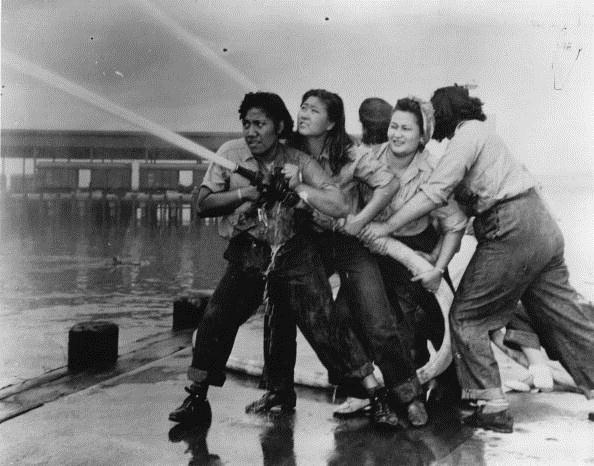
WOW.  I look at this picture and am speechless.  WOW.  There are certainly a thousand words in me that describe what I am thinking, feeling, seeing when looking at this photo, but the first word coming to my mind is . . . WOW.

WOW.  The sirens must have been blaring . . . fires roaring . . . death and destruction surrounding all. For all I know bombs were still falling.    The sky above looks to be full of hazy smoke, most likely residual from the deadly attack.

Though the three faces that I can see look intent, it is the hands of all the women that truly show intensity.  All fingers holding onto a 1941 fire hose with all the power they found deep within themselves.  Side by side each hand forming a chain of strength enabling the women to hold on . . . tight . . . knowing that their success could save lives.  WOW.

And the courage of these women.  Their ‘caution to the wind’ actions – working to save the lives of others while their own lives could have been in danger – shows courage.  Their fight to contain a stronghold on a monster hose knowing quite possibly that their physical strength only existed due to their number – shows courage.   Their desire to help those in distress – placing their own needs second – shows courage.  I often wonder what my response would be . . . only hoping that I would be a person capable of fighting fires.

Their faces are mesmerizing.  Their eyes seem to be willing the stream of water to reach its destination.   Their jaws are rigid with determination, desperation.  And though the ground below their feet appears to be slippery and unstable, their legs are planted firmly, muscularly on the dock, no trembling or quivering . . . hoping against hope to end some type of eminent suffering . . . to bring some type of calm to the firestorm. WOW.

Within twenty-four hours, President Franklin D. Roosevelt addressed the nation telling all that December 7th, 1941 would be “a date which [would] live in infamy.”  2,401 Americans were killed.  1,282 were wounded.  188 U.S. aircrafts were destroyed.  Family members, friends, colleagues, co-workers, and buddies – all walks of life were among those who perished.

Though I was not alive, I am sure that the United States stood still on that day . . . at that time . . . at that moment.  And although there is plenty of movement in the photograph, to me it renders an eerie, chilling stillness.  It is a quiet portrait, wordless.  The women are frozen in time, perched on the edge of the harbor, working with dazzling silent commitment.

WOW. I stare at this image and my mind wanders to what may have happened in the frames before this shot or what may have happened in the frames after it.  How did these women assemble?  Who called them to this duty?  Why them?  What was the chatter among them?  What were their skills . . . their strengths?

For some reason, after a good length of gazing at it, I want to know their names.  Who are they?  Where are they now?  What was their connection to this particular moment other than being in Pearl Harbor on December 7th, 1941?  What doesn’t this photograph tell me about them?

So often as tragedy strikes, the sharing of detail is too difficult.  Sometimes, it is only through pictures – like this one – that those of us on the outside catch a glimpse of what those folks on the inside experienced.  The United States may be blessed to have this piece of history as documentation of the attack on Pearl Harbor – for part of infamy is remembering a moment such as this, for better or for worse.

Interestingly, the composition of the Pearl Harbor firefighters reminds me of another popular photograph: Raising the Flag on Iwo Jima.  A Pulitzer Prize winning photo taken by Joe Rosenthal in 1945 during the Battle of Iwo Jima, it depicts six United States soldiers raising the stars and stripes in victory on Mount Suribachi.

The two photos were taken less than four years apart – one in agony and one in victory.  Both capture heroic actions – one on the part of a group of young women and the other a group of young men.  Each photo defines what I consider to be patriotism . . . our drive to protect freedom, our concern for each other, and our common goals as a nation.  Today – both photos are inspirational: they are true commentaries on the American spirit.

Though I was a very young child at the time, I have often heard, studied and can recall the words of President John F. Kennedy via his inaugural address in 1961 – a mere twenty years after the attack on Pearl Harbor:  “Ask not what your country can do for you, ask what you can do for your country.”   These words often give me guidance as I work through the challenges of daily life.

As the challenges unfolded on December 7th, 1941, I can’t imagine that the women in the photograph had any time to ask themselves or anybody else what they should do. No time for conversations or debate. Rather, I have a feeling that some type of instinct drove them to the precipice of the harbor, directed them to find a way to battle the torrent blazes around them, provided them with the courage to persist, and encouraged them to stand firm in their attempt regardless of the horrific circumstances of the day.

I just thank my fifty lucky stars for what these women did for their and my country.

Old Fashioned Is Always In Fashion

I am solidly old-fashioned.

Nothing better to me than a sharpened, yellow number two pencil and a spiral bound notebook.  I like the Slinky, red lifesavers, manual umbrellas, shredded wheat, PF Flyers, and acoustic guitars. I would rather watch a good episode of Leave It to Beaver followed by Mister Ed and Ozzie and Harriet than any of today’s new-fangled reality TV shows.    I buy a new broom at the local broom-corn festival each year and use it to sweep the garage floor over using an electric shopvac to complete the same task.  A month ago, I bought a case of glass bottled SKI soda – an old-fashioned thirst quenching classic.

Old fashioned stuff is durable.  I have owned . . . and I still use . . . the same grey metal, non-mechanical three hold punch gadget since the late 1970s.   I am not saying that I use it daily, but it hasn’t collected much dust over the years, and it’s in perfect condition.  And forget the all-in-one Black and Decker laser level that has twenty additional functions beyond maintaining a straight line, my household is the proud owner of a 30-year-old red three-foot steel version.  It’s just a level – no bells and whistles – that has been dropped off many ladders, left out in the great outdoors for days, and often lost in a crowded garage.  Yet, it still works.

Proudly, I have only owned one rolling-pin though I have owned several kitchens; I have had the same key ring for a couple of decades; and, I am a one jewelry box per lifetime type of gal. Keep in mind that all of this has nothing to do with being frugal.  It has more to do with just liking things they way they were. Old-fashioned.

Same for my language.  Sure, I could use all of the latest and greatest lingo, including the more salty versions of yesterday’s banned language.  But, I still stick with the tried and true slang that has helped to get me to this point without too much trouble.  Groovy, righteous, awesome or bumble head, holy guacamole, yikes – multipurpose old-fashioned words that seem to fit well into all kinds of conversations.

And I have found that old-fashioned almost always equals crazy funny.  One of my relatives fixed and ate a fried bologna sandwich at my house recently.  For those of you who have not had the experience, fried bologna is an ancient delicacy first created by . . . probably Mr. Oscar Mayer himself in some long ago century.  Thirty seconds in a skillet, paired with white bread and catsup, this sandwich is a comedic display of old-fashioned in motion.  It is a chuckler!

And no game is as crazy funny as good old-fashioned Spoons.  Honestly, I have played several of today’s XBOX/WII/KINECT 3D video games, and they are fun.  But, Spoons!!! Played with a deck of cards, a handful of spoons and a bunch of crazy funny relatives, this game reaches deep into the crazy funny well. No laughs greater than when full-grown kissin’ cousins jump over a table to pull coveted spoons out of challengers’ hands during a family ‘friendly’ version of this game.  Another old-fashioned chuckler.

I often tell myself that I don’t understand the lure of the old-fashioned for me . . . that this old-fashioned fascination is a mystery.  But, when I really think about it, I know for sure that the draw towards old-fashioned isn’t simply due to a preference for card games, or food, or language, or frugality.  It’s more than that.

With every generation, there seems to be a strong penchant for change . . . from clothing styles . . . to modes of transportation . . . to energy sources . . . to an endless list of activities and items that have been reinvented, improved, changed.  Life today is significantly different from life in any other moment in time. Certainly, almost all changes have  been positive and welcomed and for the betterment of all humankind.

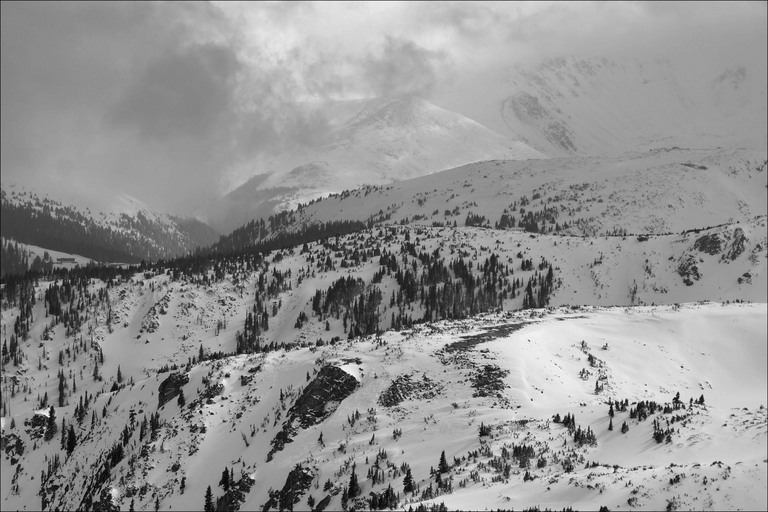
Yet, there is a part of life that I believe should remain constant . . . a part of life that should be considered a masterpiece, a part that should somehow be exempt from change.  Certainly that includes the lapping sounds of the ocean waves and the majesty of the highest mountain peaks.  It includes the freedom enjoyed by animals in the wild and the beauty each year of summer, fall, winter, and spring.  It includes quiet skies and peaceful meadows.  I know it includes the brilliance and genius of those who have gone before us along with the brilliance and genius of those who are still in our future.

Thus, however, explains my penchant for everything old-fashioned.

I may have to change the form of my telephone from a hard-wired, LAN line cordless system plugged into the wall to a cellphone carried in my coat pocket.  I may have to heat my home with solar, geothermal, and/or wind rather than the current fossil fuels available.  And I may have to give up the tried and true General Mills Wheaties – the breakfast of champions – for a more nutritious protein bar option.

But, for those few things that I can somehow manage to hold constant, I am on-board.

Bring on potato pancakes and King Bing bars.  Give me a pile of leaves and hand me a rake complete with a wooden handle and steel prongs.  Let me haul out box after box of old crazy funny holiday decorations that have lasted multiple decades because they were made in the days of the giants.

Finally, hand me a dented red level to keep me headed on the straight and narrow any day of the week.  And watch my willingness to change grow as I find comfort in keeping some things . . . just a few old-fashioned things . . . in my life constant.

The Rocky Mountains . . . An Old-Fashioned Constant

Have Map . . . Will Travel!

Remember maps?  And I mean the kind of maps that once opened took an act of Congress to refold and close . . . the kind that were too big for one person to hold and read . . . the kind that had print too small for the elderly and too confusing for the young . . .the kind that identified rest stops and road side tables?  Remember maps?

Maps used to be the crowning jewel of all travel – far or near. When traveling by automobile, maps were tucked away in every car crevice known to humankind. Front, back, underneath, inside, outside, maps were stored everywhere.  In the trunk.  Behind the visor.  In the console.  In fact, why in the world was it called a glove compartment because as far as I could tell it would have been more appropriately named the map compartment.

In the days of the giants, standard fare included the AAA TripTik (a thin, narrow map held together by red plastic comb-binding), the Rand McNally (an oversized fold-out map that didn’t seem to include any type of refolding instructions), and the Atlas (a magazine size paperback often found underneath the passenger seat).

And nothing was more fun than searching the family machine and finding an assortment of maps everywhere.  Most of them were yellow and crumpled.  Most of them were critical at some point. None of them were the ones needed at the time.  So, in retrospect I can honestly say that all of them were simultaneously useless and useful.

In the useful category . . . maps were automatic conversation starters.

Car buddies wanted to know where the divided highway started and stopped. Maps told them.  They wanted to know how many people lived in the upcoming town, and maps told them.  They wanted a heads-up on ways to avoid constructions zones.  Maps sometimes told them.  They wanted to know the population, the time zone, the nearest capital, the shortcuts, the county, the state bird, the state tree, and the number of towns between point A and point B.  And maps told them. Map conversations were a smooth blend of unique, important history with unusual, irrelevant trivia.

Also in the useful category was a map’s ability to lead the lost.

This ability, however, was predicated on the intelligence and brilliance of map users.  Unfortunately once a person was lost, intelligence and brilliance took the preverbial backseat.  Those who were lost had to know they were lost before they could use a map to figure out how to become found.  (Don’t know if I can repeat that sentence and still understand the meaning a second time myself.)

In any event, intelligence and brilliance would have all of the folks in the lost category immediately admitting that they were just that . . . lost.  However, in all my life, I can not recall any lost person snapping to attention, raising a hand, clearing a throat, and giving a shout-out that even remotely could be construed as an I-am-lost confession. Rather, far too often the lost preferred to remain lost just to avoid admitting that they needed to be found.

And how comical it could be to the map users’ audiences!

Initially, map users seemed to have a short list of questions that had to be ironed out prior to the lost admission. First were questions that blamed the map:  Had the map’s born-on date expired?  Was the map grid level sufficient for the intended journey?  Did the map have any small print disclaimers?  Was the dot on the map original . . . or crispy – a fitting question for the questions involving specks of food.

Second – were questions that blamed the map reader: Were the map eyes of the map readers within quality standards?  Were all bifocals free of watermarks and other grim and grit? Were all map readers on the same page – literally and figuratively? Were map readers chosen based on ability or by default due to their status as passengers?

And the best question of all was the destination switcheroo that allowed the lost to change the final destination to the current location. After all, what better way to become found than to ask who really was tied to the initial destination anyways?

The true glory of maps really comes into play when thinking about their uselessness.

Those McTripTikAtlas maps really only have one shining moment, one moment to claim all the enchiladas, one moment to hold the number one spot, and that is the moment of their printing.  For once printed, their journey to uselessness escalates at a rate faster than the 32 feet per second per second gravitation pull, leaving them to be nothing more than historical archives of the past, at best.

Moments after printing, all has changed – new cities, new roads, new construction sites, new road side tables.  Well okay, maybe there aren’t too many new road side tables these days, but everything else has changed.

Most importantly, the uselessness of maps allowed us to have those golden Americana opportunities to be lost.  What fun it was to hold up the flimsy, oversized, unfolded, outdated paper map and declare, “We’re Lost!” with the utmost authority and confidence, knowing that to become found would take some idle leisure time, some awkward adventuring, and some moments of uncertainty and frivolity.

No GPS censors to blink and beep to lead folks out of the abyss quickly and efficiently.  No cellphone buddies to call and correct the crazy foolishness.  No help button anywhere.

What fun.

So here’s to the maps of yesteryear that allowed all to experience the ultimate joy of being honestly and wholeheartedly lost.

For the sights and sounds that are seen when living through ‘the lost’ are nothing shy of absolutely enchanting.  I am quite sure that it was the lost who stumbled across the Redwood Forest and the Gulf Stream waters.  They just made it look more intentional later to improve the discovery story.

My suggestion when traveling, leave those smart phones and tablets behind.  Trust that the map compartment will contain something halfway between useless and useful, and see what you see on the next great lost adventure.

Lost in the Blue Ridge Mountains

Am I Funny?

For good or for bad – as odd as it may seem or perhaps not odd at all, no one has ever accused me of being funny.  I mean truly, outrageously funny.

In my defense, I certainly have been accused and am proud to accept the title of being nerdy. (And that would be the truly, outrageously nerdy type!)  For goodness sake, I put my glasses around my neck on a little lanyard to keep track of them; and, I use (and like) the word lanyard.  In fact as a youngster, I attended what I fondly call “Catholic Camp” (yes, laugh here as I attended Catholic Camp many times); and during the many hours of Catholic Camp free time, I made dozens of lanyards for my family and friends; hence, just an example as to why folks might have given me the moniker of nerdy.

But funny . . . not so much. That’s not to say that I don’t have fun on a moment to moment basis.  Humor is a welcomed sidekick throughout my life – both home and work.  In fact, my work life is on a college campus and college students are just plain, right to the bone, hysterically comical. No humorous opportunity is wasted. College is just crazy funny 24/7. Flash mobs, well they’re fun, but even better when college-naked.  Bocce, a great game –  but play it with frozen turkeys.  The campus newspaper,  use it either to seriously inform the general public or to set the record for the not-so-hidden sexual double entendres – which are crazy funny. College wear – college hair – college walk – college talk . . . crazy-funny 24/7.

A college campus is like an automatic bid into the crazy-funny hall of fame, no questions asked.  It is a hotbed of opportunity for hysterical moments with nothing being considered even in the least bit sacred; thus, everything is fair game.  Time and time again, I have witnessed some true oddities in the hallowed halls of learning.  Not too long ago, the life-size statue of Abraham Lincoln, a wonderful donation to the campus by a wonderful artist, was wearing a Cubs hat and smoking a cigar. A little later, two baby ducks strolled by and it’s indoors.  And perhaps that’s the key . . . there are no exceptions to what can become crazy-funny.

With that concept so noted, I began to wonder about the rest of my world. Just who are the funny people in my home life?  And what exactly makes them crazy-funny?

My pop is certainly on the crazy-funny list.  He didn’t, however, start on it.  Rather, like a fine wine, he aged into it.  He makes the list because he is “parental” funny.  Nothing in particular, but everything in general. He wears funny tennis shoes – which are a color that is indescribable, and the color, is, well . . . funny!  It’s not white.  It’s not brown.  It’s not tan.  It’s . . . something else.  Think of the color of concrete in the form of tennis shoes.

And as far as his skills with technology, let the crazy-funny marathon begin!  Not sure if he has a debit card, know that he doesn’t pay his bills electronically, bottled water is a waste of good plastic, he has a wonderful computer complete with a floppy disc drive and a three inch screen, and he certainly doesn’t have need for a cell-phone.

Heck, he just recently eliminated the rotary dial black telephone with the twelve-foot cord that hung on the kitchen wall. And, I think he just moved it for use in the basement, because “it still works, dadgummit!”  Blue Christmas lights line the living room ceiling; and, it is hoot when they are illuminated usually on a random Tuesday in the middle of the summer.  Some say why . . . he says why not.  Just small examples of why his entire life is just plain crazy-funny at the moment.

And my pop isn’t the only crazy-funny man in his family. His family had some humor genetics a-happenin’.  My uncle (my pop’s brother), God rest his soul, was ditto in terms of crazy-funny. Imagine my uncle’s cooking skills as being similar to my pop’s telephone skills.  Uncle Bud made grilled cheese sandwiches with white bread, plastic wrapped Kraft American singles, and butter.  As the bread would pop up from the toaster, he would slap on all ingredients, open a lengthy and heavy book at its center (preferably one that he had already read), jam the sammie into the book, slam it shut, and wait. And then eat it!?!

This comical gourmet cooking scenario hit the crazy-funny charts each time it was completed or re-enacted in front of a live audience.  When imagining this grilled cheese quest, think of a combination of Jerry Lewis and Knute Rockne – straight up comical with amazing mental and physical athleticism.  Without a doubt, Uncle Bud was crazy-funny, and not just when he was cooking for a crowd.  Though I can’t exactly put my finger on it, I think his status as crazy-funny emerged because he seemed to be truly oblivious to his comical nature.

People who are funny are funnier if they don’t know they are funny.  Such was my uncle.

And paired with my pop, they were over-the-top crazy-funny, so much so that they could sit next to each other all day long, not say a word to each other all day long or even look at each other all day long, and it would still be crazy-funny.  Though they found each other to be funny, their enjoyment came more from the times when they could laugh at themselves . . . with each other.  Two crazy-funny kids at heart.

So what have I learned with all my pondering?  Well – I have learned that college campuses rock crazy-funny.  I have learned that a Kraft American single grilled cheese sandwich may be hazardous to your health (check out the ingredient label).  I have learned that it’s okay to wear  concrete gray tennis shoes and to turn on the blue Christmas lights in July.  Adding a lanyard only makes it better.

And, of course, I have learned that crazy-funny comes when we are willing to see the humor in ourselves and laugh about it with each other.

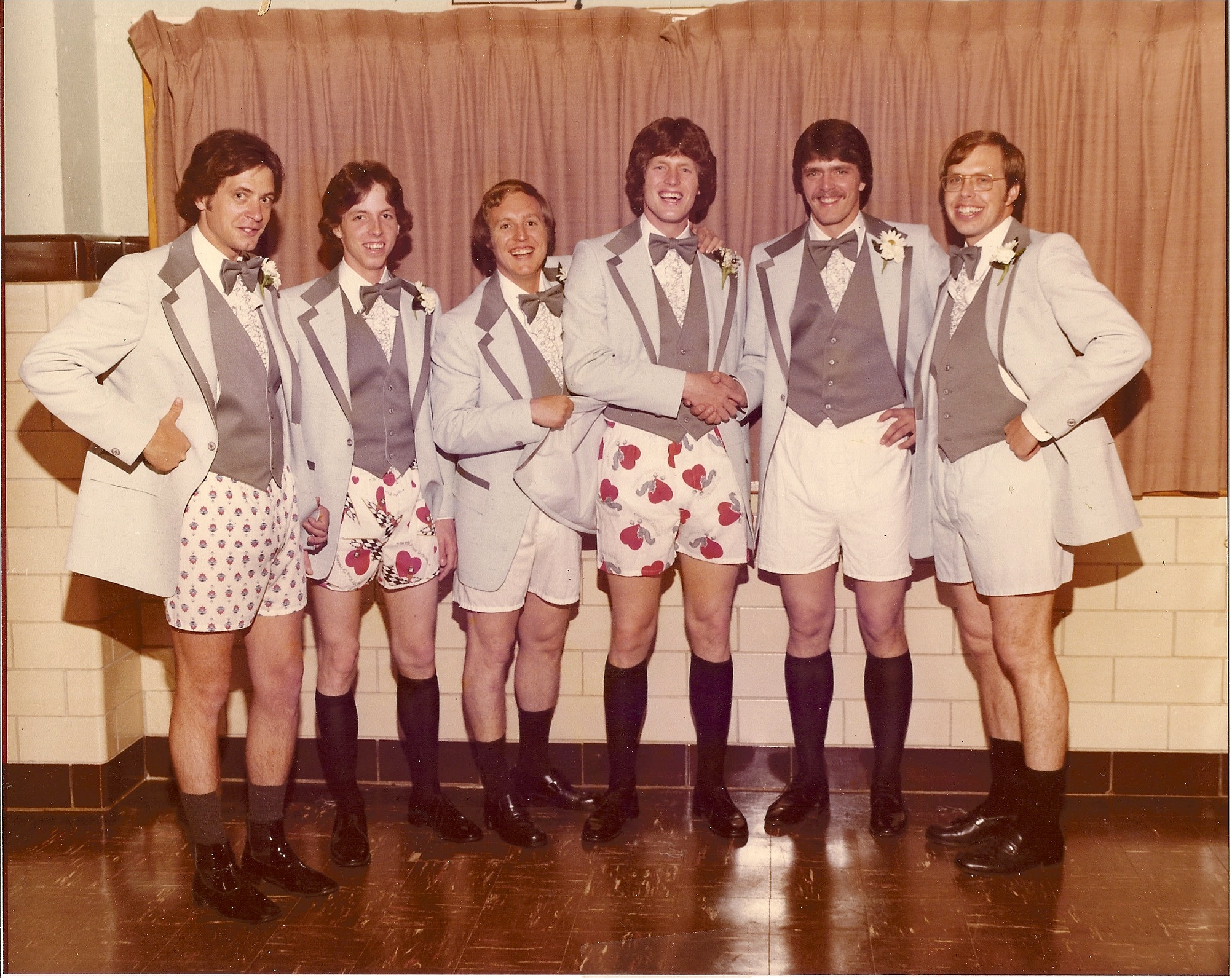
Crazy-Funny 1978 Style

.

The Three Bs

Quote

I am neither a world renowned author nor a famous professional photographer. Yet, in the grand scheme of the new digital technology era, I snap thousands of photos and write multiple blurbs . . .each day . . . everyday. Recently, I uploaded three hundred and eighty eight images to my computer from my camera. Three hundred eighty eight photos of nature, of friends, of family . . . of family, friends and nature combined. Yet, only three of those photos did I deem truly interesting. In all likelihood, perhaps only one of them would actually be interesting to anyone other than me, if that.

Likewise, I write in multiple ways multiple times a day.  I write way too many pieces of email, and a couple Facebook posts, and a memo or two, and perhaps a reports, or a tweet, and, of course, my absolute, all-time favorite – the numerous doodles combined with shorthand notes jotted down during moments of very deep thought or frankly, jotted down when I am simply daydreaming. Again, of the countless words that I write, few of them are keepers.

I have been fortunate enough to read words and seen pictures that are in the keeper category.  I think about the great words that President John F. Kennedy used in his January 20th, 1961 Inaugural Address that challenged  us to “[a]sk not what your country can do for you, ask what you can do for your country” or Mother Teresa’s “Yesterday is gone. Tomorrow has not yet come. We have only today. Let us begin.”  Words that I have heard or read over and over and over and over again. And again.

Lady Liberty

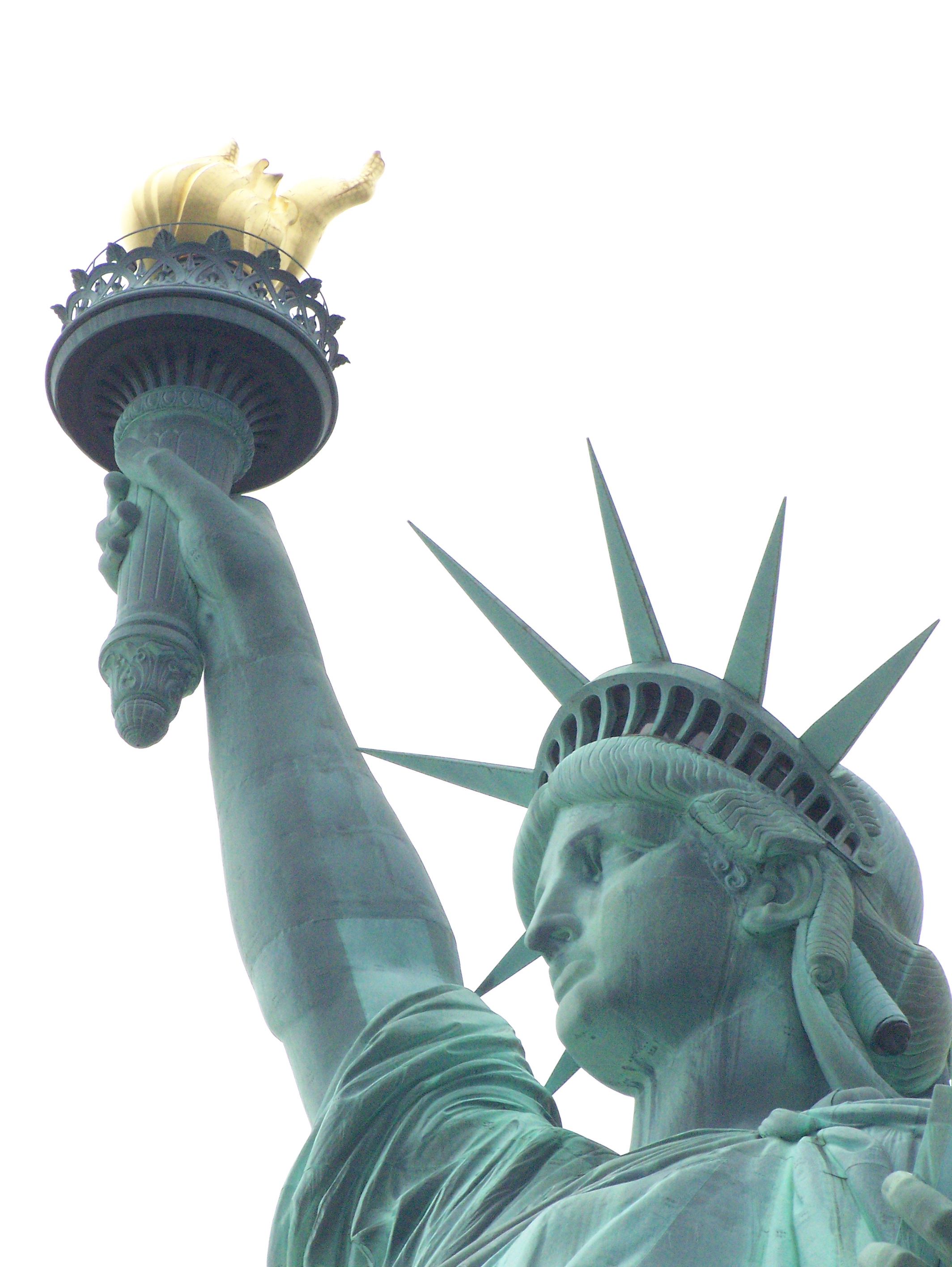
Lady Liberty Is Always Inspiring

I ponder the awe and the wonder of seeing the ceiling of the Sistine Chapel or visually experiencing the life changing beauty of Claude Monet’s 1897 Water-Lily Pond. How could my mind’s eyes every forget those glorious images.  Keepers through and through.

My question today is simply . . . what exactly makes a keeper?   Just what are the common threads among the words and images that I have committed to memory, the words and images that I refuse to forget, those that I choose to actively remember?

Though the previous examples are all quite well known to a significant portion of the world, a keeper doesn’t neccessarily have to be so.   My keepers include the parentally profound from my dad, “It’s not how much money you make young lady; rather, how much of it you save,” which was reiterrated to me many times as a working teenager bringing home a paycheck that could generally cover all random sixteen year old expenses plus a little fun.  Yet, I heard about the importance of being frugal and putting something aside for the long term whenever my pop thought about my payday.  A keeper.

Perhaps the most ridiculous as well as the most ridiculously funny keeper I have in my bucket is the phrase uttered by my third son, during a moment of total teenage frustration and to be honest a flash of anger . . .  when  he told me that “the moment I walked into the room, all fun was sucked right out of it.”  It’s just a chuckle and a true keeper.  The second it rolled off his lips,  all anger evaporated for the statement itself was far too hilarious for either of us to keep a straight face. Keeper.

As far as pictures that are keepers . . . think family.  A photo of a new born child. . . a daughter’s wedding . . . a holiday gathering . . . a baseball game . . . a graduation.  Without a doubt, each and every photo is kept and cherished.  I know that I have a couple that are most memorable and definitely on the A-list of keepers.  I happened to take a photo of the aforementioned son, (who kindly told me about the consequences of me entering a room).  He was shirtless and wrapped in blinking Christmas lights.  He was about twelve and feared nothing.  He posed: I snapped.  It has become a favorite keeper.

Again, what makes a keeper?  How does it happen?  If I could so quickly answer this question, I would be that oh so famous photographer and author.

Not all that long ago, my spouse was in a position where he needed to speak before a rather large crowd of friends and colleagues.  As I have more often done so throughout my professional career, he asked me for my thoughts on what he should do.  I gave it some thought and told him to follow the three Bs:  be brief, be brillant, be seated.

Most keepers are fairly brief. They get to the point without too much meandering.  They are amazingly uncomplicated and because of their simplicity, they have universal appeal.

All keepers are brilliant.  The ordinary and usual doesn’t qualify as a keeper.  It is only the shining star, the most unique, the writing and/or images that take our breath away.  Sistine Chapel – brilliant!  Water-Lily- brilliant.  Lasting words and phrases from folks like JFK or Mother Teresa – brilliant.

Finally, creators of keepers know when to be seated.  Using the more common vernacular, they don’t beat dead horses.  Keepers say what they want and show what they want and move to the side of the stage.

I am on a quest to create a keeper blog, one that somehow adds to the world.  Hopefully, I will use my interest in words and photos to do so.  My goal is to follow the three Bs and keep all posts under 1000 words (be brief), perhaps with a handful of those words showing some type of promise (be brilliant), and without dilly-dallying around (be seated).

So welcome to 1000 Words – One Picture.