You’re In Luck

“You’re in luck,” I said.  And with that, I turned to my second son and smiled.  “I don’t need my car tomorrow, and am glad that you can use it.”

It was a beautiful March evening; and, Timothy and I stood for just a moment in the driveway before he drove off.  As I handed him my keys, he thanked me and added just a little more. I knew the next phrase was coming well before he said it, but I looked forward to him saying it anyway.

“We’re both lucky, mom, aren’t we,” he said.  And I replied with a “Yes, son, we are.”

As he pulled away from my house with what he came to borrow, I began to consider all the times that he and I have uttered those phrases.  I tell him he is in luck and he tells me that we are both lucky – a mantra we have completed a thousand times a thousand.  But this time, I think I meant it a little more.  And I was hoping that he equally heard my words and delivered his with more meaning.

For during the early part of my day, I wasn’t feeling the luck in any way.

Though my daily work doesn’t bring me into direct, one on one contact with students often, this semester, a series of unusual events had caused me to work with three very different people for three very different reasons.  Each of these three students had challenges throughout their lives that I nor my children had ever experienced or imagined:  parents who at best could have been described as absent –  a lack of funding not only for school, but for basic needs like food and shelter – no reliable means of transportation – no steady employment of any kind – non-supportive family and friends – and in general, a day-to-day existence that was more difficult than ever delightful at every turn.

Lately, I had spent a great deal of time wondering about the what-ifs for these three young students.  What if just one thing was different in any one of their lives? Just one thing? What if one of their parents put effort into raising them?  Just one? Just a little? What type of difference would that have made?  What if each one of the students could say that they had never gone hungry – not for one day?  That they never thought about how they were going to secure their next meal? Wow.  What type of difference would that have made?  Or what if they never once had to worry about transportation to and from college, to and from work, to and from anywhere? What type of difference would that have made? If they had just had a little luck, in any direction, for any reason, at any time, what type of difference would it have made for any or all of them?

My work is not to sit behind a desk and wonder all day long.  But, there are days that wondering is the best that I can do.

For although I tried my hardest with each student and they tried their hardest, neither my effort nor their efforts has been able to provide them with enough success to eliminate all of their problems and challenges.  In fact, we hardly made a dent.  The road in front of each of them still seems long and bumpy with admittedly a tiny glimmer of light at the end  – but I wouldn’t call it a streaming beacon at this point.

Through my contact with these three individuals, I swiftly came to realize that all they really need is a little luck.  Somewhere in their frantic worlds, they need to come across a road block and suddenly be handed just a bit of luck and . . . voilà . . . the challenge is averted, the problem is eliminated, the story has a happy ending.  In fact, all anyone really needs is just a little luck.  Trouble is . . . getting to the point that such luck appears is often a journey of a million miles.

That’s why it is so important to recognize and realize when luck occurs. For when it does occur, we have normally waited a long time, planned a great deal, put in time and effort, tinkered around, and worked hard to reach such opportunity.  Benjamin Franklin said it well defining “diligence as the mother of good luck”.  Likewise, Tony Robbins calls luck “the meeting of preparation with opportunity”. Neither diligence nor preparation has a short time frame.  Both take awhile, a long while. Likewise, luck takes awhile, even for the luckiest of folks.  In considering how luck works,  I sincerely hope that the three students I have personally met during spring 2014 are in it for the long haul and are willing to persevere, waiting for their lucky moment.

Connecting all the dots in some fashion, I am grateful for the conversation between my son and me on that beautiful Wednesday evening.   He and I – in less than 100 words – acknowledged that luck had been a part of our lives and that we were and should be thankful for it and for each other.  Such a brief conversation between two people, but an important one – a conversation that gives me plenty to wonder about. A conversation that I am hoping that we will continue to utter and build on for years to come.
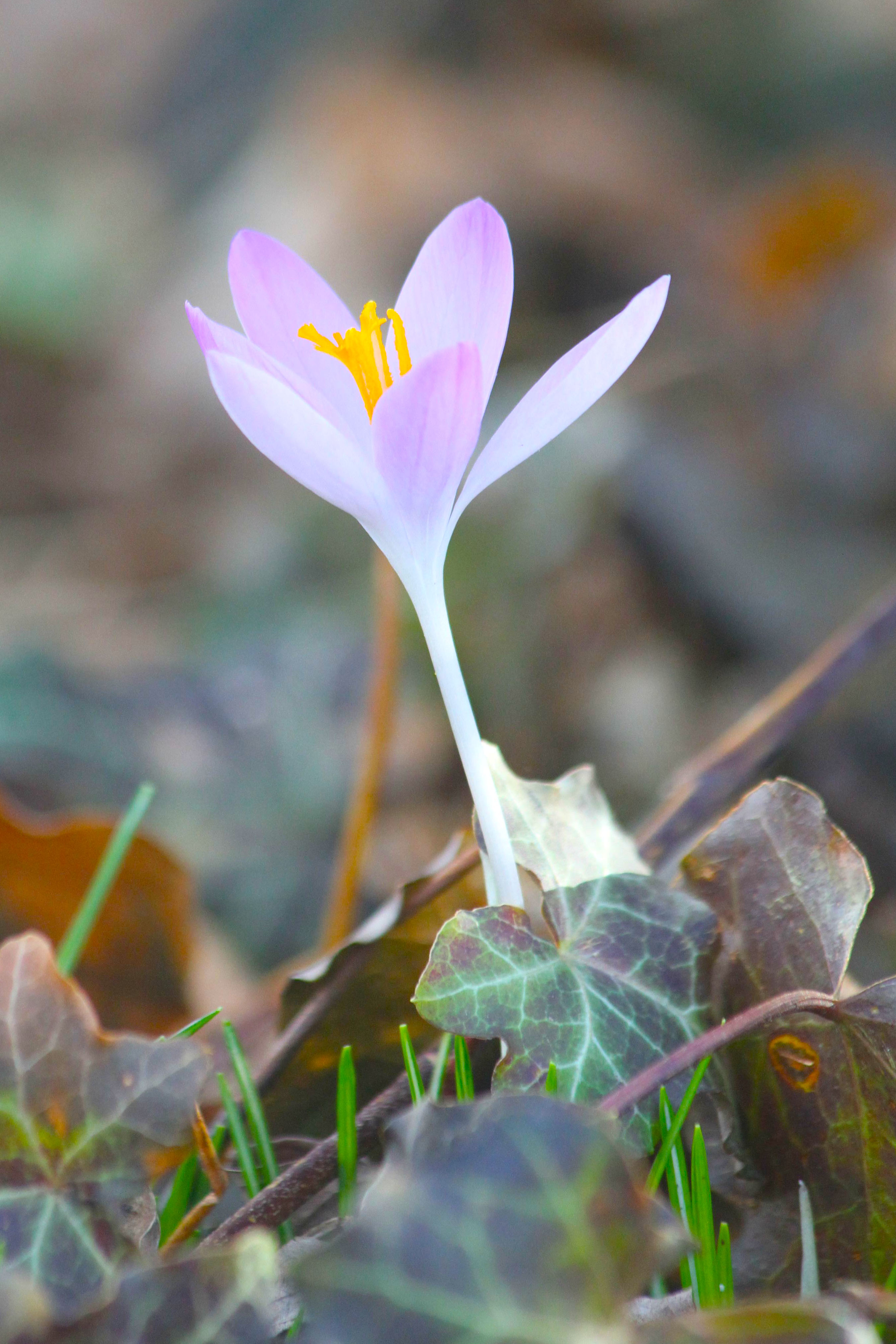
 

A flower seen on that Wednesday evening. Lucky me.

A flower seen on that Wednesday evening. Lucky me.


The Changing of the Guard

“Mom, you go first,” she said with confidence.

So I did, and as I looked back at her, I knew times were a-changin’.

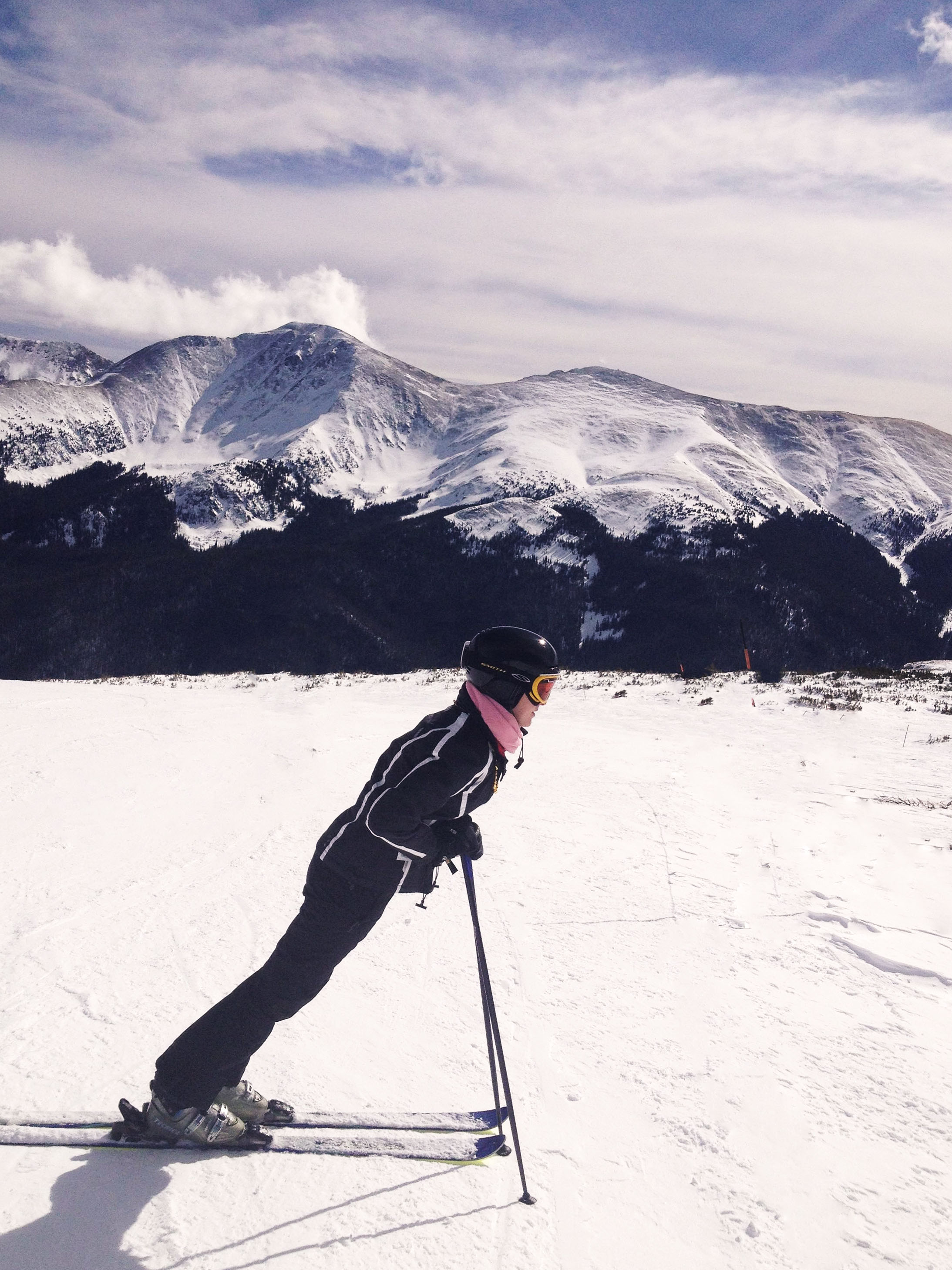
The weather was beautiful and the snow was perfect. The slopes were glistening and we were skiing together as we had for the past 25+ years. This year’s ski-adventure started out like all those that preceded it. We arrived at the lift-line a few minutes prior to opening. We secured boots, strapped on helmets, slid on gloves, and clicked into our skis. Moments later, we hopped on the first lift and headed up the slopes. Throughout the initial ride, we chatted briefly about our ski-history . . . the times we had been together on this particular lift . . . the weeks we spent as a family skiing . . . all of the traditions of the past. We smiled because here we were doing it again – skiing for a week, and it was only day one.

Over those past 25+ years, I have learned that she prefers skiing in wide open spaces, in light fresh powder, the faster – the better. Steep downhills don’t phase her, nor does skiing over ice in cold, cold weather. In fact, she is an excellent skier – with the skill and ability to maneuver most any terrain.

At the top of the slopes, we plotted out our first runs – something a little easy to start the day. And for the first hour or so, we traveled back through some of our favorite ski-haunts – pushing powder here and there – gliding and sliding – laughing and chatting.

Finally, we decided to move on to bigger and better runs – something a little more challenging. With the snow conditions perfect and the sun shining, we opted to head to up to the top – to the summit – to see the sights and ski with gusto. A smooth six-person lift took us up. Once off the lift, we stood in awe of what we could see. We were slightly above the treeline – and the Rockies stretched out in front of us for miles and miles and miles.

And there we were paused – looking, watching, thinking – with the feeling that we were standing on top of the world. What we could see was so spectacular that skiing itself took a backseat to the scenery surrounding us. During that moment, time just seemed to stand still with the only sound heard best described by Robert Frost as “easy wind and downy flake.”

“Mom, you go first,” she said with confidence.

So I did.

The slope in front of us was actually a little dicey. Most of the snow at the top had blown off so we were starting out on ice. The second section had been well-skied by others, creating a few navigable moguls. Oddly enough, 500 feet from us, the ski patrol was assisting a young man who looked like he had an unfortunate meeting with a nearby tree. The final section would take us through glades and glades of evergreens until the run flattened out near the bottom.

Skiing is an interesting sport. Any great resort will have terrain for everyone – accommodating both beginners and experts and everyone in between. Most runs have an easy way to the bottom and a challenging, more exciting way as well. Skiers judge their own ability and choose their own paths.

Throughout our ski history, we have always skied following a simple rule – an unwritten and an unspoken one – but a simple one. The strongest skier goes last. If those in front of the last skier encounter challenges beyond their abilities, that strongest skier is a tremendous asset – having the skills to not only self-navigate, but to help navigate others when necessary.

In past years, more often than not, I was the last skier. There were many times when I hauled my children out of ski-misadventures – following them down slopes that were well above their abilities, chasing them down paths through snow-covered trees, fetching runaway skis, and pulling them out of piles of snow after a fall. The last skier.

But with those four simple words, I knew that the times were a-changin’.

I glanced back and saw her standing, confident and proud. She was perched just a few feet away from me and used her ski pole to casually point towards a solid direction that we should take. I nodded equally as casually and pushed myself slightly over the icy start.

The only sound I heard at that point was the swish of my own skis. I knew that she was waiting above me – as I had done for her so many times before – patiently and appropriately, making sure that I wasn’t going to encounter any problem or challenge. It was her turn now and my turn to let her have a turn.

Out of the ice, I hit the short section of moguls, and headed for the trees. I stopped for a brief second and heard snow spraying off of her skies when she stopped immediately behind me. Though nothing outwardly had changed – we typically stopped throughout any ski run, just for fun, laughing, resting, smiling – inwardly much had changed.

Everything in life has its own season, and though my initial response was to delight in seeing her move into a different one, it was also about delighting in my movement as well. I now had another person in my life who was following and watching over me, someone to follow me through my misadventures and fetch my runaway skis. It was the changing of the guard in a part of my life, and all I could think about was all the crazy-fun that would lie ahead for me and for her.

We finished the run with little to no fanfare – which is great when skiing – and hopped right back on the same lift to experience it – one more time, again.

The You Go First Moment

The You Go First Moment

(P.S. – I have been absent from my blog for awhile, but am glad to be back!)

Bring On The Goofy

I am quite sure that under the term ‘nice guy’ in the dictionary, you would likely find a photo of my cousin, Michael.

It is easy to describe Michael – because it is all good.  As a young man, he went to a great college, joined a great fraternity, graduated with a solid degree, and secured a great job right out of the chute.  He is typical tall, dark, and handsome – with a penchant for smiling.  Today, he is a wonderful family man with equally wonderful family members.  He is calm and responsible with that caring demeanor the rest of the world envies.  He has a stellar career, is involved heavily in his community, and happens to be a rather good athlete.

He lives a thousand miles away from me.  And over the past 40+ years, I have been fortunate to have spent a week-long summer vacation each year with Michael.  Sometimes the vacation is longer; occasionally it is shorter.  With all that time together, I thought I knew him as well as anyone might.

But I was wrong.

Turns out . . . he is willingly . . . goofy.  Yes . . . goofy.

As an adult, it’s tough to be openly and enthusiastically . . . goofy.  Children can be goofy and all is well. Goofy dancing in the grocery store at age three – great! Goofy attire in junior high – great! Singing goofy songs loudly at high school football games – great! For youngsters, it is all great to be goofy.  In fact, we often encourage the goofiness in our youth as a way of increasing those crazy-funny moments in our lives that lead us to laughter, hilarity, and merriment. I readily admit that my day is brighter when I run across the goofy-side of the world. Goofy is fun.  But goofy isn’t all that common once we exit our childhood and enter that mysterious adulthood.

I am not quite sure what my definition of goofy has been, but rarely if ever, would I have associated that term with my cousin, Michael . . .  until recently.

Michael is a charitable guy.  He works hard at service to others.  And he isn’t one to want the recognition that comes along with his actions.  In fact, he usually likes to be in the background – doing his thing to help in any way possible. It turns out that Michael is the chair of a fund-raising event in his home town.   It is a great cause and a good, solid charity.  It is in need of funds.  It always is in need of funds as there are more folks who need assistance than current funds available.  So, from my vantage point, it looks like Michael has been asked to lead the efforts in his community to reach a fundraising goal.

And, lo and behold, captured via camera, the world was introduced to his goofy side.  With photos forever etching the moment, Michael is seen standing dressed up in a full-fledged, head to toe Superman costume -including cape – standing in that well-known  Superman-pose that had me do a double take when I saw it.

I laughed . . . and chuckled . . . and smiled.   Michael – in a Superman costume – goofy as can be – putting himself out there for a cause.

Working on causes . . . charitable ones . . . philanthropy . . . isn’t easy for many reasons.

First, the opportunities are endless.  There are hundreds to thousands of great causes – and each one of them deserves assistance. Narrowing the scope and finding a good fit is nearly impossible.  There are local charities, state-wide causes, national organizations, and activities that may have personal ties.  There are opportunities to volunteer time, opportunities that require specific skills and those that just seek donations.  All of them require some type of effort in achieving their goals, and all of them are worthy, but how do we, as humans, make selections?

To add to the dilemma, the older I become, the more I see a world in great need.  From children to adults, the number of people facing daily challenges seems to be growing and growing and growing.  In fact, that number seems to far outweigh the number of folks who can assist.  As a teenager, I was just sure that by the time I entered my later years, I would see a reduction or elimination of the suffering, hunger, or poverty in the world.  How could that not happen?

I recall thinking – and probably chanting at some rally during the 70s – that if I was not part of the solution, then I was part of the problem.  Thus, reaching out and helping was and is the only direction to take.  And as I have aged, I continue to pursue more opportunities to make differences.  But, it doesn’t seem to be making even the slightest dent in the world.  For all of us, it can be disheartening to try so hard to make the world a better place, knowing that the fruits of our labors may come to fruition years, decades, centuries down the road.

And that is where my thoughts of Michael enter the picture.

Sometimes to make that difference in the world – to be a part of the solution – to help those in need – we have to step outside our normal and average selves and go for it!  If that means slipping over to our goofy side and dressing like Superman, then so be it!  If utilizing that sometimes inert goofiness inside all of us positively changes the world just one iota, then we all should strive to engage in the goofy more often.   I can think of no better use of crazy-funny actions than to save the world.

The willingness of others, like Michael, to be goofy to serve the greater good is, well, motivating.  If one person helps for one moment or gives one dollar more because of one action on the part of one person doing something relatively out of character, I am grateful and forever indebted.

So, today, I say . . . bring on the goofy.

mIKE

A photo of my cousin – in his everyday attire!

A Man of Few Words

Recently, my little brother, Rich, and I entered into an interesting partnership.  And during the time we were considering whether to do so, both Rich and I consulted with our father. And in comparing notes, my brother and I found that we were both asked the same questions:

“Do you trust him?” my father asked.

“Yes,” I replied.

“Do you love him?”

“Yes,” I replied again.

“Then do it,” he said, “Everything else will work out fine.”

In this conversation, my dad was brief and to the point. If the time elapsed was more than one minute, I will be shocked.  My pop only had two questions – one about trust and the other about love.  Never having been a man of many words and certainly never having been a touchy-feeling type guy, he assumed that the two question eight-word piece of advice was enough and it would be all that I would need.  And odd as it may sound, it was.

But it was only odd to me. Clearly, it was not odd to him.  For, as I sat next to my dad listening to those two questions and watching him deliver that very brief message, it became strangely clear that this wasn’t the only time that he had used this advice.

Throughout the next several weeks, as my brother and I cinched our partnership (keeping our dad apprised of the smaller subsequent decisions and choices we were making), my dad began opening up about the times that those two poignant questions guided him.

Should he marry my mother – the love of his life – and the love of ours? Yes.  Should he take a risk and move his family to a great new frontier called Florissant? Yes.  Should he listen to the advice from his father and take a job with a company formerly called Union Electric – now Ameren UE?  Yes.  Should he, himself, enter into all types of adventures and mis-adventures with his own brother, Bud – his dearest and lifelong best friend? Yes.

With love in his back pocket and trust at his side, he had no fear of his decisions.  He just didn’t. He still doesn’t. The outcome of his decisions may not always have been as planned, may not always have been perfect, and may have led down new and unexpected paths, but with love and trust, he always felt that his decisions were . . . correct . . . right . . . just.  Where some may have fear, he had confidence.  And at the moment he was asking me his two greatest questions, he wanted me to be confident, to have no fear.

When my father asked me if I trusted my brother, he made the term . . . the idea . . . seem so simple. He didn’t want frivolous conversation from me.  He didn’t want a lengthy discussion on trust, the origins of trust, and the positive benefits of trust.  He wasn’t planning on spending hours and days introducing the concept of trust and pondering its definition with me.  He wanted me to answer his question with a brief but confident yes or no.  He really didn’t want me to discuss the degree to which I trusted my brother or any reasons why I should or should not trust him or the dangers of doing so.  In fact, I think he was hoping that I wouldn’t speak, rather simply move my head yes or no – preferably yes, which I did.

When he asked me if I loved my baby brother, the same premise applied.  Yes or no.  Did I love him?  My pop didn’t want to know the details that could have been attached to that question.  He didn’t want to know any challenges surrounding it.  In fact, I think that had I begun some type of discussion when my pop asked that question, he may have given me the awe-inspiring, dad-blaster ‘no time for talking’ look – the look that fathers use to pretty much stop space and time – in order to refocus me.  He just wanted me to give him that one word answer, again with confidence – which was yes.

In less than one minute, with eight words in two questions, my pop did it again.  It was masterful advice in the blink of an eye.  He didn’t say it this way, but I definitely heard: Trust those you love . . . and love those you trust . . . everything beyond will fall in place.

His confidence in knowing that if I had trust and if I had love, then I should have no fear was moving.  And my dad has been right.  My brother and I are having the time of our lives – and couldn’t be happier with our decision.

I know that I, like my father, will keep those two questions handy.  And as I face complicated, challenging decisions in the future, I know that – like him – I will hope that those eight words give me the same type of guidance that they have done for my dad.

But I do have to chuckle.How in the world am I ever going to meet that standard!  Heck, 1000 words isn’t always enough for me to convey whatever it is that I want to convey. Well . . . at least I have a target!

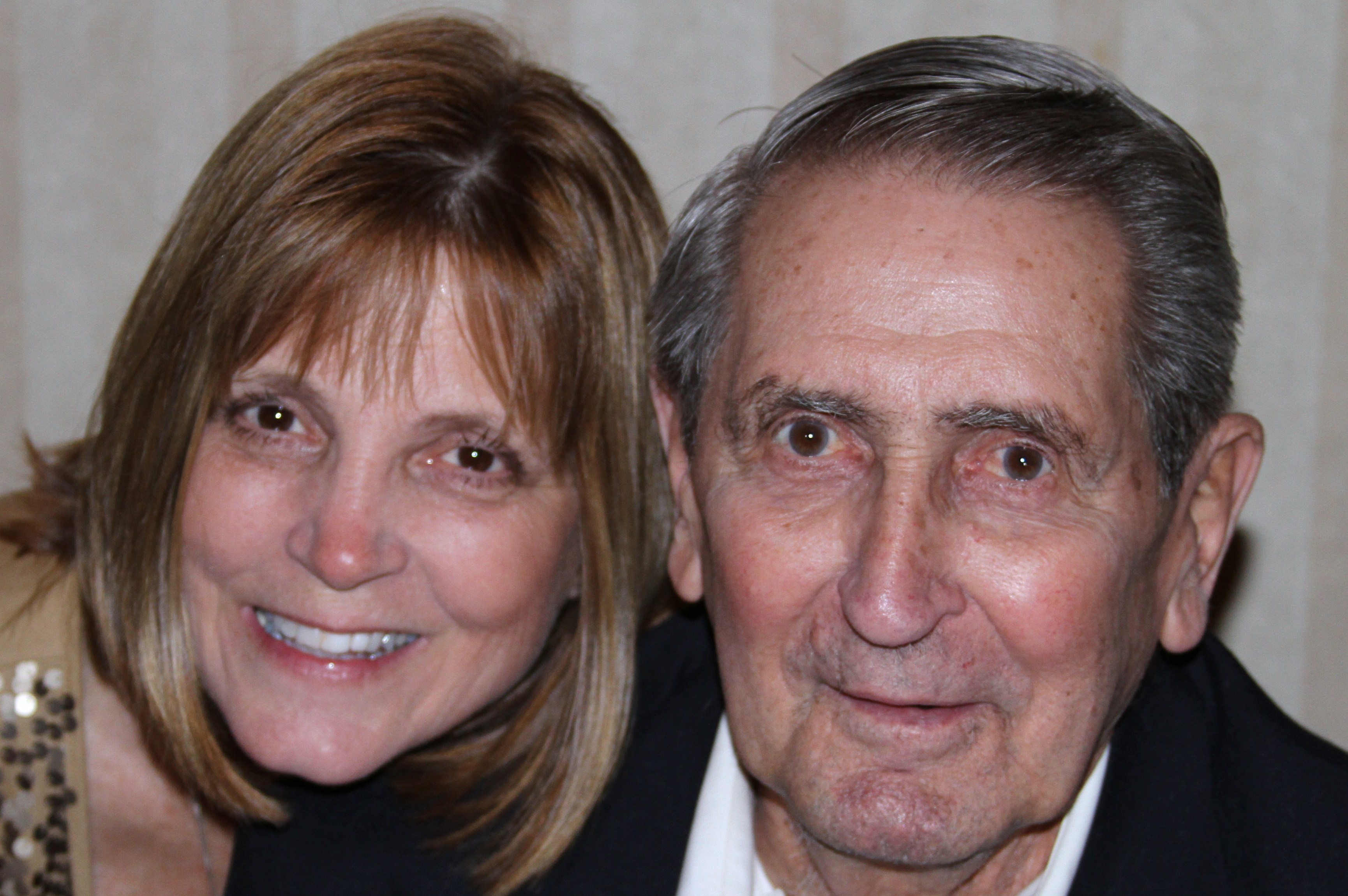
Dad

Dad

Fishing

I don’t like fishing.

And as a vegetarian, it isn’t any great surprise as to why I don’t like fishing.  I normally try, as best I can, to keep my personal views concerning something like fishing to myself.  It’s something that people do – and I don’t.  ‘Nuff said.

However, recently, while visiting the great state of North Carolina, my third son, Patrick, invited me to go fishing with him.  Twice.  And, as odd as it seemed to me, twice, I went.

The first time, he asked me to tag along with him to the ocean around noon.  His plan was to fish while slightly off-shore in a kayak.  With a pole, bait, oar, and a very small back pack full of odds and ends, he waded into the water with me behind.  My job was two-fold:  steady the kayak until he made it past the first barrage of waves and then return to shore and wait for him to return . . . which I did.

I sat on shore watching the yellow kayak swaying back and forth with the tide.  And at first, I could see him clearly.  I could see him casting, I could see him rowing, and I thought I could see him smiling.   But as time passed, he moved farther and farther towards the horizon, and it became more and more difficult for me to see anything more than a flash of yellow between ocean waves.

My mind moved away from my thoughts about fishing and towards my thoughts about my son and the danger of water, in particular ocean water.  Though thankful that he had put on a life jacket moments before jumping into the kayak, as time ticked forward, I still had that feeling in the pit of my stomach that says anything, anything can happen.  So, I began to walk and wade into the Atlantic – as if I could somehow wade and swim to the bobbing kayak.  Which realistically, I could not.

Within ten minutes, he either ran out of bait and decided on his own to end his journey or he saw me and figured that his mother was going to get herself into water-trouble and might need help, because the kayak was heading swiftly towards me.  Once we were within shouting distance, I could tell that he was delighted with the fishing.  Usually a quiet sort of guy, he rattled on about the ocean, the fish, the waves, those he caught and those he lost.  He was happy and wanted nothing more than for me to be happy for him.

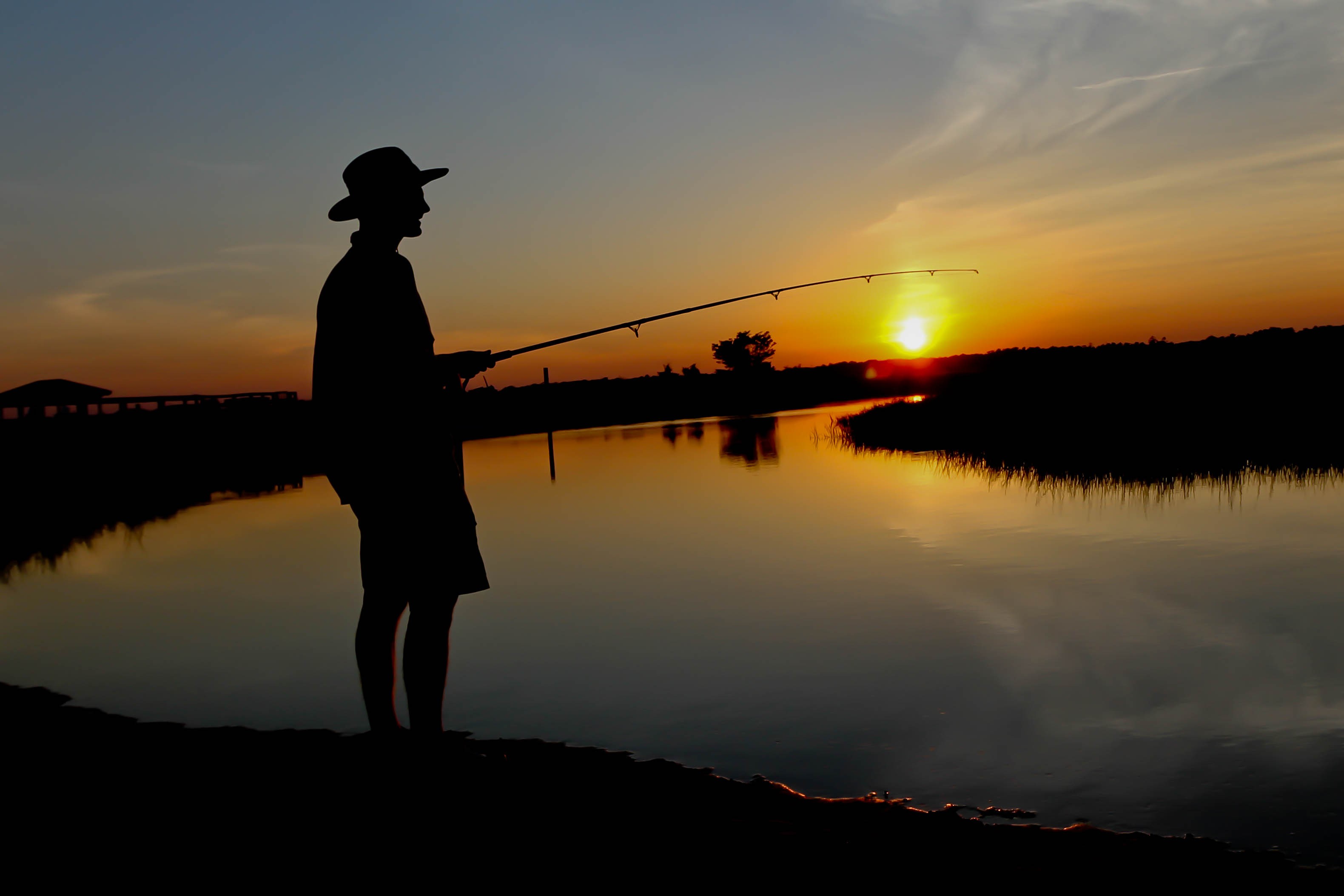
The second fishing experience was quite different.  As the sun began to set one evening, he pointed towards the marsh, grabbed a pole, his tackle, and two chairs.  He could see that the weather was perfect and the tide was up.  The plan was to quickly – faster than lightning fast –  head out with him to fish.  Again, he asked me to go, and for some reason, I went.

With me literally running behind him, we stopped when he found the perfect spot. He set up my chair, dropped his, tossed me some stuff, waded out just beyond the water’s edge and began casting.  He fished and I watched him fish. It was a fairly quiet experience with the reel making the most noise of the evening. We stayed for as long as we could see, which wasn’t all that long.  In fact, it wasn’t long enough for him to actually catch anything.  When the sun dipped below the horizon, he gave me the ‘let’s pack up’ signal, and we did.  Walking back to our place, he explained the difference between fishing in the marsh and fishing in the ocean, between fishing in the morning and fishing in the evening, between fishing from shore and fishing in a kayak.

Though I am opposed to fishing – at all levels – and he knows it, I must admit that I did enjoy my fishing experience.  First, he caught nothing that I could see.  What he caught in the ocean, he tossed back.  And he caught nothing in the marsh.  Great for me.  Not so great, I suppose, for him.

Next and more importantly, it was interesting entering someone else’s world – in particular a world that I would never enter.  It was interesting changing my perspective – stepping out of my box and seeing something from a different viewpoint.  I went fishing.  Okay, my role was very limited – at best.  I didn’t use a fishing pole. I was my son’s crowd, his groupie, his audience.  I was there to observe . . . to learn . . . to understand.

And I learned that it is one thing to talk about having an open mind and talk about being accepting of the differing viewpoints and activities, and another thing to actually have that open mind and be accepting. I always thought I was accepting of his choice to fish, but in reality, I was only accepting of it at a distance.  I really knew nothing about it.  I was more critically sarcastic than honestly accepting.

But, walking in the shoes of others truly does heightening understanding. It takes time and effort to do so, and I had to jump out of my comfort zone and hope that I could see whatever it was that he was seeing – use his eyes, his mind as my guide.

I still do not want to fish, but I know a little bit more about why my son fishes, and I think I am a little more embracing of his choice.

And as the sun went down while we were standing in the marsh fishing, I thought about the poetry of yesterday . . .   with e.e. cummings (1894 – 1962) drifting through my mind:

now the ears of my ears awake and / now the eyes of my eyes are opened
fishin (1 of 1)

It’s All About Happiness

(I am reposting this one -[originally posted in 2011] as my son, Matt, is running for Charleston City Council.  Perhaps this post will provide a little insight into what it would mean to vote for him. Feel free to share – and . . . Go Matt!)

Though I have four beautiful, wonderful children – all worthy of thousand upon thousands of words, the focus of this post is going to be about my oldest son.  There are a few family members and friends with whom I have shared his stories, but overall, I keep a tight lip on them.  And he is no longer a child – rather a guy in his early thirties.  He would say that he is mainstream, fairly innocuous, run-of-the-mill, just a regular person.  But, there is a little more.

For those who know him, sorry for the detail here.  For those who do not, he is a great person, one who faces numerous physical challenges in his life. The types of challenges really don’t matter.  I could detail them, but to what avail.  It probably is suffice to say that these challenges are truly significant and require serious work-arounds for most everything in his daily life. But, as he frequently says, it’s all good.

And it is all good.  My son’s accomplishments, regardless of the steep incline he faces with his physical challenges, are many.  The laundry list of things he did that no one ever thought he would do, including me, is a long, extensive one.  Again, the types of activities on the list really do not matter, (although the parasailing and the snowmobiling really tested my comfort level).  It is probably suffice to say that he has said yes to more unbelievable adventures than he has said no . . . some with great success, some with utter failure, but all with joy and humor.

My son has an interesting sense of purpose, one that I have only begun to truly understand.  So often, a sense of purpose stems from a career path or an occupation or a specialized job, something that is related to an individual’s work.  Not so with my oldest.  He knows he has a purpose, but it has nothing to do with what occurs in a 9 to 5 paycheck world.  His world is guided by something much more intrinsic and much less tangible.  He has his own beat, his own rhythm, his own path.  Yet, it does not exactly fit into the concept of the road not taken as discussed by American poet Robert Frost.  It actually is a direction many of us choose and follow.  He just does it better.  For him, it is all about happiness.

Some folks would claim that my son’s life is about hilarity rather than pure happiness, for he is a funny guy. No comical moment is left unturned for him.  The stories are many and they all end in laughter.  One great such moment happened just a couple of years ago.  As he was being airlifted via helicopter from hospital to hospital during a very serious health crisis, he asked about the cost of the ride.  According to the doctors and pilots on board, when he heard it was many thousands of dollars, he wanted to know if service included soft drinks, peanuts and free in-flight movies.  Because for him, it is all about happiness.

Recently he spent time with a friend whose level of challenges are – and it is difficult to even comprehend this – even more significant than my son’s.  When he came home, he talked about the experience.  He and his friend sat out in the backyard . . . for two hours . . . watching nature . . . talking . . . listening.  I asked him if he had fun.  He looked matter-of-factly at me and said, “Mom, it was all good.  I am just happy that he was happy.  Y’know, I am good at being happy. It’s what I can do.”

And he is good at it.  But how many folks can actually say that they are good at being happy.

Andy Rooney, American’s lovable curmudgeon, recently retired.  His media persona was all based on his ability to whine and complain.  Mr. Rooney took the time to comment on those little negative pet peeves that continuously drive some folks crazy.  People watched his weekly gentle rants for more than thirty years. His negative characterizations kept us engaged.  He was often times hilarious!  But his hilarity was framed in the negative. His on-camera character never seemed happy.

If it is all about happiness, then there are clearly some folks who do it better than others as evidenced by my son versus Mr. Rooney.   Richard Carlson, in his book “Dont Sweat the Small Stuff . . and it is all small stuff“, (an oldie, but a goodie), asks readers to put life into perspective in order to make life happier.  He suggests considering that which is important and that which is not.  Lost keys?  Not important.  Ran out of milk?  Let it go.  Co-worker slacking?  Take a deep breath.  According to Mr. Carlson, avoiding the drama of the small stuff frees up time to live and be happy.

There are people out there, however, who must always sweat the small stuff – people who can’t open a refrigerator, can’t zip a zipper, can’t lift a book, dress themselves, feed themselves, and the list goes on.     My son manages to constantly sweat through that type of stuff and still ends up creating a life that is all about happiness.

In January 2000, Barbra Streisand finished her Millennium Concert with a slow melodious version of the song, Happy Days are Here Again (Ager and Yellen, 1929). At that time, the world was ushering in a new century and it was a great moment to promote change, especially the type that left behind all of the sad/bad times and looked forward to all the happy days ahead.  Ms. Streisand planted her audience firmly in the right direction on the exact moment the century turned anew – a once in a lifetime performance for her and a once in lifetime experience for the audience. In listening to that album many times, the importance of replanting – repositioning – refocusing once again becomes very clear.

Through all of this,  I have learned I need to somehow work to become one of the voices who promotes a life that is all about happiness – whether it is through great American poetry, the desire to be unlike the classic curmudgeon, via a book that changes what we sweat, the power of music, or through the example that I find right in front of me each and everyday.  Thanks, Matt.

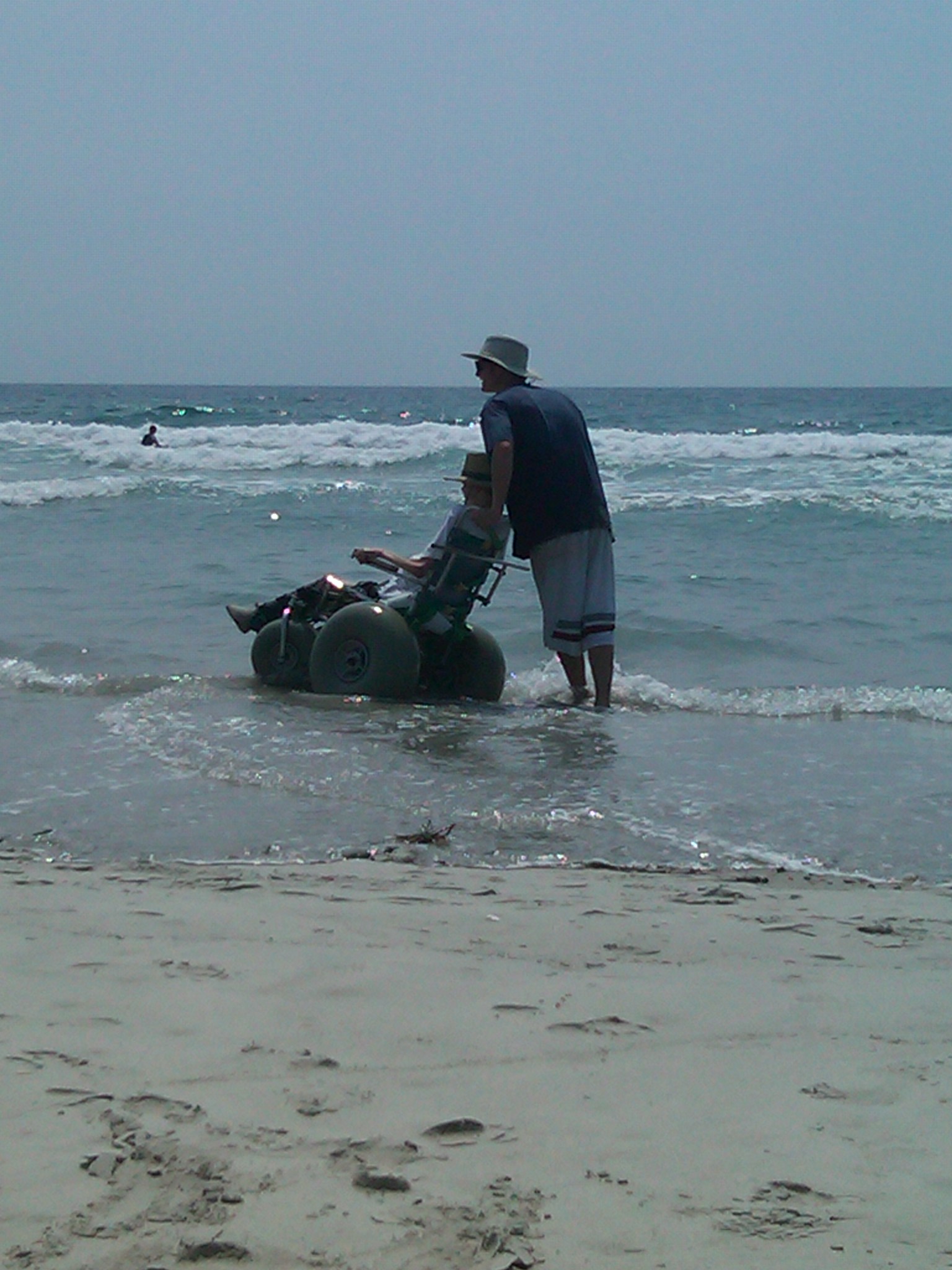
On the Beach Enjoying the water anyway possible – 2011

The View From Above

I work on a college campus, and I love it.

Though my days can be somewhat varied, most of the time there is a carefully plotted out routine to what I do. There are countless committee meetings, reams of email, tons of telephone conversations, numerous one-on-one discussions, lots of small decisions, and large decisions, significant time working with students – faculty – staff on problems, concerns, challenges. . . and the list goes on and on.

It’s normal, average college work and it’s what I do everyday.

As expected, I am generally busy. I come early and stay late.  Sometimes I stop at noon to eat, but more often, I use the lunch hour to catch up on reading, signing things, thinking.  I find my college activities quite interesting.  But, for those on the outside looking in, the picture might not seem so exciting. Instead, it might be viewed as . . . tedious . . . tiring . . . a little too much of the same old – same old, and not enough of the knock your socks off, type stuff.

Admittedly, I spend most days in my office or in conference rooms.  I listen . . . I talk  . . . I read . . . I jot something down . . . I confer with others. I squint my eyes, looking up just in case an answer to whatever problem being discussed floats through my mind. (Rarely happens, but I look anyways.)

Sometimes the day passes without me ever standing up and moving from behind my office desk to the doorway. The two chairs in front of my desk are like seats on a merry-go-round that bring all kinds of folks into my office to chat. Suddenly, I look up and the day is over. I head home. I eat, sleep, wake up and start the process over again. It’s been this way for many years.

Most of the time.

For this is a college, and I know that college life is full of both the expected and . . . the unexpected.

As was the case on December 5th, 2012.

The sun was shining, the weather was perfect, and I was ready.   I slipped out of my regular work attire and into worn-torn jeans, work boots, and a college sweatshirt.  The faculty in the West Building had invited me, and I jumped at the chance.  I was – flat-out – super excited about the opportunity.  It was as if the world leaned over and tapped me on the shoulder for a great, great adventure.

In a few moments, I met my partner-in-crime.  Joe quickly ran through the must-do rules, and I suited up.  One hard hat. Check. One pair of leather gloves. Check.  One cell phone and one camera. Check, check.  And one safety harness with tons of carabiners. Big time check.  And I stood – at the ready – waiting for more instructions.

Joe looked at me and smiled.  He and I both knew that this day wasn’t going to be the usual.  This day wasn’t going to end with me turning out the office lights, shutting the door, and carrying my shoulder bag out to my nearby car.  This day was going to be different.  It was going to be a memory in the making.  This day was going to be one of those crazy-funny college days.

Our campus is a proud one and like other locations, we are becoming more energy-efficient. We have hundreds of geothermal wells throughout campus and several solar panels perched on building rooftops. We recycle everything, drive energy-efficient college cars, collect dead batteries, drink water from the tap, and turn the lights out when we leave our offices. And, most important for this occasion, we have two brand new wind turbines strategically placed on our college farm.

And I was in luck for It was my turn to climb one of those turbines.

The time came, and Joe started to climb first.  Once he was a healthy distance ahead of me, he peered down, motioned for me to connect my safety latch, and begin.  For just a moment, I hesitated.  I was delightfully excited, but from the bottom rung, it looked like a long way up.  I could hear him telling me to take that first step, but my boot seemed glued to the ground.  It was like my mind said go, but my feet said no.

I glanced up and Joe, who was already about fifty feet ahead of me, glanced down.  He smiled and called out my name one more  – and most likely the last – time. And finally, I started to climb.  What I thought I couldn’t do and wouldn’t ever have the opportunity to do, I began to do.  And it was fun – crazy fun.

One step at a time, one foot at a time, rung by rung, I climbed.  I have no idea how long it took me to reach the top.  I only know that it took me longer than it took Joe.  He coached me through the last trap door and onto the top platform enclosure – where there was just enough room for the two of us to stand.

He opened the top hatch, and from that vantage point, the view was stunning.  Farm fields, nearby highways, barns, lakes, silos, the college buildings, athletic fields – the best word to describe it was magnificent.

Oddly enough the only thing that had really changed was that I was no longer at ground level.  I was seeing the same sights I saw everyday – the same farm fields, the same nearby highways, the same barns, the same lakes, etc., and it was like I was seeing something completely different.

I changed my perspective and everything changed.  Everything. Everything.

Today as usual, I sit at my desk with paperwork and people swirling around me, with a routine that feels safe and comfortable, with my shoulder bag waiting to go home right after I click off the office lights at the end of the day.  But I know that if I take the time to look at my world from a slightly different perspective, I will see something totally different  – something very interesting and exciting.  Just depends on where I am standing.

College is crazy-funny that way.

This slideshow requires JavaScript.

I Am A Runner

I am a runner.

A very slow one at all times, but I still call myself a runner. Most days, I put in three to file miles in terms of distance. In fair weather, I run outside. In poor weather, I seek asylum and run inside. Regardless of speed, distance or location, I would describe myself as a fairly consistent year round slow and steady runner.

And until recently, running for me wasn’t a team sport.

Decked out in average, normal sporting apparel, wearing the most basic of running shoes, my routine has been to get settled with my IPOD, turn on the most eclectic music playlist, and hit the pavement – all by myself. One and only.

My running routes are those of the most basic sort. I start at my home, swing around the neighborhood in a three to file mile circle, and end up right back in my driveway, sweating and tired, a little while later. Each day, I wave at the same folks, walk up the same hills, listen to the same music, and mutter the same complaints about this sport being too hard, too difficult, too challenging for someone like me.  But each day, off I go.

Most of the thinking I do while running isn’t that earth shaking. I think a lot about how much further I have to go both in time and distance until I am done. (That’s my favorite subject.) Or about what song will follow the one I am already hearing. Or about whether I am swinging my arms too much or holding my hands too high. Odd as it my seem, those types of topics can actually fill up all of the thinking time available throughout a normal run.

But, as average and mundane as my running may seem, for me there has always been something about it that has made me repeat the process each and every day by myself for many, many years. I just like it – start to finish – day to day – month to month – year to year. It’s fun.

Recently, however, I have kinda surprised myself . . . because I have started to participate in organized running. In April of 2012, I participated in the Illinois Half Marathon in Champaign-Urbana, Illinois. In October of 2012, I participated in the Rock and Roll Series Half Marathon in St. Louis, Missouri. There were approximately 20,000 participants in April and equally as many in October. I went from me running around my local neighborhood with my little headset and dorky shoes to joining with a big group of folks – all looking much more spiffy and speedy than I – and running around big cities.

And until last night, I really couldn’t figure out why I made such a drastic change. Keep in mind, I don’t think about these things when I run. My understanding on this issue happened while I was sitting in the living room watching late night television.

Last night, I once again watched the movie Miracle – the story of the 1980 U.S.A. Olympic Hockey Team. Like many other people, I remember where I was and who I was with while watching that particular game. I remember the animated announcer Al Michaels asking me if I believed in miracles, and goalie Jim Craig wrapped in the American flag scanning the crowd looking for his father. I can still see the pile of young U.S.A. hockey players on the ice man-hugging in jubilation.

Me? I remember cheering, smiling, and laughing with my family as we watched the Americans celebrate at Lake Placid – which was thousands of miles away from me. It was a great moment – a fun time.

And then it hit me. Why have I suddenly started running with others?  And what is it about running with others that makes it fun?  Well . . .

At the beginning of the half marathon, I stood toe to toe with thousands of other folks waiting to hear the starting bell. Once we did, we trotted off – up and down all kinds of interesting city streets. Lining those streets were crowds of folks cheering, waving signs, clapping, handing us water, and just in general supporting the runners. They rang bells, shouted out words of encouragement, sang songs, and turned long distance running  – which for me had been a solitary sport – into one crazy-fun time.

I laughed along the way, gave out my fair share of fist pumps and high fives, reached out for the finish line and smiled widely at the entirety of my sag-wagon – which consisted of one person – when I did cross it.

And through the whole process – from the years of running alone to becoming  one runner among many and to connecting these moments to a 1980s hockey game, I have learned much.

First, it’s fun having fun with people who are having fun.  It is.

It’s fun to be part of crazy fun moments that make people smile for no other reason than something like running together.  There is something terribly groovy about sharing the times of our lives with others whether it be cheering along with millions of  Americans while watching a winning hockey game on television miles and miles away from the action or participating in a crazy-fun organized run.

It’s also fun to have fun with only one person who is having fun.  It is.

It’s fun to do something alone.  It’s fun to be incognito and smiling for no other reason than running on my own. There is something equally groovy about experiencing the time of my life with only the fanfare of me whether it be eating alone, working alone, sitting alone or running the streets of my neighborhood alone.

Finally, I learned that alone or with others, I like watching Miracle.  It’s just fun.

Stopping For A Photo While Running Alone

                             Stopping For A Photo While Running Alone 

The Charleston Women’s Drama Study Club

For those who have known me for a long time, and for those who most likely have drawn logical conclusions about me by reading this blog, feel free to laugh now.  As I readily admit, normally my walk in life is not the personality that when entering a room fills it with howling laughter.  I can be crazy-funny in the moment, but on a regular basis, I am not generally described as the comic relief personality. 

I am not sure why I think this part of my life is funny – perhaps because it is so out of character for me – perhaps because I am – as I see it – in this part, a weak link in a very strong chain –  perhaps it is because it is something I never dreamt that I would be doing.

 But, I am.

So keep in mind that what I am about to tell you is true – and I am not changing the names to protect the innocent (see Dragnet 1951-1959)! 

I am proud to say that I am friends with 34 very talented women.  That number doesn’t include the five talented women who have reached emeritus status. (They are still my friends and they are still talented; however, they are just more or less retired).   Considering the entire group, the composition is amazing.  These women come from all walks of life, represent numerous generations, have very diverse interests, lifestyles, and opinions, and again, are all my friends. 

By default, I have been to most of their homes, always on the second Thursday of the month, always on time.  Actually, the rules state that if I can’t be there, I must contact the host prior to 7:45pm.  Failure to do so twice in a row means that I will be asked to exit the group. 

And in some configuration or another, these women have been together for the past 93 years.  Yes, 93 years!

Me?   I am merely a youngster as I have only been with them for the past six years.  I know several ladies who have marked their 50th year.  Let me say that again, 50th year.   It is amazing to me that sometime in 1909, 35 women joined together and came up with a brilliant idea that has managed to make it through numerous wars, natural disasters, depressions, recessions, and just the every day, usual, routine stuff that can set up all kinds of challenges and barriers no matter how strong the women are.

We have an ironclad constitution that guides us, and we follow it – every last word of it.  Every five years (no exceptions), we invite spouses and significant others.  The dues is $6.00.  Cash is preferred, checks are accepted.  But it must be paid, and the sooner, the better.  In fact, at the start of this season, it was announced that all dues had been collected during the first month.  And we applauded.    

All members must participate once each year during one of the eight months of the season.  Every five years, each member must agree to be a host.  No exceptions.  Every time we meet, we take roll, read the minutes, present the treasurer’s report, consider old business, and discuss new business.

And then the fun starts.

For the group I am describing is the Charleston Women’s Drama Study Club, currently in its 93rd season.

From October to May . . . for the past 93 years . . . a portion of our group becomes the cast – reading and acting out a play –  and the remainder of the group comprises the audience.   This season’s docket includes: The Best Man, Mrs. Mannerly, The Last Romance, Ghost Writer, Dead Man’s Cell Phone, The Other Place, The Naked Eye, and Theatrical Haiku.  In all, I have seen 48 different plays during my membership and have looked forward to the previously mentioned eight.

In early evening, on the second Thursday of the month, we fill a house, create a set, find a place for the audience to sit, listen to the director provide a brief description of the play, the playwright, the time period, and any unusual stage directions that might be happening, and . . . off we go into the world of drama. 

I have seen the ladies of the Charleston Women’s Drama Study Club transform themselves into all kinds of characters; we have no boundaries on who we might be and what we might do to convey what we believe the writer and director intended. 

I have witnessed a woman – who is in her mid to late seventies (and who has been a member of the club for decades) play a character whose profanity would make pigs squeal.  It was so out-of-character for the actor – and truly unexpected while in the moment.  So, every time she spoke, we roared.  Every time we roared, she laughed.  And every time she laughed, we laughed more. It was crazy-funny at its best. 

Again, we laugh, laugh, laugh at the comedies and cry, cry, cry at the tragedies.  At times the audience is noisy-loud, and at other times, the drama is so dramatic we can hear a pin drop.  We always end the evening by gathering around the cast and seriously discussing exactly what we might have learned from the production, followed by a cast photo taken by our resident historian.  And this has been happening for 93 years. 

Most amazing to me is what I have learned – being a member of the Charleston Women’s Drama Study Club.  In all honesty, I haven’t learned to be a better actor – my talent is still on the lean side in that area.  I am still not one who dazzles much, if at all.   

But, the moral of this story is don’t knock it until you’ve tried it. 

Even with my minuscule acting ability, if I am a cast member, my theater buddies lavish words of praise and accolades upon me.  And there is nothing better than trying something new and different, persevering and clunking through it, and having the ladies of the Charleston Women’s Drama Study Club tell me that I was superb!  For me, that is how this star was born!

Acting in the annual Christmas Play . . . Even the best actors can’t always hide their feelings!

How To Make Memories With 47,399 People

When I reflect on that moment, I have to admit it was one of the best of my short life.  It was so exhilarating, it is almost indescribable.  And unbelievable as it may sound, though it has almost been a year ago, rarely does a week pass without someone mentioning something about it to me or my daughter.

Heather, my daughter, is my youngest child and only girl.  At 28, she is slight of build, tall in stature and is as even-tempered as her father.  I am lucky as she and I pal around quite a bit together.  And oddly enough, the reason for being together on October 28th, 2011 was due to a very chance circumstance.  But it happened and we were.

The men in our lives were all left behind.  My son hadn’t been feeling well, and my spouse graciously agreed to stay home as caretaker.  He offered his spot to my daughter, and she smartly took it.  So we were off – together – on another adventure of a lifetime.

As happens in most families, she and I have actually shared many mother / daughter lifetime adventures – in all kinds of shapes and sizes from international travel to half marathons, from home building projects to weekends away.   But this event was different.

As we headed out – with all the amenities two people might need including food, clothes, cash, and cameras – my mind could hear a phrase often spoken by a dear aunt of mine who has just enough of a southern drawl to bring out the wisdom of such simple words:  “Nothing more important than making memories.”

Two hours later, we arrived at our destination.  We found a makeshift parking space, abandoned our car, and entered the thick of things.  Downtown traffic was at a standstill.   Banners were strung from every skyscraper and pump-me-up music was blaring on every corner.  Two gentlemen – sans shirts – with their chests painted bright red – strolled by us, singing a rather poor rendition of the national anthem.

Yet, because of the atmosphere, they were nothing shy of adorable – and for this occasion – very typical.  For at that moment, a total of 47,399 individuals were headed towards the gates of a previously empty stadium – each person intent on making their own memories.

Our seats were high-in-the-sky, in what folks might fondly call the nose-bleed section.   And looking out on the crowd, all we could see was a sea of red – as literally everyone had dressed in the team color for the occasion – (or as witnessed earlier, had painted their bodies accordingly).

The two women in front of us were wearing red wigs made of flashing LED lights.  A couple of rows in front of them sat a family who had brought along an assortment of hand-made posters and were waving them madly.

Before the first pitch was thrown, we had both been asked to take family photos for folks around us and had asked the folks around us to take our photo.  Fans were texting, tweeting, facebooking, and calling everyone who didn’t make it into the stadium.   It could only be described as orderly pandemonium.

Of course, not to be missed was the calm and subdued gentleman at the end of our row.

He happened to be visiting a friend who had an extra ticket.  He came along not knowing what to expect, and found all the frantic madness a little quizzical.  He was seemingly disengaged from the surrounding activity, and spent most of his time checking and re-checking his trusty blackberry . . .so we called him Blackberry Man . . .  really the only odd-duck on the pond.

But, as the game began and time began ticking forward, the excitement within the crowd escalated  – and it escalated exponentially. We stood – shoulder to shoulder – from the first crack of the bat to the last, sitting only during the momentary wee breaks between innings.  We shouted  – loud and long – creating an unrecoilable energy that was all-pervasive.  And we bonded – with the 47,399 people who came to the stadium with the same hopes and desires as the hometown athletes.

My daughter and I were  – in athletic speak – in the zone.  We were on our tiptoes, cheering, shouting, clapping, hugging, laughing. And everyone around us, except for Blackberry Man, was doing the same.  For all of us, it was a time of sheer fun and exhilaration. I was quite sure that the game’s outcome wouldn’t solve any great human mystery.  And I knew that days later, I would still be putting on my shoes one at a time. But, for that one moment, the world around us was in sync.

And I learned that anytime the world around us is in sync, it is truly unbelievable.

For today, I can still hear the collective screaming and I can still feel the collective dancing when the hometown team won. Fireworks blasted.  Confetti fell.  Lights flashed, and the music of champions played.  Strangers hugged each other, with even Blackberry Man faintly smiling.

And I can still  see my daughter’s eyes looking at me with such pure joy.

As we walked out the stadium, still shoulder to shoulder with those 47,399 people who were all still more than just a little exuberant, I knew that my daughter and I had made a great memory, a permanent one.

What I didn’t know is  how that particular memory would change my thinking.

I was once again – and in a big way –  reminded that it is possible for the entire world to be in sync.  Somehow, it is possible for all of us to be happy, for all of us to experience joy.  It might be difficult, but what is worthwhile isn’t usually easy.  All we have to do is wake up our collective sleeping giant and make a memory.

. . . . . . . . . . . . . . . . . . . . . . . . . . Confetti With Friends . . . . . . . . . . . . . . . . . . . . . . . . . . . . .