A Man of Few Words

Recently, my little brother, Rich, and I entered into an interesting partnership.  And during the time we were considering whether to do so, both Rich and I consulted with our father. And in comparing notes, my brother and I found that we were both asked the same questions:

“Do you trust him?” my father asked.

“Yes,” I replied.

“Do you love him?”

“Yes,” I replied again.

“Then do it,” he said, “Everything else will work out fine.”

In this conversation, my dad was brief and to the point. If the time elapsed was more than one minute, I will be shocked.  My pop only had two questions – one about trust and the other about love.  Never having been a man of many words and certainly never having been a touchy-feeling type guy, he assumed that the two question eight-word piece of advice was enough and it would be all that I would need.  And odd as it may sound, it was.

But it was only odd to me. Clearly, it was not odd to him.  For, as I sat next to my dad listening to those two questions and watching him deliver that very brief message, it became strangely clear that this wasn’t the only time that he had used this advice.

Throughout the next several weeks, as my brother and I cinched our partnership (keeping our dad apprised of the smaller subsequent decisions and choices we were making), my dad began opening up about the times that those two poignant questions guided him.

Should he marry my mother – the love of his life – and the love of ours? Yes.  Should he take a risk and move his family to a great new frontier called Florissant? Yes.  Should he listen to the advice from his father and take a job with a company formerly called Union Electric – now Ameren UE?  Yes.  Should he, himself, enter into all types of adventures and mis-adventures with his own brother, Bud – his dearest and lifelong best friend? Yes.

With love in his back pocket and trust at his side, he had no fear of his decisions.  He just didn’t. He still doesn’t. The outcome of his decisions may not always have been as planned, may not always have been perfect, and may have led down new and unexpected paths, but with love and trust, he always felt that his decisions were . . . correct . . . right . . . just.  Where some may have fear, he had confidence.  And at the moment he was asking me his two greatest questions, he wanted me to be confident, to have no fear.

When my father asked me if I trusted my brother, he made the term . . . the idea . . . seem so simple. He didn’t want frivolous conversation from me.  He didn’t want a lengthy discussion on trust, the origins of trust, and the positive benefits of trust.  He wasn’t planning on spending hours and days introducing the concept of trust and pondering its definition with me.  He wanted me to answer his question with a brief but confident yes or no.  He really didn’t want me to discuss the degree to which I trusted my brother or any reasons why I should or should not trust him or the dangers of doing so.  In fact, I think he was hoping that I wouldn’t speak, rather simply move my head yes or no – preferably yes, which I did.

When he asked me if I loved my baby brother, the same premise applied.  Yes or no.  Did I love him?  My pop didn’t want to know the details that could have been attached to that question.  He didn’t want to know any challenges surrounding it.  In fact, I think that had I begun some type of discussion when my pop asked that question, he may have given me the awe-inspiring, dad-blaster ‘no time for talking’ look – the look that fathers use to pretty much stop space and time – in order to refocus me.  He just wanted me to give him that one word answer, again with confidence – which was yes.

In less than one minute, with eight words in two questions, my pop did it again.  It was masterful advice in the blink of an eye.  He didn’t say it this way, but I definitely heard: Trust those you love . . . and love those you trust . . . everything beyond will fall in place.

His confidence in knowing that if I had trust and if I had love, then I should have no fear was moving.  And my dad has been right.  My brother and I are having the time of our lives – and couldn’t be happier with our decision.

I know that I, like my father, will keep those two questions handy.  And as I face complicated, challenging decisions in the future, I know that – like him – I will hope that those eight words give me the same type of guidance that they have done for my dad.

But I do have to chuckle.How in the world am I ever going to meet that standard!  Heck, 1000 words isn’t always enough for me to convey whatever it is that I want to convey. Well . . . at least I have a target!

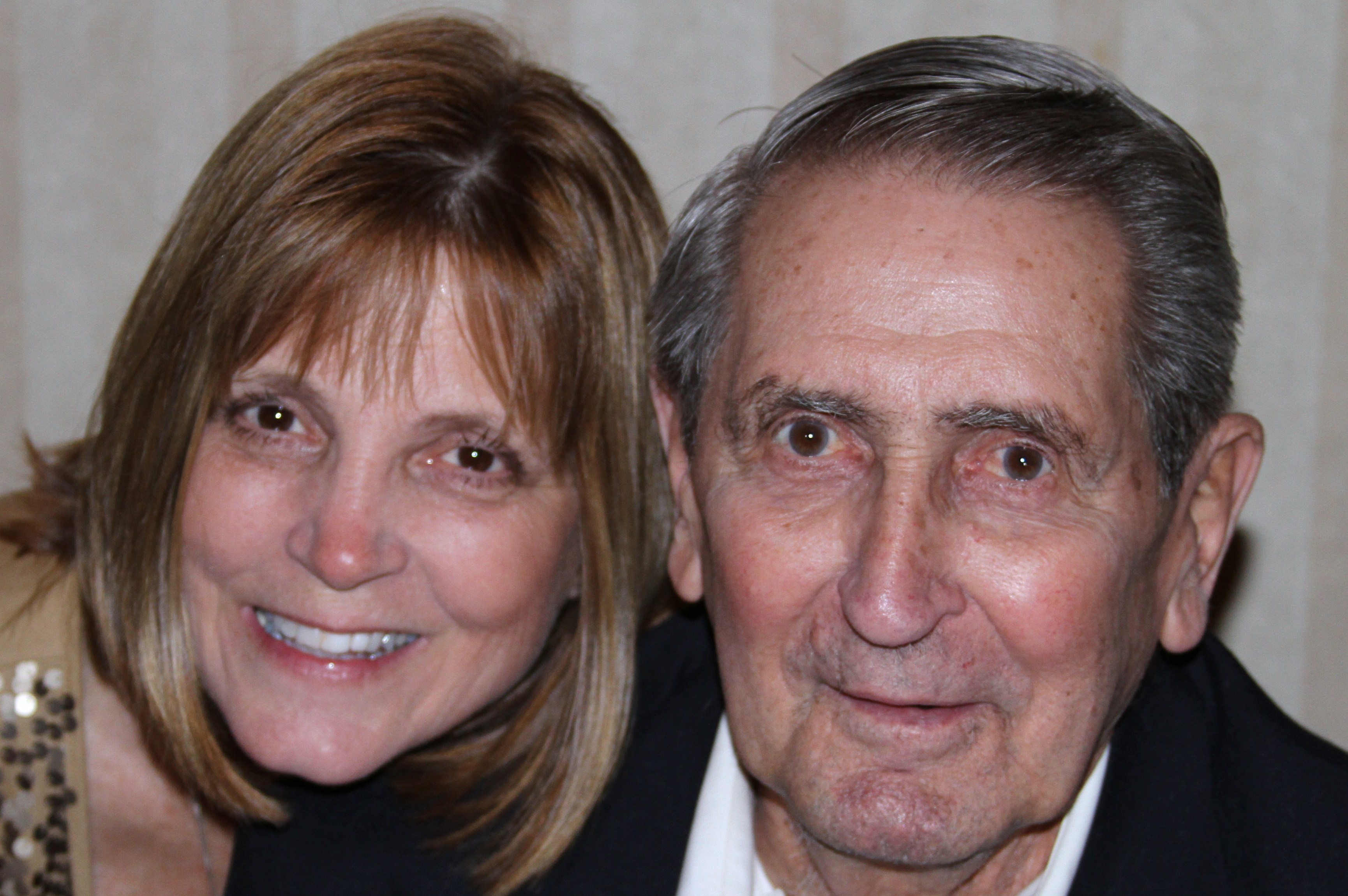
Dad

Dad

Pause On / Pause Off

Pause on.

This past September weekend was a very busy one.  For five days straight, I spent time with many, many – say it again – many family members and friends, met with tons of acquaintances, and completed all kinds of activities that brought all walks of my life together.  People were in and out of my home.  We served meals, refreshed the laundry, and arranged and re-arranged our home as needed.  The purpose of all the activity was pure enjoyment with every motion made set to encourage positive results.  And I honestly believe that at the end of this particular stretch of time, fun was had by all.

But, at the end, I paused . . . and I am still pausing.  After all was said and done, I knew that I needed to do a little self-check on the lens that I use to see everything.

Through my usual lens, my life is rather rosy.  I have four wonderful children –  who are all well-educated, who are doing well financially, and who have fairly rosy lives themselves.  I live in a very comfortable home – and want for nothing.   I am surrounded by all that is good.  I travel . . . a lot.  I spend a couple of weeks in the mountains, a couple weeks on the beach, time in various metropolitan areas, and time in great Americana spots.  I have favorite breakfast spots that aren’t just at the area covered by my kitchen table.  Two very nice folks clean my home on a bi-weekly basis.  I don’t mow the lawn.  I have easy access to health care. My cars are bright and shiny, are parked in a garage, and when broken are repaired by someone else.  I have money in my checking account at all times.  My retirement plans are going well.

I exercise everyday – because I have time and the means to do so.  I use a dry cleaner who brings my stuff to my house when it is ready.  A young person delivers the newspaper to my doorstep, daily.  I own and display seasonal decorations, and have storage space to keep them looking new and organized.  I have a big, giant family.  And all of my brothers and sister have homes that have at least four bedrooms, countless bathrooms, two car garages, and extra refrigerators. And of that group, several of us have advanced degrees, all of us have undergraduate degrees, and all children among us have gone to college or are planning on going to college; and, all have parents and relatives who are totally and passionately involved in their lives – supporting them every step of the way.

I have more than one pair of tennis shoes – just for running.  I save one dollar coins on a whim, wear matching underwear just because, and have a ginormous backyard deck.  My home has air-conditioning, tons of extra toilet paper, a pantry full of food, high-speed internet, and kitchen gadgets for every and any purpose known to humankind.  My wardrobe changes with the season.

And due to all of this  –  coupled with all the motion and commotion at my house during that five-day period in September –  I paused.  For quite awhile.  For, there is another more challenging lens that is often obscured by my rosy one previously described – especially when I am in the middle of such frenzied activity.

I paused because I know and needed to remember that there are thousands and thousands of folks who are hoping to find food for tonight’s dinner meal.  They don’t have homes or cars or educational opportunities.  They certainly don’t have decks or seasonal decorations, or storage space, matching underwear, or kitchens.  They struggle with family and friends.  In fact, there are children begging for attention from anyone – any family member – any friend – and there are adults begging for the same.  The only clothes they have are the items they are wearing.  They can’t save coins . . . they can’t save anything for their immediate needs are too great.  They use pencils because they can’t afford pens.  The only vacations they take may be those taken during their best daydreams.  Newspapers aren’t delivered, garages aren’t attached to their homes, and they have no need for extra refrigerators as they have a tough time filling one, let alone two. Healthcare is a challenge.

So I paused.

Through the summer of 2012 in another part of my world,  I have been intentionally pondering  over the term creativity.  What does it mean?  Where does it come from?  How can I learn to open myself up to becoming a more creative individual?  Where is it most prominent?  Who are the experts?  How is it reflected in me and how can I strengthen my focus on it.    And suddenly – because I took a moment to pause – I may have gotten closer to the answers.

In all my wondering about and wandering with creativity, I might have been on an erroneous path.  While pausing, I had a moment to reflect, to consider the other side.  And I learned that I have examined creativity using only one lens. . . instead of many.

I am finding that when I look through the lens that is not so rosy, I see the creativity that people use just to make it to tomorrow.  I see folks finding solutions to problems that I can only imagine.  I see folks doing things differently not because of want, but because of need.  I see folks making their worlds keep spinning in any way possible, and hoping to affect change in their lives by doing so.  Their creativity is ingenious.  And as far as I can see, their greatness in this area has to come from their ability to face adversity and survive.

For me, I learned that the source of creativity is more than just one lens.  It is more than just two, and very likely it is found in hundreds of lenses. I just need to make sure that my eyes are open and ready to see.

Pause off.

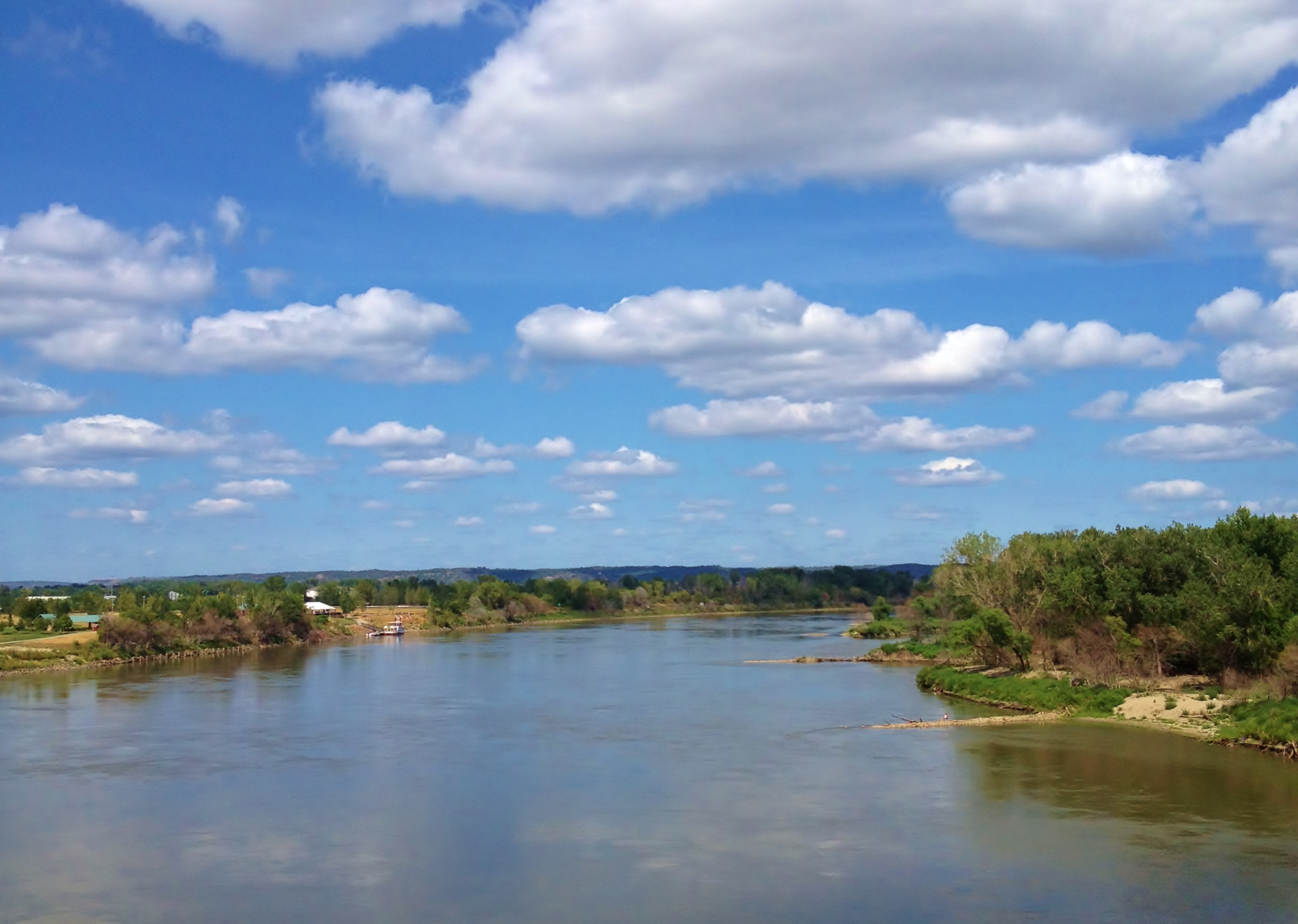
The Bob Kerrey Pedestrian Bridge in Omaha, NE, is a great place to ponder the intricacies of creativity . . . or any other subject!

The Greatest Love of All

I decided long ago, never to walk in anyone’s shadows.  If I fail, if I succeed – at least I’ll live as I believe.  No matter what they take from me, they can’t take away my dignity.  Because the greatest love of all is happening to me.  I found the greatest love of all inside of me.  The greatest love of all is easy to achieve.  Learning to love yourself is the greatest love of all. – (Greatest Love of All)

Michael Masser and Linda Creed wrote the music and lyrics in 1977 with the most famous version of it recorded by Whitney Houston in 1985.  I listen to it often . . . usually while starting my evening run.  It has a good beat. Houston has a good voice.  And the song . . . has a great meaning.

I grew up in the 1970s, graduating from high school and college during that decade.  And that decade included the end of the Vietnam War, Kent State, Apollo 13, Watergate, Mark Spitz, Love Story, Soul Train, the skateboard, and hot pants. That time period was a strange mixture of longing for the simplicity of the past while yearning for what might be great changes in the future.  It was also a mere fifty years since the United States granted women of the United States the right to vote.

During the 1970s, women weren’t exactly encouraged to pursue their dreams.  It was certainly legal to go to college, bring home the bacon and fry it up in the pan.  But . . . it wasn’t readily accepted as a way of life.  Change was still far off on the horizon.  We, as women, could see it, but it was distant, and fuzzy, and always just a bit out of arms reach.  But we, collectively, and I, individually, moved on, just putting one foot in front of the other, day by day, week by week, year by year.  Nothing was perfect, but it wasn’t chopped liver either.

What became clear to me early on . . . is that I had to believe in myself – believe that I could succeed, believe that I would be okay if I tried and failed, believe that I, alone, and no one else had control of my destiny.  That’s not to say that I stood by myself 100% of the time, but it had to start with me.  It had to start somewhere deep inside my world and gain momentum along the way.

The only way folks like Sandra Day O’Connor, Margaret Thatcher, Indira Gandhi, Mother Teresa, and my very own mother achieved the greatest they achieved – as I can unwind it –  was, first, loving themselves.  Not selfishly.  Not thoughtlessly.  Not inconsiderately. But supportively, sensibly, and courageously.  They seemed to know how to lead themselves before gaining the skills used to lead others.

Via Houston’s voice, Masser and Creed tell  us – regardless of gender – “never to walk in anyone’s shadow.”  They are certainly not the first folks to tell us so, but they do so in a simple, direct way.  And, in the previous stanza, they tell us to let the children’s laughter remind us how we used to be.

My six-year-old grandson is carefree, confident, happy, inquisitive, and has absolutely no fear of failure.  In fact, in his eyes, there is no such thing as failure – only unusual successes.  He definitely isn’t walking in anyone else’s shadow.  I am not even sure he has the ability to do so.  He certainly doesn’t have the desire.  He loves himself for himself.  Children are models in that regard, our inspiration.

I paused while running and took a photo of my shadow.

Though I have slowed down a bit with this activity, throughout my own children’s college years, I would routinely email the lyrics to songs like The Greatest Love of All to my sons and daughter, usually on what I called Motivation Mondays.   With each email, I would remind them of their own personal greatness and implore them to consider their talents in order to make a difference in their world, in my world, in the world.  My purpose behind Motivation Mondays wasn’t to stroke ego or make sure  that all 18-22 year olds related to me were attending college classes as scheduled; rather, it was to nurture the ability within them, within all humans to love ourselves in the best way possible.

For me, I hope and pray that the struggles of the 1970s are nearing the end, and that the solutions to today’s struggles are easier to reach.  I hope and pray that my own children have the Greatest Love of All, and that they recognize that it is being modeled for them every day, in every way, by the gentle giant of a six-year-old who is a fearless soul at this point.  And finally, I hope and pray that I continue to forge my own path, my own destiny, never walking in anyone else’s shadow.

It’s a story that hasn’t been finished.

Things I Have Long Since Forgotten

When I put my mind to it, I realize that I have long since forgotten perhaps more than I remember.

. . . the names of the Shakespearean tragedies  . . . the number of elements on the periodic table . . . the distance from the earth to the sun . . . why humans hiccup . . . the Gettysburg Address . . . the Pythagorean Theorem . . .

Throughout my first twelve years of education, rote memorization was a way of life.  If it could be memorized, the good Sisters of Our Lady of Fatima Grade School and St. Thomas Aquinas High School required it.  There wasn’t a week that passed without my brain being stretched in order to set something, usually something I perceived as complicated, to memory.  It seems like I was routinely required to retain and recall all kinds of formulas, poems, definitions, conjugations, lists, songs, instructions, passages, speeches and prayers.

. . . the 44 United States Presidents . . . the Greek alphabet . . . Maslow’s first name . . . the hierarchy of biological classifications . . . the lyrics of almost any song . . . the novels of Mark Twain . . . the Latin roots of the verbs of action . . . the I have a dream speech . . . PI and its uses . . .

When I think back to the laundry list of things I memorized and fast forward to today’s list of thing I have long since forgotten, it’s a little frightening.  In my neck of the woods, what fifth grader didn’t have to recite by heart the Preamble to the U.S. Constitution? What second grader didn’t have their multiplication tables memorized? And what Catholic high school senior couldn’t recite the books of the Bible – New and Old Testament without flaw?   But on some levels, today, I may be hard pressed to ace all that I once knew with ease.

. . . a natural minor scale . . . the names of bones in the human body . . . the rules of probability . . . the expeditions of Ferdinand Magellan . . . the kilometer to mile conversation formula . . . the nations of the United Nations . . . the members of the Dow . . . why there are lunar phases . . .

From 1962 to 1974, my life included many evenings of tough love studying to ensure that not only did I memorized everything aside from the ingredients of the nearby pickle jar, but so, too, did my five siblings.   I can still hear the ‘listen and repeat’ mantra emanating from family and friends – hoping that all that entered my head stayed in my head.

. . . the list of constellations . . . Juliet’s speech from the balcony . . . how to find a square root of anything . . . the NASA astronauts . . . prime numbers up to 100 . . . the periodization list . . .

During my college life and beyond, the time spent memorizing seemed to diminish.  Perhaps I had committed everything that I needed to commit to memory. (It’s a nice thought, but even as I write that one, I doubt it.)  Perhaps higher education was moving me beyond remembering towards understanding, applying, analyzing, evaluating, or creating.  (That’s a lofty thought.)  Or perhaps I just ran out of time (which is the most likely explanation),  for memorizing cannot be accomplished without a generous allotment of available minutes, hours, days.    I know, however, that time spent on memorizing is time well spent.

As evidenced by what occurred on Friday, May 11th, 2012.

As a lifelong educator, I have attended all kinds of graduation ceremonies; and each ceremony has its own flair of the sun . . . its own flash of sparkle . . . its own best moment.  But in all that I have witnessed, nothing has even come close to May 11, 2012.

The pomp and circumstance of this particular ceremony was in full swing.  The National Anthem had been sung, the faculty awards given, the distinguished alumni honored, and the presidential welcome complete.   Next in line was the speech from the young student trustee.  The graduates were poised for listening, but as always, their hopes were for something short and sweet.

Kiersten took the stage with ease, cap and gown swirling around her.  She strode to the podium, and much like all earlier speakers, her prepared notes were waiting for her.  And she did pause momentarily to open them.  Then, with striking confidence, she gazed out into the audience and began her address.  Within seconds, the audience – which filled the field house beyond capacity – came to the realization that those notes were going to go unused, because she had – in preparation for the occasion – committed her entire speech to memory.

And it was stunning.

No cue cards, no teleprompter, no power point, no reading from notes, no magic tricks . . . just Kiersten delivering a speech for the ages.  And as she finished and left the stage, my mind wandered back to the times and moments that folks asked me to memorize something, anything, everything.  I could hear Sister Mary Vincent loud and clear telling a class of eight year olds that even though I didn’t understand it today, in the future, I would see the power of a speech memorized well.  And it may have taken a long time, but on May 11, 2012, I saw just that.

I am no stranger to great speakers.  It has been my privilege through my type of employment to hear a slew of tremendous folks speak – among those:  President Clinton, Senator Ted Kennedy, Governor Jeb Bush, Dr. Mark Milliron, Ms. Eva Mozes Kor, Dr. Freeman Hrabowski, Ms. Erma Bergmann, Mr. Jim Collins, Ms. Jean Driscoll, Mr. Lou Henken, and many, many more.

From that particular list, I can remember not only the essence of their oration, but their presentation style as well – each one having a different type of appeal, a different type of approach, evoking a different type of emotion.

What was common, however, is my impression that all of them had memorized their entire presentation.  Moment for moment, word for word, they had it memorized.  Some spoke at great length.  Some were humorous.  Some were aided by technology.  Some were asked to speak at the very last moment, but regardless seemed to be totally prepared.  One took my breath away.

Today, I thank my lucky stars on two levels:  one that my life has been filled with opportunities to memorize more than i can ever remember, and two that I was among those in attendance on May 11th, 2012 – where I witnessed excellence.

As you can see, I was truly having a great time at Graduation 2012! Many thanks to all who made it so . . . memorable!

The Pearl Harbor Firefighters

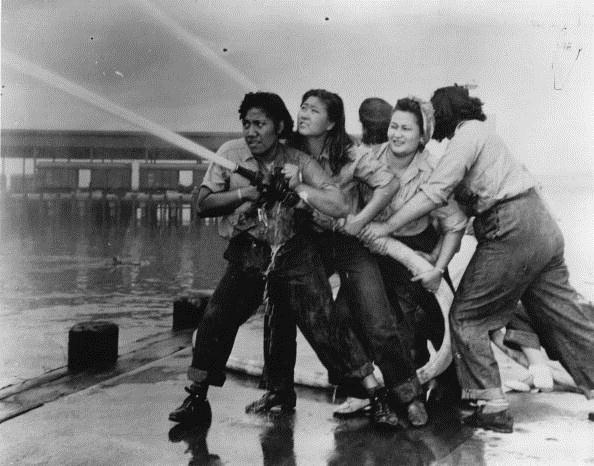
WOW.  I look at this picture and am speechless.  WOW.  There are certainly a thousand words in me that describe what I am thinking, feeling, seeing when looking at this photo, but the first word coming to my mind is . . . WOW.

WOW.  The sirens must have been blaring . . . fires roaring . . . death and destruction surrounding all. For all I know bombs were still falling.    The sky above looks to be full of hazy smoke, most likely residual from the deadly attack.

Though the three faces that I can see look intent, it is the hands of all the women that truly show intensity.  All fingers holding onto a 1941 fire hose with all the power they found deep within themselves.  Side by side each hand forming a chain of strength enabling the women to hold on . . . tight . . . knowing that their success could save lives.  WOW.

And the courage of these women.  Their ‘caution to the wind’ actions – working to save the lives of others while their own lives could have been in danger – shows courage.  Their fight to contain a stronghold on a monster hose knowing quite possibly that their physical strength only existed due to their number – shows courage.   Their desire to help those in distress – placing their own needs second – shows courage.  I often wonder what my response would be . . . only hoping that I would be a person capable of fighting fires.

Their faces are mesmerizing.  Their eyes seem to be willing the stream of water to reach its destination.   Their jaws are rigid with determination, desperation.  And though the ground below their feet appears to be slippery and unstable, their legs are planted firmly, muscularly on the dock, no trembling or quivering . . . hoping against hope to end some type of eminent suffering . . . to bring some type of calm to the firestorm. WOW.

Within twenty-four hours, President Franklin D. Roosevelt addressed the nation telling all that December 7th, 1941 would be “a date which [would] live in infamy.”  2,401 Americans were killed.  1,282 were wounded.  188 U.S. aircrafts were destroyed.  Family members, friends, colleagues, co-workers, and buddies – all walks of life were among those who perished.

Though I was not alive, I am sure that the United States stood still on that day . . . at that time . . . at that moment.  And although there is plenty of movement in the photograph, to me it renders an eerie, chilling stillness.  It is a quiet portrait, wordless.  The women are frozen in time, perched on the edge of the harbor, working with dazzling silent commitment.

WOW. I stare at this image and my mind wanders to what may have happened in the frames before this shot or what may have happened in the frames after it.  How did these women assemble?  Who called them to this duty?  Why them?  What was the chatter among them?  What were their skills . . . their strengths?

For some reason, after a good length of gazing at it, I want to know their names.  Who are they?  Where are they now?  What was their connection to this particular moment other than being in Pearl Harbor on December 7th, 1941?  What doesn’t this photograph tell me about them?

So often as tragedy strikes, the sharing of detail is too difficult.  Sometimes, it is only through pictures – like this one – that those of us on the outside catch a glimpse of what those folks on the inside experienced.  The United States may be blessed to have this piece of history as documentation of the attack on Pearl Harbor – for part of infamy is remembering a moment such as this, for better or for worse.

Interestingly, the composition of the Pearl Harbor firefighters reminds me of another popular photograph: Raising the Flag on Iwo Jima.  A Pulitzer Prize winning photo taken by Joe Rosenthal in 1945 during the Battle of Iwo Jima, it depicts six United States soldiers raising the stars and stripes in victory on Mount Suribachi.

The two photos were taken less than four years apart – one in agony and one in victory.  Both capture heroic actions – one on the part of a group of young women and the other a group of young men.  Each photo defines what I consider to be patriotism . . . our drive to protect freedom, our concern for each other, and our common goals as a nation.  Today – both photos are inspirational: they are true commentaries on the American spirit.

Though I was a very young child at the time, I have often heard, studied and can recall the words of President John F. Kennedy via his inaugural address in 1961 – a mere twenty years after the attack on Pearl Harbor:  “Ask not what your country can do for you, ask what you can do for your country.”   These words often give me guidance as I work through the challenges of daily life.

As the challenges unfolded on December 7th, 1941, I can’t imagine that the women in the photograph had any time to ask themselves or anybody else what they should do. No time for conversations or debate. Rather, I have a feeling that some type of instinct drove them to the precipice of the harbor, directed them to find a way to battle the torrent blazes around them, provided them with the courage to persist, and encouraged them to stand firm in their attempt regardless of the horrific circumstances of the day.

I just thank my fifty lucky stars for what these women did for their and my country.