How Could I Not

How could I not write about it.  It has been on my mind since it happened.

June 12th, 2016 –  forty-nine people lost their lives.  Fifty-three individuals were injured, are certainly still injured.  Hundreds of parents, spouses, children, and family members are still distraught, in shock, mourning, grappling with loss and change. Thousands of friends and acquaintances are reaching out, hoping that they can in some small ways be helpful.  And I, along with the rest of the United States, am wondering what is my role. . . what should I do.

And like the rest of the world, I agonize over this type of senseless violence.  Orlando, Brussels, Paris, Boston, and now I add Istanbul – and these are just the ones that readily come to mind – not all of them.  Gun violence, and bomb violence, and terrorism, and death and more death. It just seems endless.

In this particular area, I feel like I am falling into a great, giant abyss – tumbling downward, with nothing to latch onto to help me stop.  It just seems so far beyond my control, I have no tangible, workable, magical solutions to offer.  I believe myself to be a learned person with the desire to end the violence, and the willingness to put in the effort to do so, but I have no clue as to what I can do –  that will be effective.

As is an American tradition, there are folks out in the big world who are suggesting that we more emphatically implement the old policies, or create new and improved policies, or throw out all existing policies and start again. I watched the federally elected in our country hold a sit-in as they fought to figure out what to do.  I have heard calls for more, as well as for less, gun legislation, for more, as well as for less, immigration policy, for more conservative as well as more liberal solutions.

My heart is fine with any of those choices.  Whatever works best, just do it.  I don’t care how we approach this issue; I just want it solved to the best of our ability.  I want a solution that reduces violence and injury and death.  I am for every solution that does and against anything that does not.

My head, however, is telling me that there might not be a solution.  My head is telling me that while we solve the criminal challenges that are in front of us, there are new groups that are part of the evil empire that are waiting in the wings with more giant, terrible acts.  My head hurts just thinking about the absolute quandary that exists.  Who are these people and how do we abate the evil that they create?

Over this year’s July 4th holiday, which this year in the Midwest can only be described as time off to watch it rain like no other, I had the opportunity to watch a documentary on the history of the United States – the American Revolution, the Westward Expansion, the Civil War, and on and on and on, all the way to present time.

I think I learned something interesting, something that may be able to shed some light for me as I tumble down in that dark abyss.  What I learned may not be the great solution to this problem.  And what I learned isn’t some extraordinary AHA type moment. It is small and rather inconsequential, but for me it was a bit powerful.  I am not sure if it will be helpful to anyone else other than me, but I am willing to share it none-the-less.  It is something universal and something that I hadn’t thought about in quite some time – and certainly not to the extent that I have pondered about it right now.  It is positive and it is a great fallback position to consider when everything else is failing.

We Americans . . . we are a resilient bunch.

Centuries ago, folks fought and gave their lives for independence.  Whatever truths we held to be self-evident, they came with a price.  Great people, good people died.  Innocent people, unsuspecting people died.

Centuries ago, the United States fought the United States, not for independence, but for unity, and human rights, and people died.  In fact, more people died in the Civil War than any other US moment in time. It was a time of great loss with battle after battle after battle.

Before my time, folks fought in World War I, World War II, and the Korean War.  My experience includes the Vietnam War and everything that has transpired since, including September 11th – a day of infamy for me. Whether a war or a random act of violence, people have died.

Yet our country survives.

We are an amazing and stunningly resilient bunch. We could close up shop, give up, and become a lawless, crime-ridden society. Some countries have.  We could stop our quest for goodness and justice, and opt for something with less effort.  We could choose to walk on the wrong side.

But, we don’t.

We carry on.  We battle each other on who should be in charge of our country.  We fight over which solution has the most potential – even if all of the solutions are on the weak side.  We are emphatic about our teams and dig in when considering compromising with each other.  We chastise each other’s philosophies and spend too much time and money duking out who is best fit to lead.

And it finally has dawned on me that there is something that I should be doing, that is expected of me, that does help when facing tragedies like Orlando, a daily part for me.  Though that circumstance occurred miles and miles away from me and I lost no relative, friend, or acquaintance, it is imperative for me to carry-on, to support the idea of a shared American identity, to remain faithful to the elimination of evil at all turns, and to dedicate my time and energy to those issues, ideas, and paths that generate the growth of all that is good, even if I am just sitting in the bleachers seats, watching the action from far, far away.

Resiliency is my heritage.  It is what has preceded me, what needs to follow me, and as an American, what is expected of me.

And America, count me in!

July 4th IBK

July 4th, 2016 Fireworks

Magic Journeys

She asked me if I would like to play tea with such an earnest voice, I had to just say yes. I watched her run quickly to the next room and carefully removed the teapot from the shelf.  Once back in the kitchen, she climbed up to the sink and filled it with water.  My instructions were to sit on the floor.  In her mind – and then in  my mind – the room transformed into some other unknown place where she and I were drinking lemon flavored tea and eating biscuits (which looked suspiciously like water and jelly beans).  But to us – at that time – it was truly tea and biscuits.

Several hours later, after she and I had left that moment, and after she had left my home, I  took off for my daily run.  Tennis shoes – check.  Hair tie – check.  IPod and headphones – check, check.  My body was ready to go, but my mind was telling me that I was tired, that I didn’t have time, that the weather wasn’t the greatest, that I should just forget it and call it a day.  I was ready to turn around, give up on the exercise idea, head back into my house for a little “R & R” or maybe a lot of “R & R”.

Mindlessly, I flipped on my music and began listening to the Sherman Brothers tell me about a magical world . . . the world between awake and asleep, between real and pretend. Magic Journeys.   I watched a bird skim the sky overhead and fly beyond the treeline.  Slowly but steadily,  I was again transformed to another time and another place.  This time, however, it wasn’t sitting in a castle drinking tea and eating biscuits.

With my imagination at work – I began to picture myself as a quick and speedy.  I could see myself many moons prior, running as if nothing could stop me.  The more the music played, the more I imagined myself, not being tired, or unmotivated, but having that trail-blazing, never say stop exercising attitude.

It didn’t take me long to figure out that my mind was rewriting the moment.  I spent the next hour running what I thought was like the wind!  Not because I was, for I assure you that my speed right now is generally the same – somewhere between slow and slower, but it felt different.  And I finished.  And I smiled.

I have spend a great deal of time thinking about those two moments.  The focus, however, isn’t on the tea party or the run, rather it is on my imagination.

As a child, I recall using my imagination all of the time.  Cardboard boxes became castles.  The backyard soccer game became the Women’s World Cup.  I was Peggy Fleming when I put on ice-skates, and Carole King when I played the piano.  I directed orchestras, danced on American Bandstand, flew, had the best presidential acceptance speech, and walked down those fashion runways like a pro.

Children use imagination all the time.  The world encourages it.  But somewhere within my childhood, I packed up that imagination and headed for adulthood.

I admit that it might look crazy-funny for me to sit in a cardboard box, with my soccer ball, ice-skates, piano, baton, ballet shoes, wings, type-written speech, and platform shoes  – all day long.  And I am thankful that adulthood has taught me that I need to be a little more realistic that my five-year old self.

I suppose what I am trying to learn is which parts of imagination are behind me and which parts are still in front of me. Mark Twain tells me that I can’t depend on my eyes when my imagination is out of focus.  And Albert Einstein tells me that imagination is more important than knowledge.  For knowledge is limited, whereas imagination embraces the entire work, stimulating progress, giving birth to evolution; and strictly speaking, it is a real factor in scientific research.

For the remainder of 2016, I am going to dust off my imagination.  I am going to look at it like one of the most versatile tools in my box and use it every change I get.  My approach isn’t going to be via the tea party model (however, I am not ruling anything out), but more towards the running/transformation model.

I want to look more at what can be than what is.  I want to see the potential rather than seeing the status.  I want to practice imagining all that can be – in all facets of my life – just to see what might happen.  I want to learn more about what happens when imagination is let loose.  What happens when I just unleash it and give it a go at all turns. I want to wonder more about everything, just to see the results.

I have no idea where this idea may take me.  I can only imagine.

IMG_1312

A recent imagination moment.


The Fine Wine Dine

I can’t explain why.  I really can’t.  All I can say is that the evening stood out.  It was a first among equals night. It was one of those moments . . . a moment that as it happens everyone knows that it is destined to become a memory.

Ten of us had gathered.  All of us were friends.  Each of us had a strong connection to one or more of us. Yet none of us were childhood friends with all of us.  Our interests were diverse – nature, health, the spirit, the spirits, enterprise, numbers, learning, teaching – with a lot of some and a little of others.   We met at twilight – the time of magic between daylight and darkness on a cool crisp mid-winter evening.

Those hosting had planned and prepared and welcomed the rest upon arrival.  Though all of us had seen each other over the past couple of months, our greetings were as if we had not. Handshakes, hugs, kisses, pats-on-the-back, smiles – it was a tete-a-tete for ten that started the evening out perfectly. Again, I can’t explain why, but from the moment our feet crossed the threshold of the door, the aura of the making of a memory began.

Our intent was simple – food and wine and conversation followed by more food and more wine and more conversation.  The emphasis here should be, in particular, on the conversation about the wine, of which there was a great deal, for nine of us were learning from the one of us who was a master in that area.

For this year’s fine wine dine, the table setting included numerous wine glasses which to me looked like birds on a wire – straight, dainty, orderly and whimsical.  In addition, each setting included two black goblets, mysterious in both color and shape.  The first four wine flights to be served at the table had been pre-poured.  So all was ready.

However, like most gatherings, our first moments were spent in the kitchen.  We stood, and mingled, and chatted.  We listened and learned about recent trials and tribulations that occurred in our lives.  We watched as those cooking finalized the meal with brief finishing touches.  We were served our first wine flight coupled with a much appreciated antipasto.  Most importantly, we were pausing our busy lives for something beyond the ordinary. Worked stopped.  Fun ensued.

As we moved out of the kitchen, we soon learned much more about the mysterious black goblets.  Regardless of our viticulture ability – (me, a mere novice) – we were to identify each of the goblet’s contents without the ability to see it.  A better name for this portion of the evening might be the fine blind wine dine, a puzzling, curious challenge that had nine of us laughing on edge.

And laughter kept coming, from beginning to end.  We laughed at our ability or inability as hopeful wine connoisseurs.  We laughed at ourselves, at each other, at our futures, at our days gone by, at everything and anything.  At times, we laughed until we cried. We just laughed.  For hours.  For fun.  With friends.

Hours later, as we all departed, we seemed reluctant to cross over that threshold and head in the opposite direction.  If I had thought about my thoughts at that time, I probably was thinking about my luck – to be with a group of friends for a moment of fun on that mid-winter’s night.

I can’t explain why.  I really can’t, but I am going to try.

Like everyone else, there are twenty-four hours in my day and seven days in my week.  Of those twenty-four hours and seven days, the moments that I can recall are few and far between.  I remember the spectacular – the weddings, the graduations, the holidays, the birthdays, the anniversaries.  I remember the somber – the deaths, the funerals, the illnesses.  Most of my memories revolve around my family who are the individuals with whom I share hours upon hours upon hours of my time.   My mother, God rest her soul, has been gone for many years; yet, I can still hear her calling my name from the days of my childhood.

And somewhere in those memories now sits something a little bit different . . . unusual . . . unique.  It doesn’t involve the spectacular or the somber or my family.  It isn’t something of tradition or tragedy.  It isn’t marked by a date on the calendar or tied to a sibling, an aunt, an uncle or my parents.

It is a moment in my life that I spent with friends, good friends, doing something rather ordinary in an extraordinary way – eating, drinking, laughing, talking – personified.  The exact stories we told and why we laughed . . . I am not sure of it now.  I think it was all funny, but . . . then . . . it could have been the wine speaking.

What I am a little more sure about is the value of good friends.  I may not know my wines (to even the basest level of knowing the difference between red or white wine when placed in a black goblet), but I do know that friends are treasures beyond words.

Lesson learned. Enough said.

IMG_1093

The Mysterious Black Goblets

Don’t Hurry Life

August by birth, Gus in life, my grandfather was an interesting man.  He was only alive and in my life for what seems to me now as a brief pause, a short stay;  but that time period was definitely a most impactful one.

He often described his childhood/boyhood as a time of hardship, a time of great challenge, where he had to use both his brain and his braun to make it through each and every day.  With jobs before and after school, and school not the focused priority that is seen in students and parents of today, I listened to his stories and imagined the life of a youth with more responsibilities than I could ever imagine.

Conversely, he described his manhood as nothing shy of glorious, as a time of great adventure, still using his brain and braun to make it through each and every day, but in a different more creative, fun-filled, devil-may-care way.  I listened intently as he regaled stories of danger, pride, cleverness, handwork, risk, and exciting uncertainty in a world of change. He was fetching in looks and ingenious in nature. And he was unusual . . . in ways difficult to pinpoint, best described by me as a grandfather of many mysteries.  He seemed to often times walk the fence and teeter between that which was pure and good and that which was in a more gray area.

His unwritten biography of today contains a plethora of stories detailing escapades with individuals from shady backgrounds, from moments of both average and dangerous shenanigans, from times of walking on the ethical border and times of not. There were moments told when he escaped death, found fortunes, relied on lopsided handshake agreements, bet against the house and lost, and settled a variety of scores.  With decades having passed since his death, and even more decades having passed since the origin of the most exciting of adventures, I find it difficult to decipher between the actual truth and the fond folklore nature of the memories we share about Grandpa Gus.

Throughout all these cloudy, misty, and foggy memories that now make up the ever-so-exciting version of his life story, however, there is one that is crystal clear for me. It was a quick moment that he and I shared with little fanfare at the time. There was no particular detailed or dramatic buildup before it and very little following. It was a granddad/granddaughter moment that happened on a sunny autumn day following a quiet, uneventful visit between the two of us. I never expected to create a memory at that time, but . . . we did.

From his hospital bed near the end of his time with me, he leaned towards me and told me firmly, “Don’t hurry life, Debbie.”

At that time, I was starting my own adventures and was clearly in a rush to be whoever I was going to be and do whatever I was going to do.  I must have been on a visible mission to get to wherever I was going as quickly as possible, as it was so very obvious to him.  I wanted to work, to play, to find love, raise a family, create my own fortune, and figure out how to walk my own ethical line. I wanted shenanigans and escapades, and excitement and crazy-funny moments  that would eventually create folklore for me.

I had stopped by to see him as I was coming and going from one activity to another.  He, on the other hand, was unable to come and go any longer.  His movements were limited to those of a man reaching the end of his time  – a man who knew he had reached that moment – a man who was no longer rushing, but rather waiting.

And he told me firmly, “Don’t hurry life, Debbie.”

I often think of that moment, the time he uttered such a short and simple phrase – that left me with oh-so-very-much to consider.

Am I always in a hurry?  Do I stop and appreciate the ‘now’ as much as I should?  What life pace is the best?  Who determines the speed and how is it determined? Is there something intrinsically better about the slow over the quick?  And for goodness sakes, how in the heck do I slow life down?

It wasn’t until recently that I think – and I am still not sure, just sayin’ – that I understand a little about what he was trying to tell me.  It is not that I haven’t pondered those words over and over and over for a very long time.  I have.  It is more that I have finally reached a point in my life that they make much more sense to me.

From his hospital bed near the end of his time with me, I held his hand and he mine. His was dark and wrinkled, mine not so.  His grasp was faint and slight, mine not so. I looked at face and he gazed at me with tears wallowing in his eyes. His life was near its end . . . in the home stretch, and I knew he wanted so much to tell me that I needed to enjoy every moment I possibly could throughout my life, that I needed to work to be all that I could be while appreciating everything that would occur in my story, and that I needed to stop and smell the flowers along the way for each step of life is more fabulous than the last.  Finally, he needed to know that I understood him perfectly and permanently.

And in a whispery voice that signaled both age and wisdom, in a barely audible tone, he told me firmly, “Don’t hurry life, Debbie.”

And I understand.

DSCN0997

The Flowers Along The Way


A Poem As Lovely As a Tree

I have never met a tree that I did not like.  In fact, there is something about them that takes my breadth away.  The budding in Spring, the flowering in Summer, the color bursts of Fall, and their barren branches throughout all of Winter – all stages amaze me.  Simple, complicated, tall, small, evergreen, deciduous, alive, dead – I like them all.

Though I do not live in the heart of a forest, I am fortunate to have a south facing bedroom window that overlooks the woods.  Every morning and night, I take a peek at the trees – just to see what is happening.   Yet, the time spent double-checking those trees twice a day for 30+ years still hasn’t helped me with my general tree knowledge.  I have no idea what type of trees are out there – perhaps oak, or maybe maple, possibly walnut.  I’m just not sure. Dendrology isn’t my forte.

I know much simpler details. I know they have grown.  I know there are young ones and old ones.  I know their noise, and I know their quiet.   I just like them, all.

Growing up in suburbia America, my family had their fair share of trees.  There was the token large tree in the front yard, the evergreen trees that lined the house, and the three or four trees strategically planted in the back yard for shade.  As a child, I absolutely abused those back yard trees – climbing, building, hacking, pushing, breaking.  I did everything to those trees, but appreciate them.

Now, I do.

I enjoy the quiet they bring – not in terms of sound, but in terms of life.  There is something about walking through snow covered trees in the middle of winter – alone.  It is more than quiet.  It is calm and peaceful – two sensations that are normally difficult to achieve simultaneously but easy for me to find with winter trees. They offer no words of wisdom.  They speak only metaphorically. But for some reason their calm and peaceful quiet always provides a crazy-fun adventure.

I enjoy how they depict time – their uncanny ability to show me the circle of life in just a short twelve months.  With trees, I am reminded each year of how life moves from green to brown to bare to rebirth – a microcosm of the human lifespan.  From them, I am reminded that time is more than hours, days, weeks.  Time = seasons.  Not sure why I like this thought: I just do.

I enjoy what I have learned about anticipation. I anxiously await the blooming of the Bradford Pear trees that ring my college campus in Spring, and the show of color in the back yard woods each Fall, and even the gloomy bark-only look of those same trees in Winter.  I believe I enjoy the time of anticipation nearly as much as the time of arrival.

I know that in my wonderings about trees that I have certainly learned a little.  I have learned that there is beauty and majesty in most everything, that the world right outside my back window is utterly amazing, that the simplest of objects can cause the most complex of thoughts, that I clearly have way too much time on my hands, and am thankful that I do.

Happy New Year

IMG_0528

A Very Decorated Tree at the Missouri Botanical Garden

I Wore My Shorts Inside Out

I wore my shorts inside out. . . For at least ten minutes. . . While shopping. . . With my daughter. . . On vacation. . . In Florida. . . They were lined Nike running shorts. . . Black. . . With black lining. . . Trimmed in neon yellow.

I had just tried on some clothes in a local beach shop. When I put my shorts back on, I put them on inside out. And I didn’t notice. . . At all.

I walked fifty feet to the cashier, bought a couple items, and exited the store.

I turned to my daughter and said, “My shorts feel a little sideways,” . . . never looking down at them. But she did. Within seconds, we were laughing so hard, our eyes were blurry and our stomach muscles hurt.

I actually wore my shorts inside out for at least ten minutes while shopping with my daughter on vacation in Florida, and didn’t notice.

There is no doubt in my mind that wearing my shorts inside out was one of the goofiest things I have ever done. Somewhere I am sure there is a long list of other crazy funny actions on my part. But this one happened a couple days ago, so it has risen exponentially as my number one memorable moment.

I asked my daughter if she thought anyone else noticed. Her response was: “How could others not?” She suggested checking social media quickly for ‘crazy funny woman with shorts on, lined shorts on, inside out’.

As we were still laughing upon returning to our vacation compound, I willingly shared my faux-pas with the remaining assembled relatives. Wearing lined shorts inside out while shopping. There was no need to embellish the story in any way. It was crazy funny in its short form.

I didn’t have to share the embarrassing moment with my vacation family. It was a choice. My daughter, following a politeness protocol, would have graciously kept the story to herself. But I threw caution to the wind and shared it.

I truly believe that the world is crazy funny more often than not. At any given time, someone somewhere is doing something that is just flat out funny. Most embarrassing moments are hysterical if the owners can overcome the embarrassment.

But it isn’t that simple.

Too often crazy funny moments are transformed into anger, frustration, or fright.

I could have blamed my inside out action on the lack of adequate light in the changing room. Or on the minuscule time I had available to shop. Or on my daughter for not alerting me sooner. The whole event could have been framed in anger with me passing blame towards anyone or anything beyond me.

During the same vacation week, I watched a young boy, a new bike rider, at a speed of less than 1/1000 mile per hour ever so slowly run into my cousin. I saw my college age nephew toss a bocce ball that broke into two as it hit the ground. And my thin and trim brother-in-law sat in three beach chairs, breaking each one, within a three hour period.

Each scenario could have been framed differently.

My cousin could have scolded the bike rider. With acres and acres of beach, it was rather quizzical for him to – at a snail’s pace – hit her. The opposing bocce team could have cried foul as a very competitive game came to a screeching halt when my nephew’s bocce ball split. The tournament was effectively ended. And with a three for three broken beach chair track record, my brother-in-law should have been a little frightened to sit in anything. Bodily injury was a possibility and his cost of sitting on the beach was escalating.

Instead we turned to the crazy funny side.

The little boy hopped off the bike, backed away (slowly) and we chuckled. The bocce players looked at the two half moon pieces, laughed, and went for a swim. My brother-in-law trudged three times to the trash can to dispose of the next broken chair while we howled.

And the inside out shorts?

The next morning as I arrived on the beach, five of the sweetest nieces and cousins suited up in their now favorite inside out shorts, inside out lined shorts, for that one extra belly-busting roller coaster laugh.

All I can say is . . . well framed!

20140802-185411.jpg

Positivity – – -ness

“It’s all in his positivity – ness.”

That is the sentence my son uttered and the word that he used.  And when he did, I did the eye-squint double take.  I certainly know what the word positive means.  And I am fairly skilled with the meanings of the common english suffixes. But when he put them all together, I paused.

Since that moment, I have thought long and hard about it.  Positivity – ness. What does it mean?  What does it mean to me?  What should it mean?

Many days, I find that all types of challenges, problems, dilemmas, tests, trials, and conundrums that are just waiting to be explored, solved, eliminated, completed, deciphered, and overcome.  All too often there seems to be far too few hours in the day to properly address everything that is on my short-term list, never mind everything that is on my long-term list!

In fact though I am embarrassed to admit it – but not too proud to face it – two days ago, though it is not something I do often, I did take a small pile of moments out of my day to stop and complain – about the workload in front of me, the mound of seemingly insolvable problems around me, and the lack of my ability to succeed with any of it.  Keep in mind, that I know that I should not be complaining. I know my world is kind, great, and wonderful. I have family, friends, health, security, and more; but, for some reason I took five and whined.

Today, I remembered my son’s word . . . positivity – ness.  It swirled around my mind for a piece of time, and became a little, silent mantra that I heard most of the afternoon.  Positivity – ness. Positivity – ness.  Positivity – ness.  As crazy-funny as it might sound, that most unusual word – a word that seems to have one too many endings – is one very powerful noun.  And for now, it is becoming one stunning part of my vocabulary.

Most vocabulary words have rather concise definitions.  Though not a genius, I can generally rattle off the meaning of everyday, ordinary words lickety-split, and for words that are more complicated, I can usually find sufficient dictionary definitions that are ten words or less.   However, positivity – ness is neither an ordinary word nor one that can be found in the dictionary.  It was one that was created and developed by my third son, the artist.

What I think he meant by it is only a guess.  However, I have had some practice with such word interpretation.  For this particular word isn’t the first that he has invented.  In fact, he has a fleet of great terms plus a few phrases that he has brought to fruition.  Some of his words have brought howls of laughter, some nods of agreement, others quizzical head shakes, all of them joy in the moment. I have truly grown accustomed to new language additions from this most unlikely source.

Positivity – ness is a term, however, that has done more for me than just increased my language.  Its meaning isn’t simple nor short.  I think when that third son invented it, he knew it was a word to be comprehended and understood after a long period of thought. In fact, I think he expected folks around him to consider its meaning and use it appropriately, kindly, and confidently.

Positivity – ness is what it takes to make it through a day when there is nothing else to consider.  Positivity – ness is knowing that we are all challenged each day, but we are also blessed, and it is the blessings that should be the focal point.  Positivity – ness is learning to enjoy and respect the differences within each other.  Positivity – ness is expecting that we will work to change the world in many ways, every day, all of our days.  Positivity – ness is relying on each other for the strength we need when we can’t muster the strength we need ourselves.

Today, I found positivity – ness in the smile on the face of the guy who nodded his head as I jogged past him on a sidewalk near my home town university.  I heard positivity-ness in the voice of my oldest son as he told me about the birth of a friend’s child, seven pounds, two ounces, healthy.  I felt positivity – ness when my golf partner told me about the joy of helping her daughter move into her first new house.  I learned positivity – ness through all of these events and so many more, too many to list, that occurred in one brief twenty-four hour period.

I think the beauty of the definition of positivity – ness is that it can not exactly be defined.  More importantly, as I use the word – positivity – ness – I need to make sure that I use it well and use it right, while undergoing and valuing that quirky unknown meaning sensation.

The world is a great place, filled with opportunity and possibilities.  I hope that I can use my positivity – ness to reach out to others, to find ways to make the ails of the universe fade away.

What a great word.  What a great day.

Positivity - ness from the artist. 2014

Positivity – ness from the artist. 2014


The Family Dance

For me, it was that incredible memorable family dance moment.

The band was playing what could easily be described as the music of many – the type familiar and beloved by both the young and the old, not too loud and not too slow – music for the ages.

The reception was in full swing. And at that particular moment, I looked around and noticed it immediately: all of us on the dance floor were related. Brothers, sisters, aunts, uncles, nieces, nephews, sons, daughters, moms, dads, and grandchildren. All of us were happy, laughing, smiling, and . . . dancing.

Admittedly, we could have never described the dance we were dancing as organized.  It wasn’t refined, or symmetrical. It wasn’t pretty, cultured, or structured.  In fact, if analyzed, it was fairly clunky and chunky.  No one had rehearsed, and although the family talents are many, there are no professional dancers in the mix.  Just a group of folks ranging in age from zero to 80+ who were happy, laughing, smiling, and  . . . dancing.

And, of course, it wasn’t dancing in the very traditional sense.  Rather than pairing up in a Fred Astaire / Ginger Rogers type manner, the dance floor resembled more of a brood, a clutch, a gaggle, or a flock of individuals moving at the same tempo, in the same rhythm, using the same motions, to the same music, dancing that potentially awkward and always interesting family dance.

Large gatherings, such as this one happened to be, are not uncommon in my family.  With six siblings at the core plus twenty-one immediate cousins, all family gatherings end up on the large to very large size. Birthdays, graduations, holidays, weddings just turn into big, giant family celebrations. Luckily, in my family, each relative not only seems to know every other relative well enough to dance, but all family members seem to understand each other and have an over-arching acceptance of and pride in all kinds of similarities and differences among the group.

And with family dancing, it is the differences that can and do shine brightly.

At that particular moment, several folks in the teenage set were not only dancing, but singing madly along with the band leader, unabashed and unafraid of displaying their singing (or non-singing) aptitude.

One family member, who could normally be described as quiet and pensive, in a very brave move, having been coaxed to the dance floor by the young but married cousins, displayed some serious dance motion which added a new piece of delight throughout all.

An uncle was arm in arm with a tiny niece, tapping his foot, simultaneously swinging her in step with the beat of the music, while my sister and I held hands over the backs of our respective spouses with whom we were dancing.

As the music reached a crescendo, with bride and groom center stage – the rest of us broadly encircling them – our pop, a less than spry 80+ year old and only remaining grandparent, decided to join the group.  With his walking more of a chore than a pleasure, his participation surprised all of us.  We stared as he edged so gently and carefully towards the middle and watched as the wall of his grandchildren and children parted to accommodate and include him.

He didn’t know it at the time, nor did we, but he was dancing his final family dance.  And it was magical.

1781868_967544111892_1441363181_n

His dance moves were quaint and soulful.  They were deliberate and slow and filled with youthful joy. As he cautiously swayed to the sounds, his family did the same, holding our breath hoping he was successful and hoping the moment wouldn’t end. For as he danced, he exuded an aura that captured a lifetime of happiness in a family dance that he had helped to generate and foster.

Without a doubt, it was a family dance for the ages.

And though usually during the height of a wedding celebration in the middle of a dance floor surrounded by generations of family, it isn’t the moment to capture a serious life lesson.  But, that’s the magic part of it.

It was obvious to me that the family dance was not for a moment about music and movement.  The band may have played and feet may have shuffled, but it was very incidental to the rhythm of the event.  We were throwing away our challenges and our barriers.  We were delighting in the common family bonds that we had cultivated for many years, and we were family dancing.

I don’t necessarily like the following adage.  It seems tired and overused, but it also seems to be true that life isn’t a short sprint, but rather a long, long journey with moments of challenge, of concern, of worry along with moments of joy, hope, and celebration.

I journey with many family members with whom I sometimes disagree, often disappoint, and always seem to need more than I have the ability to help.  But with enough time and with lots of concerted effort, I am hoping that my journey can include that one last magical moment, that perfect storm, that extraordinary symbiosis, the family dance.

I just have to plan ahead and work hard.  I say bring it on!


You’re In Luck

“You’re in luck,” I said.  And with that, I turned to my second son and smiled.  “I don’t need my car tomorrow, and am glad that you can use it.”

It was a beautiful March evening; and, Timothy and I stood for just a moment in the driveway before he drove off.  As I handed him my keys, he thanked me and added just a little more. I knew the next phrase was coming well before he said it, but I looked forward to him saying it anyway.

“We’re both lucky, mom, aren’t we,” he said.  And I replied with a “Yes, son, we are.”

As he pulled away from my house with what he came to borrow, I began to consider all the times that he and I have uttered those phrases.  I tell him he is in luck and he tells me that we are both lucky – a mantra we have completed a thousand times a thousand.  But this time, I think I meant it a little more.  And I was hoping that he equally heard my words and delivered his with more meaning.

For during the early part of my day, I wasn’t feeling the luck in any way.

Though my daily work doesn’t bring me into direct, one on one contact with students often, this semester, a series of unusual events had caused me to work with three very different people for three very different reasons.  Each of these three students had challenges throughout their lives that I nor my children had ever experienced or imagined:  parents who at best could have been described as absent –  a lack of funding not only for school, but for basic needs like food and shelter – no reliable means of transportation – no steady employment of any kind – non-supportive family and friends – and in general, a day-to-day existence that was more difficult than ever delightful at every turn.

Lately, I had spent a great deal of time wondering about the what-ifs for these three young students.  What if just one thing was different in any one of their lives? Just one thing? What if one of their parents put effort into raising them?  Just one? Just a little? What type of difference would that have made?  What if each one of the students could say that they had never gone hungry – not for one day?  That they never thought about how they were going to secure their next meal? Wow.  What type of difference would that have made?  Or what if they never once had to worry about transportation to and from college, to and from work, to and from anywhere? What type of difference would that have made? If they had just had a little luck, in any direction, for any reason, at any time, what type of difference would it have made for any or all of them?

My work is not to sit behind a desk and wonder all day long.  But, there are days that wondering is the best that I can do.

For although I tried my hardest with each student and they tried their hardest, neither my effort nor their efforts has been able to provide them with enough success to eliminate all of their problems and challenges.  In fact, we hardly made a dent.  The road in front of each of them still seems long and bumpy with admittedly a tiny glimmer of light at the end  – but I wouldn’t call it a streaming beacon at this point.

Through my contact with these three individuals, I swiftly came to realize that all they really need is a little luck.  Somewhere in their frantic worlds, they need to come across a road block and suddenly be handed just a bit of luck and . . . voilà . . . the challenge is averted, the problem is eliminated, the story has a happy ending.  In fact, all anyone really needs is just a little luck.  Trouble is . . . getting to the point that such luck appears is often a journey of a million miles.

That’s why it is so important to recognize and realize when luck occurs. For when it does occur, we have normally waited a long time, planned a great deal, put in time and effort, tinkered around, and worked hard to reach such opportunity.  Benjamin Franklin said it well defining “diligence as the mother of good luck”.  Likewise, Tony Robbins calls luck “the meeting of preparation with opportunity”. Neither diligence nor preparation has a short time frame.  Both take awhile, a long while. Likewise, luck takes awhile, even for the luckiest of folks.  In considering how luck works,  I sincerely hope that the three students I have personally met during spring 2014 are in it for the long haul and are willing to persevere, waiting for their lucky moment.

Connecting all the dots in some fashion, I am grateful for the conversation between my son and me on that beautiful Wednesday evening.   He and I – in less than 100 words – acknowledged that luck had been a part of our lives and that we were and should be thankful for it and for each other.  Such a brief conversation between two people, but an important one – a conversation that gives me plenty to wonder about. A conversation that I am hoping that we will continue to utter and build on for years to come.


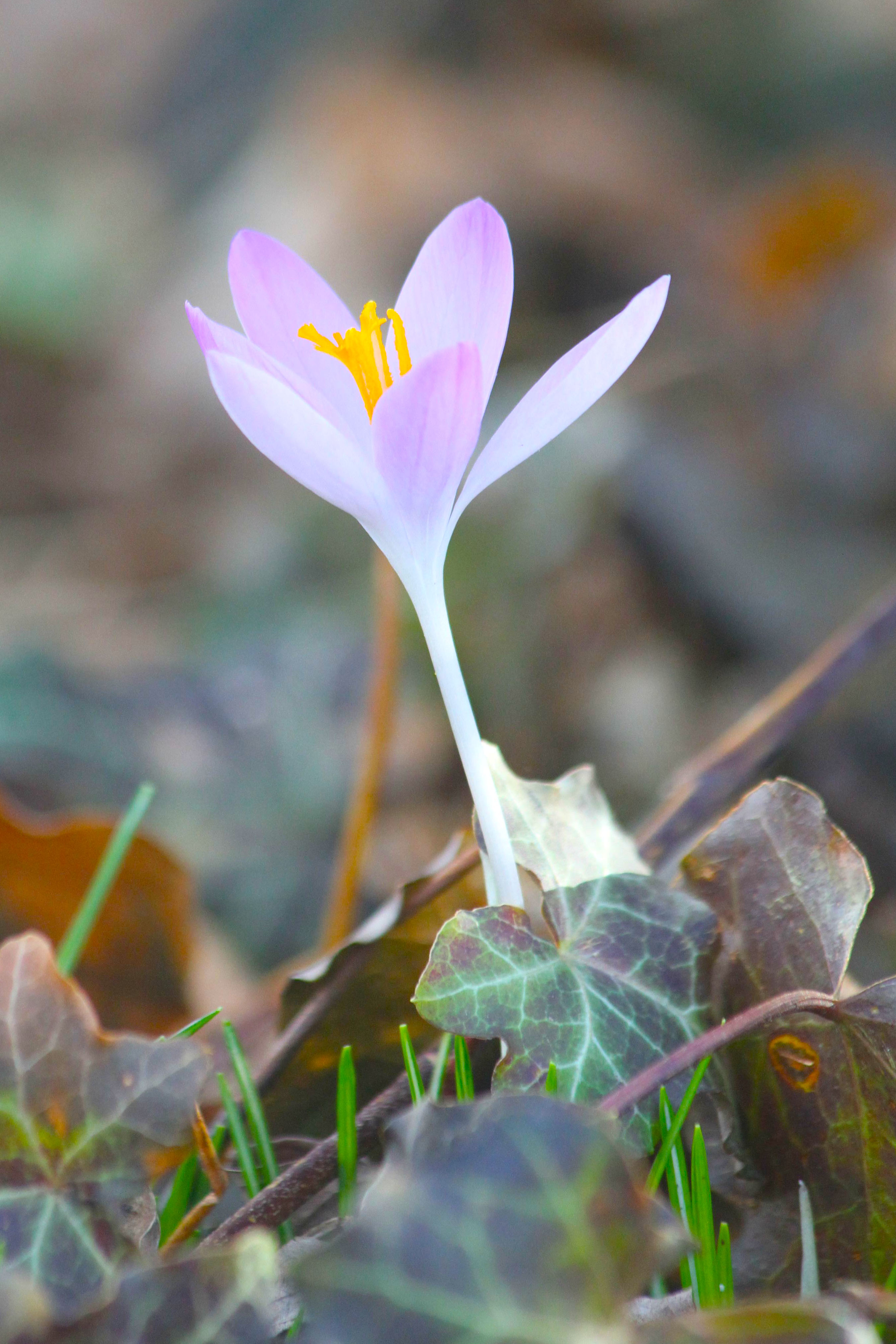
A flower seen on that Wednesday evening. Lucky me.

A flower seen on that Wednesday evening. Lucky me.


The Changing of the Guard

“Mom, you go first,” she said with confidence.

So I did, and as I looked back at her, I knew times were a-changin’.

The weather was beautiful and the snow was perfect. The slopes were glistening and we were skiing together as we had for the past 25+ years. This year’s ski-adventure started out like all those that preceded it. We arrived at the lift-line a few minutes prior to opening. We secured boots, strapped on helmets, slid on gloves, and clicked into our skis. Moments later, we hopped on the first lift and headed up the slopes. Throughout the initial ride, we chatted briefly about our ski-history . . . the times we had been together on this particular lift . . . the weeks we spent as a family skiing . . . all of the traditions of the past. We smiled because here we were doing it again – skiing for a week, and it was only day one.

Over those past 25+ years, I have learned that she prefers skiing in wide open spaces, in light fresh powder, the faster – the better. Steep downhills don’t phase her, nor does skiing over ice in cold, cold weather. In fact, she is an excellent skier – with the skill and ability to maneuver most any terrain.

At the top of the slopes, we plotted out our first runs – something a little easy to start the day. And for the first hour or so, we traveled back through some of our favorite ski-haunts – pushing powder here and there – gliding and sliding – laughing and chatting.

Finally, we decided to move on to bigger and better runs – something a little more challenging. With the snow conditions perfect and the sun shining, we opted to head to up to the top – to the summit – to see the sights and ski with gusto. A smooth six-person lift took us up. Once off the lift, we stood in awe of what we could see. We were slightly above the treeline – and the Rockies stretched out in front of us for miles and miles and miles.

And there we were paused – looking, watching, thinking – with the feeling that we were standing on top of the world. What we could see was so spectacular that skiing itself took a backseat to the scenery surrounding us. During that moment, time just seemed to stand still with the only sound heard best described by Robert Frost as “easy wind and downy flake.”

“Mom, you go first,” she said with confidence.

So I did.

The slope in front of us was actually a little dicey. Most of the snow at the top had blown off so we were starting out on ice. The second section had been well-skied by others, creating a few navigable moguls. Oddly enough, 500 feet from us, the ski patrol was assisting a young man who looked like he had an unfortunate meeting with a nearby tree. The final section would take us through glades and glades of evergreens until the run flattened out near the bottom.

Skiing is an interesting sport. Any great resort will have terrain for everyone – accommodating both beginners and experts and everyone in between. Most runs have an easy way to the bottom and a challenging, more exciting way as well. Skiers judge their own ability and choose their own paths.

Throughout our ski history, we have always skied following a simple rule – an unwritten and an unspoken one – but a simple one. The strongest skier goes last. If those in front of the last skier encounter challenges beyond their abilities, that strongest skier is a tremendous asset – having the skills to not only self-navigate, but to help navigate others when necessary.

In past years, more often than not, I was the last skier. There were many times when I hauled my children out of ski-misadventures – following them down slopes that were well above their abilities, chasing them down paths through snow-covered trees, fetching runaway skis, and pulling them out of piles of snow after a fall. The last skier.

But with those four simple words, I knew that the times were a-changin’.

I glanced back and saw her standing, confident and proud. She was perched just a few feet away from me and used her ski pole to casually point towards a solid direction that we should take. I nodded equally as casually and pushed myself slightly over the icy start.

The only sound I heard at that point was the swish of my own skis. I knew that she was waiting above me – as I had done for her so many times before – patiently and appropriately, making sure that I wasn’t going to encounter any problem or challenge. It was her turn now and my turn to let her have a turn.

Out of the ice, I hit the short section of moguls, and headed for the trees. I stopped for a brief second and heard snow spraying off of her skies when she stopped immediately behind me. Though nothing outwardly had changed – we typically stopped throughout any ski run, just for fun, laughing, resting, smiling – inwardly much had changed.

Everything in life has its own season, and though my initial response was to delight in seeing her move into a different one, it was also about delighting in my movement as well. I now had another person in my life who was following and watching over me, someone to follow me through my misadventures and fetch my runaway skis. It was the changing of the guard in a part of my life, and all I could think about was all the crazy-fun that would lie ahead for me and for her.

We finished the run with little to no fanfare – which is great when skiing – and hopped right back on the same lift to experience it – one more time, again.

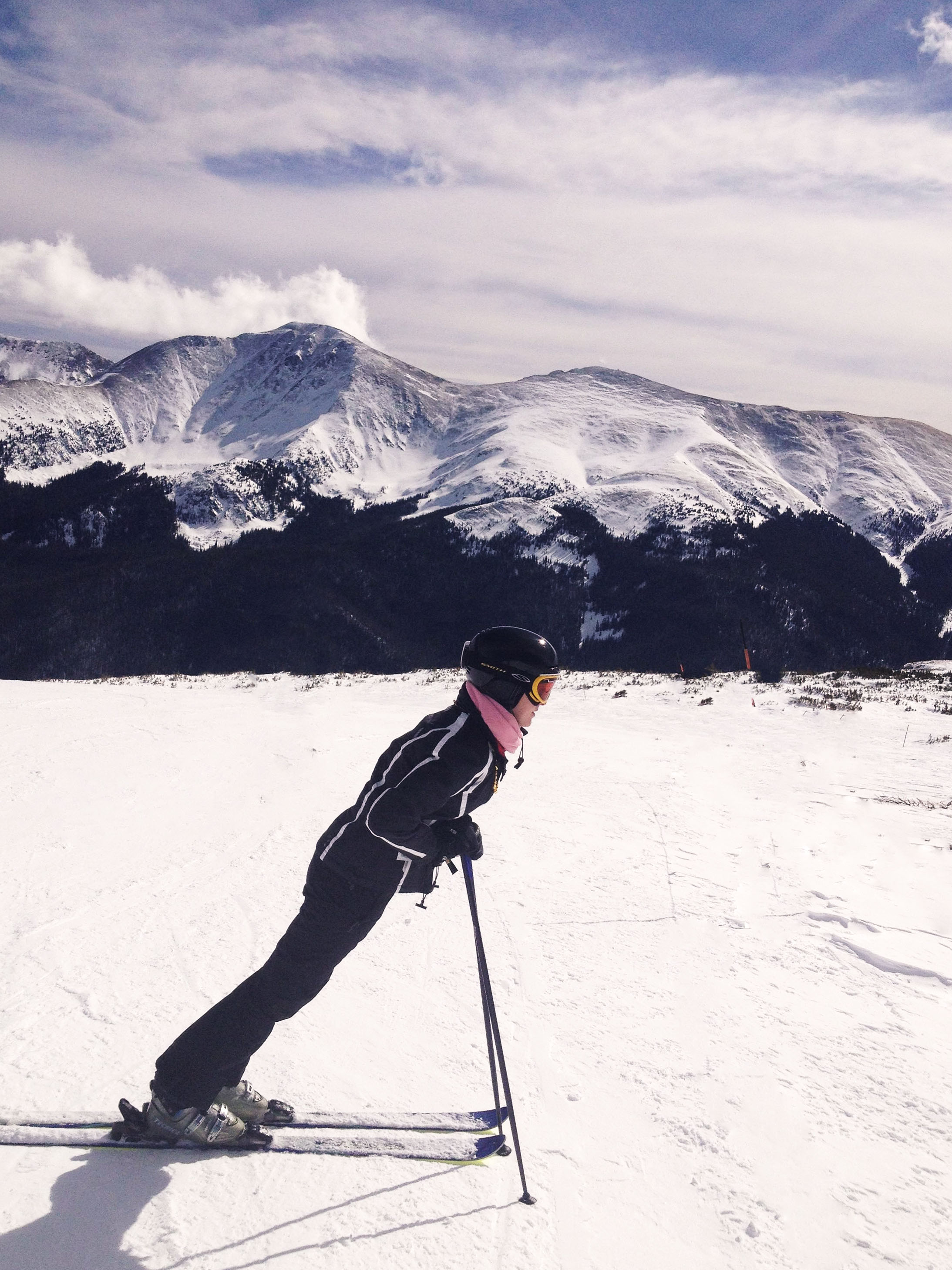
The You Go First Moment

The You Go First Moment

(P.S. – I have been absent from my blog for awhile, but am glad to be back!)