Is It Ever Okay to Make Mistakes?

Is it ever okay – really okay – to make mistakes?

I am not talking about the kind of mistakes that cause death and destruction, rather the kind that occur daily, little by little . . . anywhere from benign fashion faux pas (shoes – no socks . . . socks – no shoes) to inexplicable food choices (bring on bacon, butter, cheese, mayo and high cholesterol) to more egregious errors (forgot to pay the mortgage, pick up a child, turn off the kitchen faucet).

Well, we all make mistakes.  But, is it okay, really?

Growing up, according to my parents, no one should be afraid of making mistakes.  After all, they would say, Thomas Edison, American inventor extraordinaire, led the world in mistakes: “If I find 10,000 ways something won’t work, I haven’t failed.  I am not discouraged, because every wrong attempt discarded is often a step forward.”  Of course, Mr. Edison redeemed himself after making all those mistakes by inventing . . . a lot of . . .  everything.  After all, just flipping on the nearest light switch is a constant reminder of what he accomplished.

And they would remind me that Babe Ruth, beloved 20th century baseball legend, wasn’t afraid of mistakes.  I am not sure when Babe said this, but I think it was directly to my folks immediately prior to the moment of one of my greatest mistakes because that is when I heard it repeated:  “Never let the fear of striking out get in your way.”  Babe, of course, may have had 1330 career strike outs, but he also had 714 career home runs, and played for a team that still holds many baseball records, and . . .  looked good in stripes.

But I am neither a world class entrepreneur nor sports icon.  So, is it really okay – for me – to make mistakes?

Extrapolating a little, according to Nike, it is.  The Nike Corporation has built an empire on the phrase “Just Do It,” which seems to imply that regardless of level of success, people should go ahead and try.  Not to worry about the opportunities for failure, just do it.  Not to think about unintended consequences, just do it.  Not to fret the time away and see life pass by, just do it.  And there are a dozen more such sayings relative to mistakes that most of us can repeat without too much prodding. They are great thoughts to live by, but, again, is it really okay?

Even the simplest of mistakes can be costly.  Just think about the financial implications of overcooking (more aptly put – burning the boots off) the Thanksgiving turkey.  First bird is bought, baked, burnt, and set aside as uneatable.  Second bird must be bought and baked, and first bird must be buried.  Double the oven hours, double the prep hours, double the cost of the turkey, double the trip to the grocery store, include the trip to trash bin for first bird, and the time patiently waiting to eat.  Counting up the time, energy consumption, and money means that the average wallet will – pound for pound – be reduced significantly.  (I may have experience with this mistake.)

And, what about the simple mistake of forgetting to put a stamp on an outgoing letter.  (I am certain I have experience with this one!) Just think about how many people will have interacted with the naked envelope before it returns back to the original mail box marked “insufficient postage.”  A letter without a stamp may have traveled many miles in its erroneous round-trip journey – certainly incurring more than its original 44 cent pre-mistake cost.

Just recently, however, I learned a great lesson about mistakes from the youngest member of the family, a character who is five years old and is just starting on the long journey into the world of mistakes.  He went to watch a local parade early one morning.  He was wearing a bulky sweatshirt and a pair of straight leg Levi jeans.

As he bent over to reach for some parade candy that had been tossed to the ground inches in front of him, the crowd behind him noticed that he was wearing his jeans backwards . . . front pockets and zipper in the back.

Someone asked him why he was wearing them the wrong way.  He responded with a chuckle.  “I don’t have them on wrong,” he said.  “Your eyes don’t see ‘em right.”  And with no cares in the world, he went back to happily collecting parade candy.  No time to waste.

His quick comment conjured up thoughts of a favorite National Geographic photographer, Dewitt Jones, and his dvd – Extraordinary Visions.  Within this dvd, Dewitt asks folks to reframe their vision, to turn problems into opportunities. Mistakes are only mistakes if we see them as mistakes.  See them as opportunities and they become opportunities.  Every mistake is a learning moment.

So every time we forget to stamp an envelope, every time we misplace our keys, every time we spill a glass of water, we have an opportunity to learn.  Maybe it isn’t the easiest way to learn and maybe we don’t learn a lot, but this type of plan is much more interesting than a more traditional non-mistake learning one.

That burnt black turkey may not have been great for human consumption, but tossing it into the woods, I learned a lot about what coyotes and crows are willing to eat.

Dewitt also challenges folks to always remember that for every situation “there’s more than one right answer.” Thus, using Dewitt’s logic, some mistakes aren’t mistakes after all; rather, they are just another right answer pulled from the never-ending arsenal of right answers.  Or, in the case of the straight leg Levi jeans, just another way to wear them.

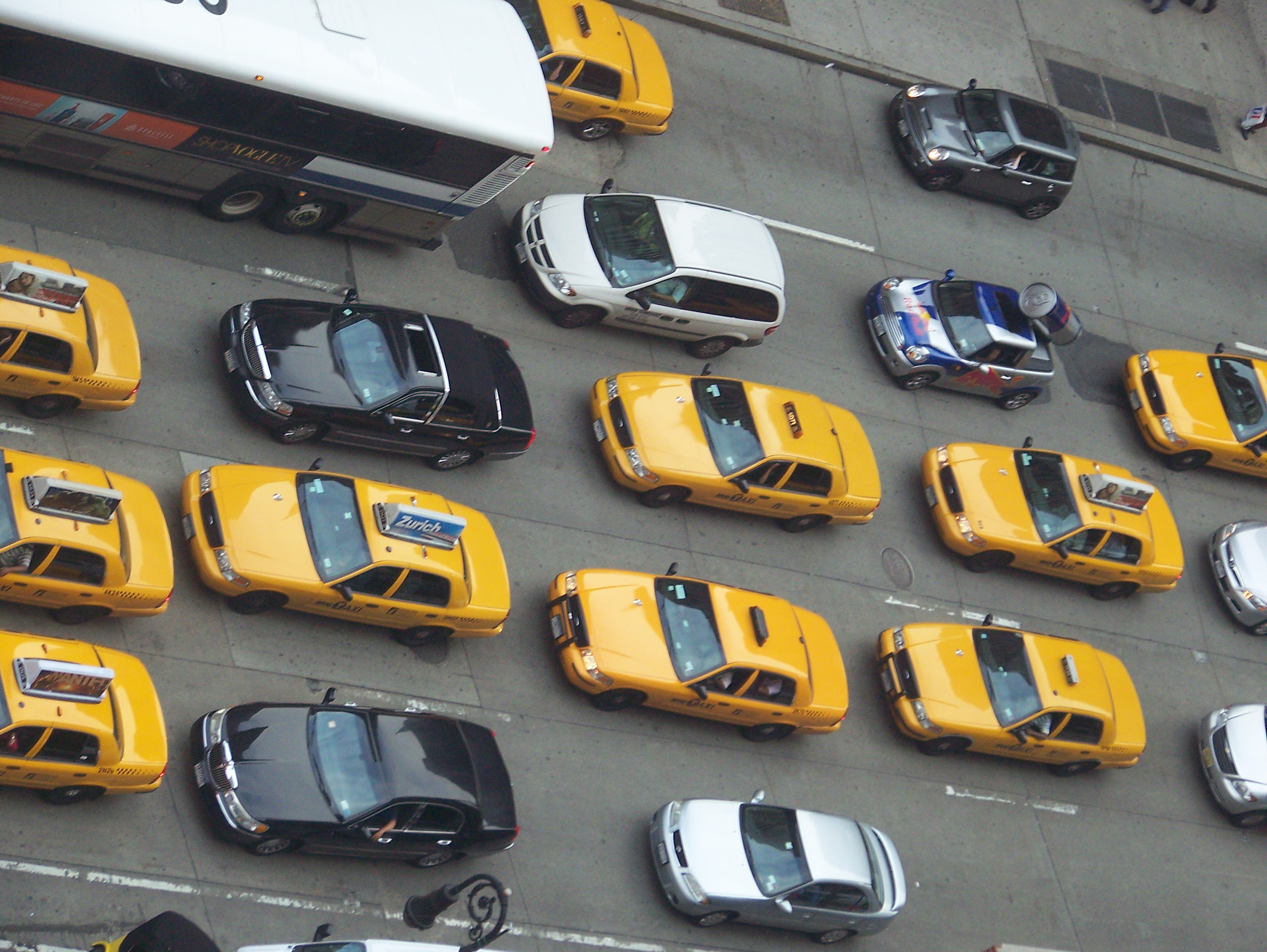
This photo was taken by mistake. It was supposed to include people, but timer was set to ten seconds rather than one minute.

Have Map . . . Will Travel!

Remember maps?  And I mean the kind of maps that once opened took an act of Congress to refold and close . . . the kind that were too big for one person to hold and read . . . the kind that had print too small for the elderly and too confusing for the young . . .the kind that identified rest stops and road side tables?  Remember maps?

Maps used to be the crowning jewel of all travel – far or near. When traveling by automobile, maps were tucked away in every car crevice known to humankind. Front, back, underneath, inside, outside, maps were stored everywhere.  In the trunk.  Behind the visor.  In the console.  In fact, why in the world was it called a glove compartment because as far as I could tell it would have been more appropriately named the map compartment.

In the days of the giants, standard fare included the AAA TripTik (a thin, narrow map held together by red plastic comb-binding), the Rand McNally (an oversized fold-out map that didn’t seem to include any type of refolding instructions), and the Atlas (a magazine size paperback often found underneath the passenger seat).

And nothing was more fun than searching the family machine and finding an assortment of maps everywhere.  Most of them were yellow and crumpled.  Most of them were critical at some point. None of them were the ones needed at the time.  So, in retrospect I can honestly say that all of them were simultaneously useless and useful.

In the useful category . . . maps were automatic conversation starters.

Car buddies wanted to know where the divided highway started and stopped. Maps told them.  They wanted to know how many people lived in the upcoming town, and maps told them.  They wanted a heads-up on ways to avoid constructions zones.  Maps sometimes told them.  They wanted to know the population, the time zone, the nearest capital, the shortcuts, the county, the state bird, the state tree, and the number of towns between point A and point B.  And maps told them. Map conversations were a smooth blend of unique, important history with unusual, irrelevant trivia.

Also in the useful category was a map’s ability to lead the lost.

This ability, however, was predicated on the intelligence and brilliance of map users.  Unfortunately once a person was lost, intelligence and brilliance took the preverbial backseat.  Those who were lost had to know they were lost before they could use a map to figure out how to become found.  (Don’t know if I can repeat that sentence and still understand the meaning a second time myself.)

In any event, intelligence and brilliance would have all of the folks in the lost category immediately admitting that they were just that . . . lost.  However, in all my life, I can not recall any lost person snapping to attention, raising a hand, clearing a throat, and giving a shout-out that even remotely could be construed as an I-am-lost confession. Rather, far too often the lost preferred to remain lost just to avoid admitting that they needed to be found.

And how comical it could be to the map users’ audiences!

Initially, map users seemed to have a short list of questions that had to be ironed out prior to the lost admission. First were questions that blamed the map:  Had the map’s born-on date expired?  Was the map grid level sufficient for the intended journey?  Did the map have any small print disclaimers?  Was the dot on the map original . . . or crispy – a fitting question for the questions involving specks of food.

Second – were questions that blamed the map reader: Were the map eyes of the map readers within quality standards?  Were all bifocals free of watermarks and other grim and grit? Were all map readers on the same page – literally and figuratively? Were map readers chosen based on ability or by default due to their status as passengers?

And the best question of all was the destination switcheroo that allowed the lost to change the final destination to the current location. After all, what better way to become found than to ask who really was tied to the initial destination anyways?

The true glory of maps really comes into play when thinking about their uselessness.

Those McTripTikAtlas maps really only have one shining moment, one moment to claim all the enchiladas, one moment to hold the number one spot, and that is the moment of their printing.  For once printed, their journey to uselessness escalates at a rate faster than the 32 feet per second per second gravitation pull, leaving them to be nothing more than historical archives of the past, at best.

Moments after printing, all has changed – new cities, new roads, new construction sites, new road side tables.  Well okay, maybe there aren’t too many new road side tables these days, but everything else has changed.

Most importantly, the uselessness of maps allowed us to have those golden Americana opportunities to be lost.  What fun it was to hold up the flimsy, oversized, unfolded, outdated paper map and declare, “We’re Lost!” with the utmost authority and confidence, knowing that to become found would take some idle leisure time, some awkward adventuring, and some moments of uncertainty and frivolity.

No GPS censors to blink and beep to lead folks out of the abyss quickly and efficiently.  No cellphone buddies to call and correct the crazy foolishness.  No help button anywhere.

What fun.

So here’s to the maps of yesteryear that allowed all to experience the ultimate joy of being honestly and wholeheartedly lost.

For the sights and sounds that are seen when living through ‘the lost’ are nothing shy of absolutely enchanting.  I am quite sure that it was the lost who stumbled across the Redwood Forest and the Gulf Stream waters.  They just made it look more intentional later to improve the discovery story.

My suggestion when traveling, leave those smart phones and tablets behind.  Trust that the map compartment will contain something halfway between useless and useful, and see what you see on the next great lost adventure.

Lost in the Blue Ridge Mountains

Am I Funny?

For good or for bad – as odd as it may seem or perhaps not odd at all, no one has ever accused me of being funny.  I mean truly, outrageously funny.

In my defense, I certainly have been accused and am proud to accept the title of being nerdy. (And that would be the truly, outrageously nerdy type!)  For goodness sake, I put my glasses around my neck on a little lanyard to keep track of them; and, I use (and like) the word lanyard.  In fact as a youngster, I attended what I fondly call “Catholic Camp” (yes, laugh here as I attended Catholic Camp many times); and during the many hours of Catholic Camp free time, I made dozens of lanyards for my family and friends; hence, just an example as to why folks might have given me the moniker of nerdy.

But funny . . . not so much. That’s not to say that I don’t have fun on a moment to moment basis.  Humor is a welcomed sidekick throughout my life – both home and work.  In fact, my work life is on a college campus and college students are just plain, right to the bone, hysterically comical. No humorous opportunity is wasted. College is just crazy funny 24/7. Flash mobs, well they’re fun, but even better when college-naked.  Bocce, a great game –  but play it with frozen turkeys.  The campus newspaper,  use it either to seriously inform the general public or to set the record for the not-so-hidden sexual double entendres – which are crazy funny. College wear – college hair – college walk – college talk . . . crazy-funny 24/7.

A college campus is like an automatic bid into the crazy-funny hall of fame, no questions asked.  It is a hotbed of opportunity for hysterical moments with nothing being considered even in the least bit sacred; thus, everything is fair game.  Time and time again, I have witnessed some true oddities in the hallowed halls of learning.  Not too long ago, the life-size statue of Abraham Lincoln, a wonderful donation to the campus by a wonderful artist, was wearing a Cubs hat and smoking a cigar. A little later, two baby ducks strolled by and it’s indoors.  And perhaps that’s the key . . . there are no exceptions to what can become crazy-funny.

With that concept so noted, I began to wonder about the rest of my world. Just who are the funny people in my home life?  And what exactly makes them crazy-funny?

My pop is certainly on the crazy-funny list.  He didn’t, however, start on it.  Rather, like a fine wine, he aged into it.  He makes the list because he is “parental” funny.  Nothing in particular, but everything in general. He wears funny tennis shoes – which are a color that is indescribable, and the color, is, well . . . funny!  It’s not white.  It’s not brown.  It’s not tan.  It’s . . . something else.  Think of the color of concrete in the form of tennis shoes.

And as far as his skills with technology, let the crazy-funny marathon begin!  Not sure if he has a debit card, know that he doesn’t pay his bills electronically, bottled water is a waste of good plastic, he has a wonderful computer complete with a floppy disc drive and a three inch screen, and he certainly doesn’t have need for a cell-phone.

Heck, he just recently eliminated the rotary dial black telephone with the twelve-foot cord that hung on the kitchen wall. And, I think he just moved it for use in the basement, because “it still works, dadgummit!”  Blue Christmas lights line the living room ceiling; and, it is hoot when they are illuminated usually on a random Tuesday in the middle of the summer.  Some say why . . . he says why not.  Just small examples of why his entire life is just plain crazy-funny at the moment.

And my pop isn’t the only crazy-funny man in his family. His family had some humor genetics a-happenin’.  My uncle (my pop’s brother), God rest his soul, was ditto in terms of crazy-funny. Imagine my uncle’s cooking skills as being similar to my pop’s telephone skills.  Uncle Bud made grilled cheese sandwiches with white bread, plastic wrapped Kraft American singles, and butter.  As the bread would pop up from the toaster, he would slap on all ingredients, open a lengthy and heavy book at its center (preferably one that he had already read), jam the sammie into the book, slam it shut, and wait. And then eat it!?!

This comical gourmet cooking scenario hit the crazy-funny charts each time it was completed or re-enacted in front of a live audience.  When imagining this grilled cheese quest, think of a combination of Jerry Lewis and Knute Rockne – straight up comical with amazing mental and physical athleticism.  Without a doubt, Uncle Bud was crazy-funny, and not just when he was cooking for a crowd.  Though I can’t exactly put my finger on it, I think his status as crazy-funny emerged because he seemed to be truly oblivious to his comical nature.

People who are funny are funnier if they don’t know they are funny.  Such was my uncle.

And paired with my pop, they were over-the-top crazy-funny, so much so that they could sit next to each other all day long, not say a word to each other all day long or even look at each other all day long, and it would still be crazy-funny.  Though they found each other to be funny, their enjoyment came more from the times when they could laugh at themselves . . . with each other.  Two crazy-funny kids at heart.

So what have I learned with all my pondering?  Well – I have learned that college campuses rock crazy-funny.  I have learned that a Kraft American single grilled cheese sandwich may be hazardous to your health (check out the ingredient label).  I have learned that it’s okay to wear  concrete gray tennis shoes and to turn on the blue Christmas lights in July.  Adding a lanyard only makes it better.

And, of course, I have learned that crazy-funny comes when we are willing to see the humor in ourselves and laugh about it with each other.

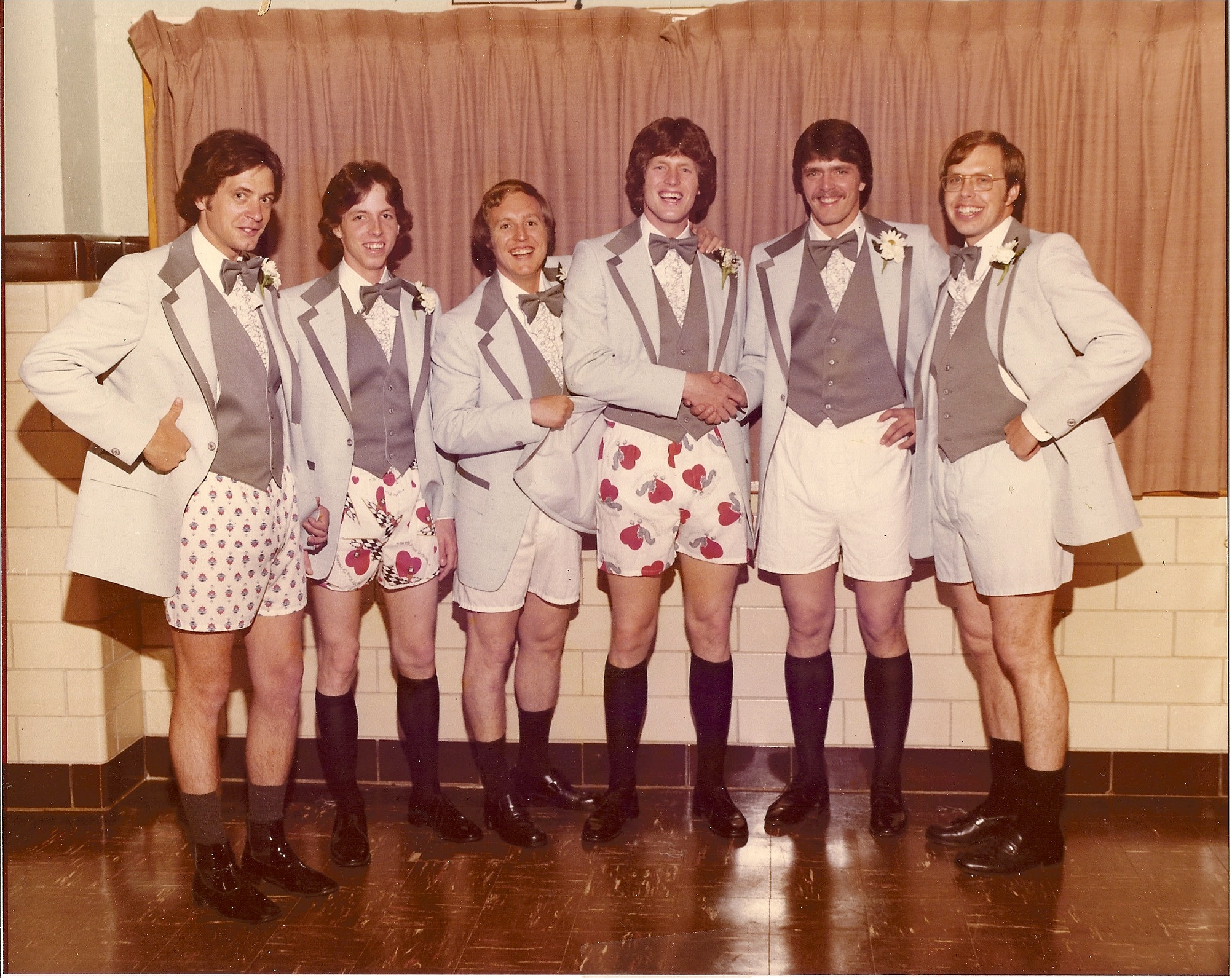
Crazy-Funny 1978 Style

.

The Three Bs

Quote

I am neither a world renowned author nor a famous professional photographer. Yet, in the grand scheme of the new digital technology era, I snap thousands of photos and write multiple blurbs . . .each day . . . everyday. Recently, I uploaded three hundred and eighty eight images to my computer from my camera. Three hundred eighty eight photos of nature, of friends, of family . . . of family, friends and nature combined. Yet, only three of those photos did I deem truly interesting. In all likelihood, perhaps only one of them would actually be interesting to anyone other than me, if that.

Likewise, I write in multiple ways multiple times a day.  I write way too many pieces of email, and a couple Facebook posts, and a memo or two, and perhaps a reports, or a tweet, and, of course, my absolute, all-time favorite – the numerous doodles combined with shorthand notes jotted down during moments of very deep thought or frankly, jotted down when I am simply daydreaming. Again, of the countless words that I write, few of them are keepers.

I have been fortunate enough to read words and seen pictures that are in the keeper category.  I think about the great words that President John F. Kennedy used in his January 20th, 1961 Inaugural Address that challenged  us to “[a]sk not what your country can do for you, ask what you can do for your country” or Mother Teresa’s “Yesterday is gone. Tomorrow has not yet come. We have only today. Let us begin.”  Words that I have heard or read over and over and over and over again. And again.

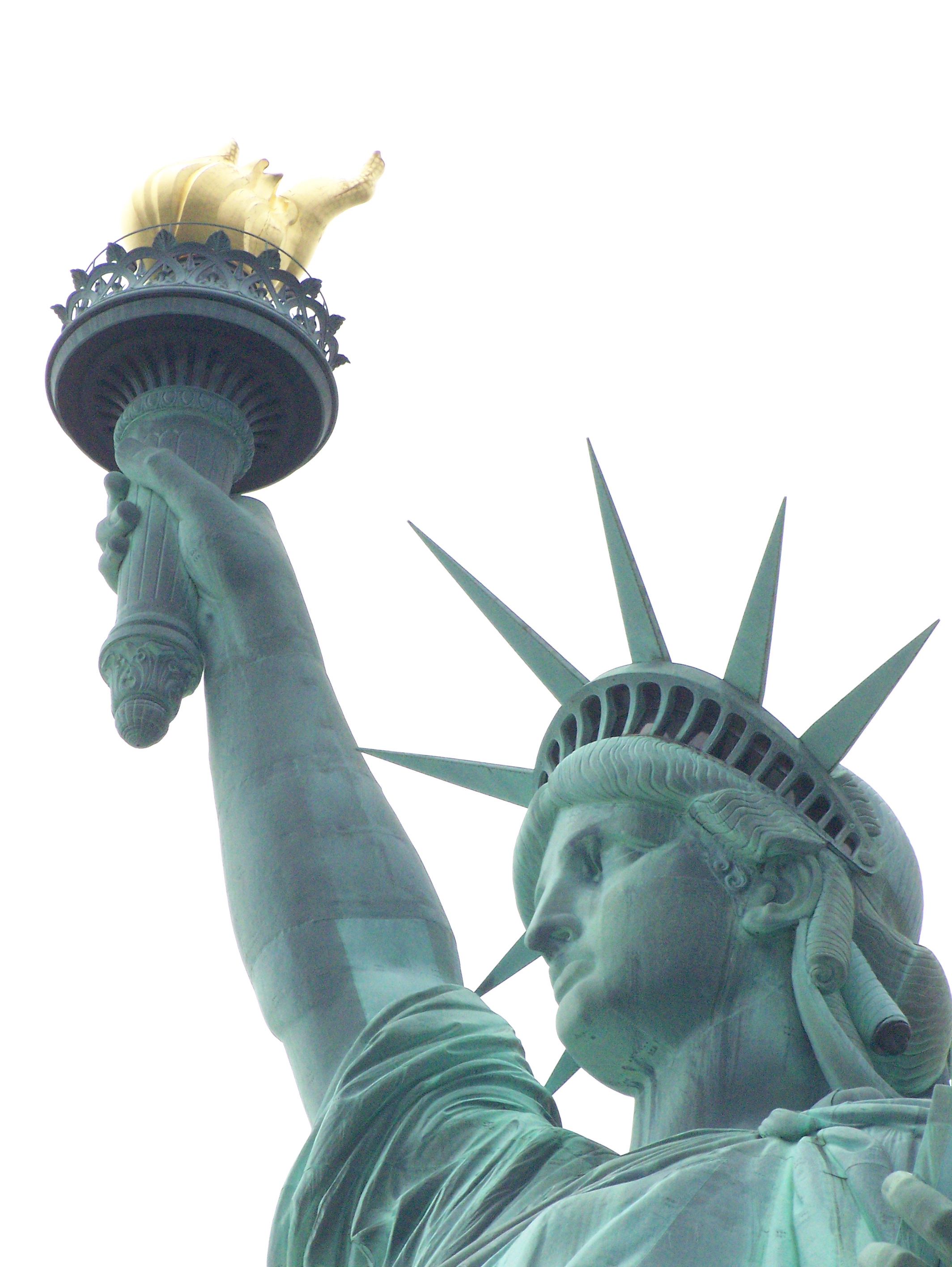
Lady Liberty

Lady Liberty Is Always Inspiring

I ponder the awe and the wonder of seeing the ceiling of the Sistine Chapel or visually experiencing the life changing beauty of Claude Monet’s 1897 Water-Lily Pond. How could my mind’s eyes every forget those glorious images.  Keepers through and through.

My question today is simply . . . what exactly makes a keeper?   Just what are the common threads among the words and images that I have committed to memory, the words and images that I refuse to forget, those that I choose to actively remember?

Though the previous examples are all quite well known to a significant portion of the world, a keeper doesn’t neccessarily have to be so.   My keepers include the parentally profound from my dad, “It’s not how much money you make young lady; rather, how much of it you save,” which was reiterrated to me many times as a working teenager bringing home a paycheck that could generally cover all random sixteen year old expenses plus a little fun.  Yet, I heard about the importance of being frugal and putting something aside for the long term whenever my pop thought about my payday.  A keeper.

Perhaps the most ridiculous as well as the most ridiculously funny keeper I have in my bucket is the phrase uttered by my third son, during a moment of total teenage frustration and to be honest a flash of anger . . .  when  he told me that “the moment I walked into the room, all fun was sucked right out of it.”  It’s just a chuckle and a true keeper.  The second it rolled off his lips,  all anger evaporated for the statement itself was far too hilarious for either of us to keep a straight face. Keeper.

As far as pictures that are keepers . . . think family.  A photo of a new born child. . . a daughter’s wedding . . . a holiday gathering . . . a baseball game . . . a graduation.  Without a doubt, each and every photo is kept and cherished.  I know that I have a couple that are most memorable and definitely on the A-list of keepers.  I happened to take a photo of the aforementioned son, (who kindly told me about the consequences of me entering a room).  He was shirtless and wrapped in blinking Christmas lights.  He was about twelve and feared nothing.  He posed: I snapped.  It has become a favorite keeper.

Again, what makes a keeper?  How does it happen?  If I could so quickly answer this question, I would be that oh so famous photographer and author.

Not all that long ago, my spouse was in a position where he needed to speak before a rather large crowd of friends and colleagues.  As I have more often done so throughout my professional career, he asked me for my thoughts on what he should do.  I gave it some thought and told him to follow the three Bs:  be brief, be brillant, be seated.

Most keepers are fairly brief. They get to the point without too much meandering.  They are amazingly uncomplicated and because of their simplicity, they have universal appeal.

All keepers are brilliant.  The ordinary and usual doesn’t qualify as a keeper.  It is only the shining star, the most unique, the writing and/or images that take our breath away.  Sistine Chapel – brilliant!  Water-Lily- brilliant.  Lasting words and phrases from folks like JFK or Mother Teresa – brilliant.

Finally, creators of keepers know when to be seated.  Using the more common vernacular, they don’t beat dead horses.  Keepers say what they want and show what they want and move to the side of the stage.

I am on a quest to create a keeper blog, one that somehow adds to the world.  Hopefully, I will use my interest in words and photos to do so.  My goal is to follow the three Bs and keep all posts under 1000 words (be brief), perhaps with a handful of those words showing some type of promise (be brilliant), and without dilly-dallying around (be seated).

So welcome to 1000 Words – One Picture.