Turn, Turn, Turn

“To everything . . . turn, turn, turn.  There is a season . . . turn, turn, turn.  And a time for every purpose, under Heaven. A time to be born, a time to die, a time to plant, a time to reap, a time to kill, a time to heal, a time to laugh, a time to weep . . .”  The Byrds, 1965.

At the time, it didn’t seem that small.  It just didn’t.  But, I suppose it was. Throughout the normal year, there were eight of us – six children (four boys, two girls) and our parents.  In the summer, however, the number increased.  Our grandmother arrived in May for a two month visit, and our cousin joined us in June for the summer.  And at least once each day – and sometimes two – the entire group would gather around the  wooden kitchen table  – oblong in shape with two benches and two end-chairs  – to eat.  With five to a side and my grandmother and father at the ends, it must have been elbow to elbow.  It just didn’t seem so at the time.

When it started, the home was 888 square feet – not including an unfinished full basement and a backyard. It had three bedrooms, one bathroom, and what would now be called an “eat-in” kitchen.  As I entered my teenage life, my folks expanded the house, tearing down the small bedroom wall to create a living-room/dining room combo, and adding a family room and a larger bedroom. Finally, well after I had moved out, they added a deck which spanned the entire length of the rear of the house.  Again, at the time, none of it seemed small.

There was a need for creativity, however, with only one bathroom and a minimum of eight residents.  On school mornings, showers started early and lasted a few minutes or less if possible.  The house had two sinks and it wasn’t beyond anyone to use the one in the kitchen to brush teeth or wash hair.  As the family aged, my father kindly set up a make-shift shower in the basement – weaving a hose through the ceiling joists, centering it over the floor drain, and encircling it with a shower curtain for as much privacy as a shower in the middle of an open basement could have.   It seemed luxurious and we felt lucky to have two showers.

Throughout the ensuring years, my parents added a large round, above-ground pool in the backyard – right next to the two story tree house, built by my brothers, and eventually secured for safety by my dad.  We had a one car garage which was fine during the time that we only owned one car.  As we learned to drive and bought more cars, we simply parked them in the street as best we could. Everything seemed to fit – nothing seemed too small.

In fact, our small house worked so well that on Christmas in 1976, my parents invited my aunt, uncle, and their four children to stay with us for the holidays. Total home population was fourteen residents, fifteen when my grandma arrived, with my parents welcoming many others on a daily basis to visit with our visitors.  For two weeks, we ate in shifts, showered on a schedule, slept wherever floorspace permitted, and, in general, made concessions on almost everything and anything related to space.  With a Christmas tree and presents filling up an already full family room, the space should have felt tight and cramped.  But again, it did not.

It never did.

Not too long ago, my husband, my son, and I went to that family home to stay overnight.  There were only three of us in the house at the time – as my father was staying at my brother’s house for the evening, and my mother had passed away a dozen years prior.   As we sat at the kitchen table, I thought back to the times when there would be a minimum of an additional five to seven individuals eating dinner in the same space.  Toe to toe, shoulder to shoulder, we would eat, talk, laugh, fight and cry with each other, meal after meal after meal after meal.

Something in the world has changed, however, because looking at that kitchen today with a yardstick and a ruler, it definitely would be considered small. It just would be. In fact, thinking back, there were times when rather than navigating through those sitting at the table,  the best way to walk through the kitchen was to exit out the back door, walk around and enter the front door.

The kitchen may have been small.  The bathroom may have been small.  In fact, the whole house may have been small;  but, what wasn’t small was the life of the folks living in that home.  From that small house, we learned a lot.

We learned to share – everything – closets, clothes, towels, bedrooms, shower space, radios, cars, food – nothing was sacred. In small spaces, individual ownership of things is tough – making sharing a natural, seamless, normal function. I look back on it and recognize that it was a blessing to learn the concept of sharing so prominently and passionately.

We also learned to be flexible.  People – cousins, grandparents, friends – moved in and out of the house all the time. In fact, the house seemed empty without someone staying with the eight of us.  We just shifted, moved, and/or switched places to meet the current needs without fanfare or concern.  A sleeping bag here – a blanket there – add a couple of pillows – and voila – we found the space.  With such flexibility, my parents reaffirmed the idea that it was our family that was blessed – to have so many folks who wanted to live with us.  We were the fortunate ones.  We were the lucky ones.

We learned that there was a time for everything. Everything was scheduled to make sure that life in the house ran like clockwork. Dinner time – 5:00pm.  Shower time – scheduled each morning.  Bedtime – on the half hour after 7:00pm depending on age.  Everything had its own moment, and it was best to capitalize on those moments.

Finally, as I march deeper and deeper into the 21st century, I only hope that I have learned to share well, to be flexible enough, and to know that “to everything there is a time and a purpose, under Heaven.”

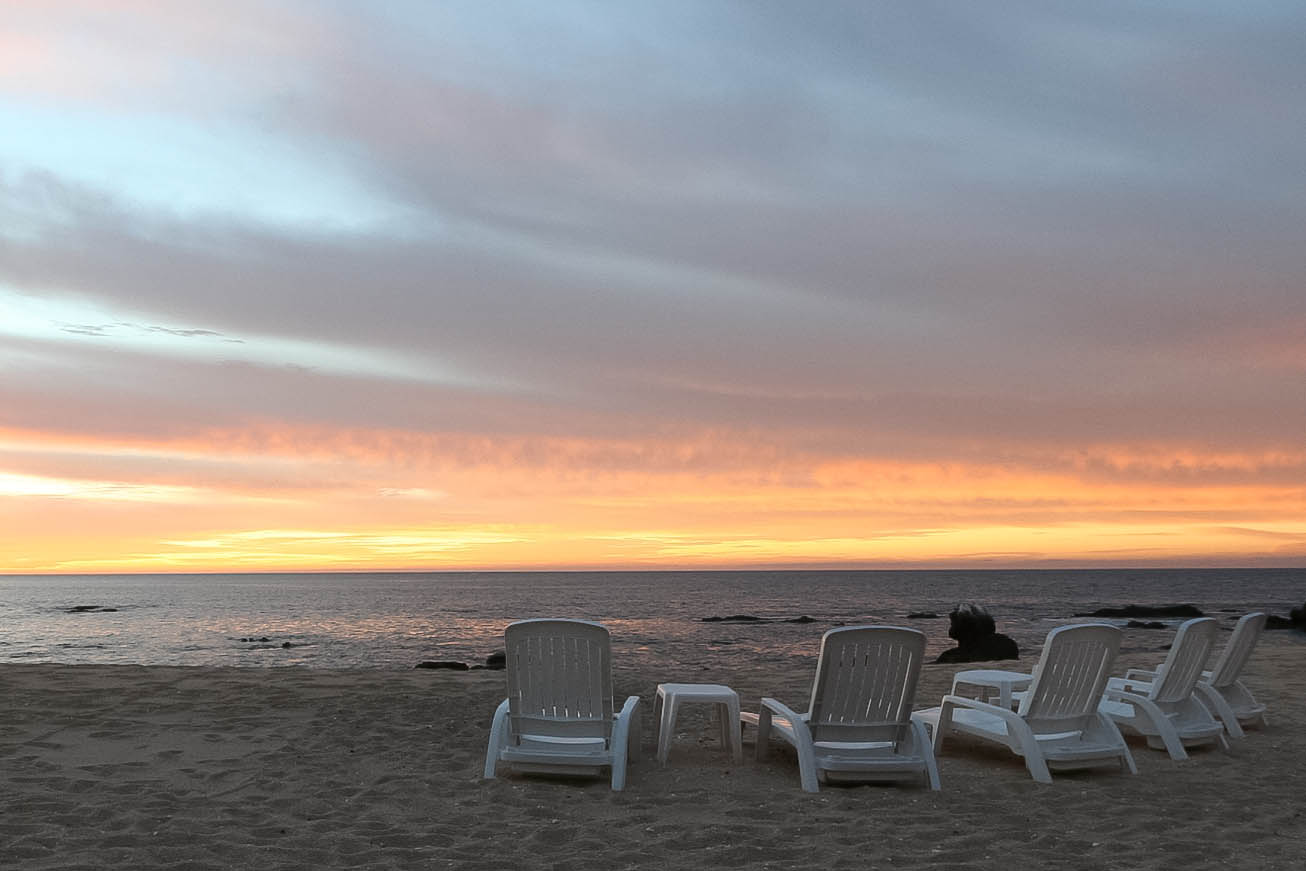
At the edge of the world - a big and beautiful place.

At the edge of the world – a big and beautiful place.

Icicles

As a child, just the sight of icicles meant that my world was about to become very exciting.  Icicles meant winter. . . which meant cold . . . which meant time for action.  But there was always a lingering question.  Would it be cold enough?

Weather forecasting during my childhood wasn’t near as easy as it is today.  In the 60s and 70s, we would check the St. Louis newspaper’s weather bird, repeatedly dial the free weather phone number, turn on the television to watch the five minute 10:00pm weather report, and/or stick our heads outside and look around.  Even then, the long term weather forecast seemed like a guess.

When icicles appeared, it was most important to know that those icicles would be sticking around for several days – weeks – longer!  For if there was even a remote thought that a hard, down and dirty winter had arrived, the crazy-fun was going to begin.

My mother would stand at the front door with us – peering at the winter sky, thinking . . . pondering.  Isabelle was a petite young thing and a stay-at-home parent to six wild children (with the oldest 15 years older than the youngest), living in a home with one bathroom, in charge of anything and everything related to ensuring that my four brothers, one sister and I reached adulthood respectfully.

She wasn’t one to jump to conclusions quickly.  Rather, she would review the situation carefully, using a squint face which meant that her mind was somehow completing a unique mathematical calculation.  If after looking outside, she turned towards the living room closet, we were golden!  If not, our patience as children would be tested.

Sometime in the winter of 1971, I had just finished a grueling day of toiling at the local ice cream shop. (Yes, once I considered it hard work.  Now I see it as being paid to eat dessert, chat with friends, and occasionally serve food to others.)  Walking home from that job, which was only up the street from my home, I could see my siblings and mother all huddled around the front door.  Isabelle’s two eyes looked like slits as she gazed up at the house guttering.

As most would agree, winter evening weather can create an amazing hushed beauty.  Nothing is better than being outside on a cold, silent, clear, moonlit evening.  It can seem like the earth is on pause, standing still for just a moment.

And this time, my family’s anticipation only added to that beauty.

I walked off the sidewalk, talking the shortcut up my front lawn.  With each step, I heard the crunching of the frozen grass beneath my feet.   Life all around me was below-zero frozen.  And I slyly smiled because I was beginning to understand the scene.

Nearing the front door, I could see what my family could see.  With a brilliant moon in the background on a starry evening at the beginning of winter, there it was . . . a long line of big, perfect, giant, shiny, stoic icicles hanging down from the rooftop of 200 Duquette Lane.  And happy smiles on everyone’s face.

2011February ice storm 045

From that point forward, the person we knew as a traditional hardworking, intentional-driven mom turned into this crazy-funny person.  Bedtime . . . forget it! Homework . . . not tonight! Safety . . . ignore it! Practicality . . . dream on!

She shouted and some of us suited up.  Hats, coats, gloves, scarves, boots – check.  The rest headed for the basement.  Acting like a volunteer firefighting brigade, my siblings unhooked the downstairs washing machine from its water source.  They secured a spray nossel to the backyard hose which was patiently waiting three feet away just for these occasions.  They attached the hose to the now-barren water source, and threaded it out the basement window to my waiting mom.

With all systems a-go, Isabelle gave the on-signal.  Now, all it took was watching, waiting, and spraying.

My mother, in her early to mid-forties, wearing non-waterproof everything, would stand in the dark of the backyard, on such icicle evenings, for hours – with or without the rest of the brigade – holding a cold, wet hose, spreading a thin layer of water on the lawn in order to create one heck-of-a-great time for the family.

The nearest commercial ice-skating rink was both out of sight in terms of distance and  cost.  But, with a little luck and a little elbow grease, the back yard of 200 Duquette Lane could turn into one of the finest skating arenas in the nation.

According to Isabelle, there was an art to freezing the backyard.  First, she would apply a continual fine misting over the grass.  Once the grass was covered, she would remove the spray nossel and use a flooding approach.

By the time she had completed step one, she, herself, looked like a frozen popsicle, with icicles hanging from the ridge of her gloves, coat, body.  We would help as much as possible, but this moment was hers.  It was a time for Isabelle to step out of her responsible mother role and do something so absolutely nutty, that it befuddles me even today.

Throughout the night and into the morning, she would pace the back yard, hose in hand, until every inch was covered in ice.  My father, who left for work before 5:00am each day was a trusty assistant, but could not lead this madness.  It was an Isabelle project all the way.

Upon waking, we would skate the heck out of the back yard – daytime, nighttime, before school, after school.  That crazy-funny ice rink with three giant trees in its middle was a winter treasure beyond belief. We had the time of our lives.

Isabelle?  She really didn’t like to skate, but she watched us like a mom from the nearby kitchen window.  And for as long as the icicles stayed, we felt like the luckiest bunch of kids on the face of the earth.  Who knew that a postage stamp yard in the middle of suburbia Missouri could become such a splendor-land.

Well maybe, only that squinting mother of six who saw icicles as opportunities.

How To Make Memories With 47,399 People

When I reflect on that moment, I have to admit it was one of the best of my short life.  It was so exhilarating, it is almost indescribable.  And unbelievable as it may sound, though it has almost been a year ago, rarely does a week pass without someone mentioning something about it to me or my daughter.

Heather, my daughter, is my youngest child and only girl.  At 28, she is slight of build, tall in stature and is as even-tempered as her father.  I am lucky as she and I pal around quite a bit together.  And oddly enough, the reason for being together on October 28th, 2011 was due to a very chance circumstance.  But it happened and we were.

The men in our lives were all left behind.  My son hadn’t been feeling well, and my spouse graciously agreed to stay home as caretaker.  He offered his spot to my daughter, and she smartly took it.  So we were off – together – on another adventure of a lifetime.

As happens in most families, she and I have actually shared many mother / daughter lifetime adventures – in all kinds of shapes and sizes from international travel to half marathons, from home building projects to weekends away.   But this event was different.

As we headed out – with all the amenities two people might need including food, clothes, cash, and cameras – my mind could hear a phrase often spoken by a dear aunt of mine who has just enough of a southern drawl to bring out the wisdom of such simple words:  “Nothing more important than making memories.”

Two hours later, we arrived at our destination.  We found a makeshift parking space, abandoned our car, and entered the thick of things.  Downtown traffic was at a standstill.   Banners were strung from every skyscraper and pump-me-up music was blaring on every corner.  Two gentlemen – sans shirts – with their chests painted bright red – strolled by us, singing a rather poor rendition of the national anthem.

Yet, because of the atmosphere, they were nothing shy of adorable – and for this occasion – very typical.  For at that moment, a total of 47,399 individuals were headed towards the gates of a previously empty stadium – each person intent on making their own memories.

Our seats were high-in-the-sky, in what folks might fondly call the nose-bleed section.   And looking out on the crowd, all we could see was a sea of red – as literally everyone had dressed in the team color for the occasion – (or as witnessed earlier, had painted their bodies accordingly).

The two women in front of us were wearing red wigs made of flashing LED lights.  A couple of rows in front of them sat a family who had brought along an assortment of hand-made posters and were waving them madly.

Before the first pitch was thrown, we had both been asked to take family photos for folks around us and had asked the folks around us to take our photo.  Fans were texting, tweeting, facebooking, and calling everyone who didn’t make it into the stadium.   It could only be described as orderly pandemonium.

Of course, not to be missed was the calm and subdued gentleman at the end of our row.

He happened to be visiting a friend who had an extra ticket.  He came along not knowing what to expect, and found all the frantic madness a little quizzical.  He was seemingly disengaged from the surrounding activity, and spent most of his time checking and re-checking his trusty blackberry . . .so we called him Blackberry Man . . .  really the only odd-duck on the pond.

But, as the game began and time began ticking forward, the excitement within the crowd escalated  – and it escalated exponentially. We stood – shoulder to shoulder – from the first crack of the bat to the last, sitting only during the momentary wee breaks between innings.  We shouted  – loud and long – creating an unrecoilable energy that was all-pervasive.  And we bonded – with the 47,399 people who came to the stadium with the same hopes and desires as the hometown athletes.

My daughter and I were  – in athletic speak – in the zone.  We were on our tiptoes, cheering, shouting, clapping, hugging, laughing. And everyone around us, except for Blackberry Man, was doing the same.  For all of us, it was a time of sheer fun and exhilaration. I was quite sure that the game’s outcome wouldn’t solve any great human mystery.  And I knew that days later, I would still be putting on my shoes one at a time. But, for that one moment, the world around us was in sync.

And I learned that anytime the world around us is in sync, it is truly unbelievable.

For today, I can still hear the collective screaming and I can still feel the collective dancing when the hometown team won. Fireworks blasted.  Confetti fell.  Lights flashed, and the music of champions played.  Strangers hugged each other, with even Blackberry Man faintly smiling.

And I can still  see my daughter’s eyes looking at me with such pure joy.

As we walked out the stadium, still shoulder to shoulder with those 47,399 people who were all still more than just a little exuberant, I knew that my daughter and I had made a great memory, a permanent one.

What I didn’t know is  how that particular memory would change my thinking.

I was once again – and in a big way –  reminded that it is possible for the entire world to be in sync.  Somehow, it is possible for all of us to be happy, for all of us to experience joy.  It might be difficult, but what is worthwhile isn’t usually easy.  All we have to do is wake up our collective sleeping giant and make a memory.

. . . . . . . . . . . . . . . . . . . . . . . . . . Confetti With Friends . . . . . . . . . . . . . . . . . . . . . . . . . . . . .

Pause On / Pause Off

Pause on.

This past September weekend was a very busy one.  For five days straight, I spent time with many, many – say it again – many family members and friends, met with tons of acquaintances, and completed all kinds of activities that brought all walks of my life together.  People were in and out of my home.  We served meals, refreshed the laundry, and arranged and re-arranged our home as needed.  The purpose of all the activity was pure enjoyment with every motion made set to encourage positive results.  And I honestly believe that at the end of this particular stretch of time, fun was had by all.

But, at the end, I paused . . . and I am still pausing.  After all was said and done, I knew that I needed to do a little self-check on the lens that I use to see everything.

Through my usual lens, my life is rather rosy.  I have four wonderful children –  who are all well-educated, who are doing well financially, and who have fairly rosy lives themselves.  I live in a very comfortable home – and want for nothing.   I am surrounded by all that is good.  I travel . . . a lot.  I spend a couple of weeks in the mountains, a couple weeks on the beach, time in various metropolitan areas, and time in great Americana spots.  I have favorite breakfast spots that aren’t just at the area covered by my kitchen table.  Two very nice folks clean my home on a bi-weekly basis.  I don’t mow the lawn.  I have easy access to health care. My cars are bright and shiny, are parked in a garage, and when broken are repaired by someone else.  I have money in my checking account at all times.  My retirement plans are going well.

I exercise everyday – because I have time and the means to do so.  I use a dry cleaner who brings my stuff to my house when it is ready.  A young person delivers the newspaper to my doorstep, daily.  I own and display seasonal decorations, and have storage space to keep them looking new and organized.  I have a big, giant family.  And all of my brothers and sister have homes that have at least four bedrooms, countless bathrooms, two car garages, and extra refrigerators. And of that group, several of us have advanced degrees, all of us have undergraduate degrees, and all children among us have gone to college or are planning on going to college; and, all have parents and relatives who are totally and passionately involved in their lives – supporting them every step of the way.

I have more than one pair of tennis shoes – just for running.  I save one dollar coins on a whim, wear matching underwear just because, and have a ginormous backyard deck.  My home has air-conditioning, tons of extra toilet paper, a pantry full of food, high-speed internet, and kitchen gadgets for every and any purpose known to humankind.  My wardrobe changes with the season.

And due to all of this  –  coupled with all the motion and commotion at my house during that five-day period in September –  I paused.  For quite awhile.  For, there is another more challenging lens that is often obscured by my rosy one previously described – especially when I am in the middle of such frenzied activity.

I paused because I know and needed to remember that there are thousands and thousands of folks who are hoping to find food for tonight’s dinner meal.  They don’t have homes or cars or educational opportunities.  They certainly don’t have decks or seasonal decorations, or storage space, matching underwear, or kitchens.  They struggle with family and friends.  In fact, there are children begging for attention from anyone – any family member – any friend – and there are adults begging for the same.  The only clothes they have are the items they are wearing.  They can’t save coins . . . they can’t save anything for their immediate needs are too great.  They use pencils because they can’t afford pens.  The only vacations they take may be those taken during their best daydreams.  Newspapers aren’t delivered, garages aren’t attached to their homes, and they have no need for extra refrigerators as they have a tough time filling one, let alone two. Healthcare is a challenge.

So I paused.

Through the summer of 2012 in another part of my world,  I have been intentionally pondering  over the term creativity.  What does it mean?  Where does it come from?  How can I learn to open myself up to becoming a more creative individual?  Where is it most prominent?  Who are the experts?  How is it reflected in me and how can I strengthen my focus on it.    And suddenly – because I took a moment to pause – I may have gotten closer to the answers.

In all my wondering about and wandering with creativity, I might have been on an erroneous path.  While pausing, I had a moment to reflect, to consider the other side.  And I learned that I have examined creativity using only one lens. . . instead of many.

I am finding that when I look through the lens that is not so rosy, I see the creativity that people use just to make it to tomorrow.  I see folks finding solutions to problems that I can only imagine.  I see folks doing things differently not because of want, but because of need.  I see folks making their worlds keep spinning in any way possible, and hoping to affect change in their lives by doing so.  Their creativity is ingenious.  And as far as I can see, their greatness in this area has to come from their ability to face adversity and survive.

For me, I learned that the source of creativity is more than just one lens.  It is more than just two, and very likely it is found in hundreds of lenses. I just need to make sure that my eyes are open and ready to see.

Pause off.

The Bob Kerrey Pedestrian Bridge in Omaha, NE, is a great place to ponder the intricacies of creativity . . . or any other subject!

The Comeback Moment

I caught his eyes, and I knew it was the moment. My young, eighteen year old cousin was looking straight at me with that smile.  It was the moment we all waited for . . . the moment of excitement . . . the most anticipated moment . . . the defining moment.  He said absolutely nothing to me and I nothing to him.  But, we both grinned and we knew it.  And we weren’t the only ones who recognized it.

My sister was some twenty feet behind me laughing as she reached out for our tiny ten-year old niece who had just swallowed a bit of salt water, but was none-the-less smiling and laughing, too. My spouse, also laughing,  had tumbled back further towards shore and was intent on returning, pausing just long enough to squeeze water out of his faded yellow swim shirt and to meet up with a brother-in-law who likewise was making his way back to the group.

The teenage girls – six of them who were all nearly the same age, (old enough to be on their own, but young enough to need some watchful eyes) – were already waiting for the next round, as were the college kids – the bold, the crazy, the unabashed, the fearless – who had moved the center of the group several feet farther out into the ocean than the original position.

In all, there were nearly thirty of us, marching out from the inch deep shoreline to chin high waters in the Atlantic.  And with ocean waves crashing, we – aunts, uncles, parents, brothers, sisters, children, cousins, grandparents, and friends – stayed together.  The day was bright and the water was warm. The waves were all too often over our heads, yet for some reason their force was unusually weak, with just enough danger to make it seem dangerous mixed in with just enough safety for those of us old enough to be concerned to not be concerned.

Wave after wave, we would watch and wait for the perfect ride, the perfect catch. The waves would roll by and each of us would do our body surfing best, some with more success than others, to manage them with fun. It wasn’t the skill of the sport or the challenge of the water that interested us.  The lure was, and always has been, something else.

Vacation in my world has always meant traveling to the beach to meet up with a large assortment of family members.  For the past 45+ years, during the third week in July, we haul beach chairs, tents, umbrellas, buckets, shovels, nets, towels, cameras, toys, coolers, books, food, and now phones to the ocean shore.   Arriving mid-morning and leaving mid-evening, we pack, unpack, and eventually repack, learning to take a little less stuff and a little more food to the beach with each passing day.  As I watch my children, grandchildren, nieces and nephews carry my belongings to the beach, I fondly recall the times I helped my parents, grandparents, aunts and uncles carry theirs.

Throughout these 45+ years, we have developed our fair share of family vacation traditions: take pictures Friday night, share homemade salsa, play miniature golf Thursday, late lunches and dominoes, ring the bell, get an ice cream, church on Sunday,  beach bocce winner-take-all, and evenings poolside.  Are they special, extraordinary, unique, exceptional traditions?  Hardly.  They are simple, average, common, uncomplicated, ordinary ones – with everyone included in everything and no official planning for anything.

These traditions have created a sense of ease to a vacation that could be considered a little arduous as relatives are required to pack up significant belongings and travel hundreds of miles in over-stuffed vehicles just to be together for seven straight days.  And vacations, regardless of type, time, or location, can be costly.  Gas tanks, plane rides, car rentals, maps, fun food, sunscreen, laundromats, movie tickets, and finally, the purchasing of all necessities sadly forgotten at home means vacations have a price.  But, we return every year – same time, same place – to once again carry our stuff to the sandy ocean shore.

In all honesty, over those past 45+ years, we have changed locations . . . albeit once.  And why we moved from the Gulf of Mexico to the Atlantic is a mystery to most of us, but somewhere in the 80s, we shifted east. It is clear, however, that those before me sought a quiet, remote, uncluttered, and unpopulated spot with little more to do than link lives with those in attendance.  No fast food, go-carts, shopping malls, piers, boardwalks, high rises, tourist attractions, beach bars, jet skis, surf shops, or restaurant chains.  Just a roof over our heads with sand, water, family and friends. 

As I caught my cousin’s eyes, I knew it was the moment.  I could see it.  To my right, a cousin of my cousin had locked arms with my niece.  From the shore, my brother and my aunt were snapping photo after photo. My spouse ended up circled by the six teenage girls who were holding onto the lone surf board owned and operated by another young cousin. To my left, I saw a cousin’s friend raising a lost, then found baseball cap that had left the drenched head of another relative.   Two others were holding the hands of that tiny, young ten-year old for safekeeping. Everyone was smiling.  Everyone was laughing.   

In that moment, I saw a family – 30+ strong  – dancing in the waves . . . together . . . in sync . . .with no thoughts and no cares in the world.  And I knew that this moment was the comeback moment, the one that will bring us back . . . together . . . again . . . next year.

.

                         Vacationing Together in the Summer on the Atlantic

The Greatest Love of All

I decided long ago, never to walk in anyone’s shadows.  If I fail, if I succeed – at least I’ll live as I believe.  No matter what they take from me, they can’t take away my dignity.  Because the greatest love of all is happening to me.  I found the greatest love of all inside of me.  The greatest love of all is easy to achieve.  Learning to love yourself is the greatest love of all. – (Greatest Love of All)

Michael Masser and Linda Creed wrote the music and lyrics in 1977 with the most famous version of it recorded by Whitney Houston in 1985.  I listen to it often . . . usually while starting my evening run.  It has a good beat. Houston has a good voice.  And the song . . . has a great meaning.

I grew up in the 1970s, graduating from high school and college during that decade.  And that decade included the end of the Vietnam War, Kent State, Apollo 13, Watergate, Mark Spitz, Love Story, Soul Train, the skateboard, and hot pants. That time period was a strange mixture of longing for the simplicity of the past while yearning for what might be great changes in the future.  It was also a mere fifty years since the United States granted women of the United States the right to vote.

During the 1970s, women weren’t exactly encouraged to pursue their dreams.  It was certainly legal to go to college, bring home the bacon and fry it up in the pan.  But . . . it wasn’t readily accepted as a way of life.  Change was still far off on the horizon.  We, as women, could see it, but it was distant, and fuzzy, and always just a bit out of arms reach.  But we, collectively, and I, individually, moved on, just putting one foot in front of the other, day by day, week by week, year by year.  Nothing was perfect, but it wasn’t chopped liver either.

What became clear to me early on . . . is that I had to believe in myself – believe that I could succeed, believe that I would be okay if I tried and failed, believe that I, alone, and no one else had control of my destiny.  That’s not to say that I stood by myself 100% of the time, but it had to start with me.  It had to start somewhere deep inside my world and gain momentum along the way.

The only way folks like Sandra Day O’Connor, Margaret Thatcher, Indira Gandhi, Mother Teresa, and my very own mother achieved the greatest they achieved – as I can unwind it –  was, first, loving themselves.  Not selfishly.  Not thoughtlessly.  Not inconsiderately. But supportively, sensibly, and courageously.  They seemed to know how to lead themselves before gaining the skills used to lead others.

Via Houston’s voice, Masser and Creed tell  us – regardless of gender – “never to walk in anyone’s shadow.”  They are certainly not the first folks to tell us so, but they do so in a simple, direct way.  And, in the previous stanza, they tell us to let the children’s laughter remind us how we used to be.

My six-year-old grandson is carefree, confident, happy, inquisitive, and has absolutely no fear of failure.  In fact, in his eyes, there is no such thing as failure – only unusual successes.  He definitely isn’t walking in anyone else’s shadow.  I am not even sure he has the ability to do so.  He certainly doesn’t have the desire.  He loves himself for himself.  Children are models in that regard, our inspiration.

I paused while running and took a photo of my shadow.

Though I have slowed down a bit with this activity, throughout my own children’s college years, I would routinely email the lyrics to songs like The Greatest Love of All to my sons and daughter, usually on what I called Motivation Mondays.   With each email, I would remind them of their own personal greatness and implore them to consider their talents in order to make a difference in their world, in my world, in the world.  My purpose behind Motivation Mondays wasn’t to stroke ego or make sure  that all 18-22 year olds related to me were attending college classes as scheduled; rather, it was to nurture the ability within them, within all humans to love ourselves in the best way possible.

For me, I hope and pray that the struggles of the 1970s are nearing the end, and that the solutions to today’s struggles are easier to reach.  I hope and pray that my own children have the Greatest Love of All, and that they recognize that it is being modeled for them every day, in every way, by the gentle giant of a six-year-old who is a fearless soul at this point.  And finally, I hope and pray that I continue to forge my own path, my own destiny, never walking in anyone else’s shadow.

It’s a story that hasn’t been finished.

Okay Ordinary

My life is generally . . . often . . . usually . . . quite ordinary. And I have come to the realization that ordinary is . . . okay.

I have a typical home with typical trimmings – front door, back door, kitchen, garage, deck, bedrooms, bathrooms. I own no pets, grow no plants, have no secret passage ways, and no moat. I organize my closet according to color first, then season. I keep all my super secret stuff in a folder marked super secret – because it is so much easier to find super secret stuff that is filed properly. I steer clear of food that comes with expiration dates; and, am an avid collector of nothing other than dust. I make my bed everyday before leaving the house, and my late night snack is cheap, easy air popped popcorn. A most ordinary life.

On work days, I have an ordinary commute – a 14.2 mile / 17 minute one way cruise that includes three stop lights and one stop sign – total. (I could pare those stops down if I took the back roads.) The ordinary commute comes with a routine. Every morning, I eventually meet up with the same car-driving coffee klatch crowd. There is the Dodge Caravan man who gives me the head nod and the lift-the-fingertips off the steering wheel wave . . . the blue Buick lady with the gracious, soulful arm gesture who occasionally touts the horn. And, of course, the crazy-funny college kid in the beater mobile with blaring music, who just turns and smiles. He’s cool – and the coffee klatch knows it. Me? I practice the Queen Elizabeth raise my left arm at the elbow, thump pointing towards my shoulder with a slight motioning of the hand and a randomly added left eye wink. Really, all the second stop light group has to do is to add a little Sister Sledge, and suddenly we would be one big ordinary family.

And the landscape along the way? It’s ordinary with . . . admittedly . . . a chaser of interesting.

First, I live in farm country where there are acres and acres and acres, miles and miles and miles of corn and soybeans everywhere. One month it’s green and growing. A couple of months later, it’s brown and dry. Planting to harvesting, it’s the same each year. Has been for hundreds of years. In the spring, it’s called the green wave – a term of endearment characterizing its ordinary beauty.

However, in terms of ordinary / not-so-ordinary, that doesn’t explain why there is a random, twenty-foot, replica of an authentic Native American tee-pee peeking out on the edge of one of those nearby farms; nor does it explain the meticulously maintained, privately owned – but publicly used – deluxe cement-finished roadside tables, complete with a paved turn-about near mile four. Their use is sporadic, but the folklore factor they add to the commute is all worth it.

Again, it’s ordinary in an unusual way.

Which can also describe the local theater. Near the commute’s five-mile mark, in a large open farm field sits an AMC Showplace 10 movieplex. Surrounded by corn and soybeans, it’s a busy, hometown place with pleasant, hospitable employees, complete with a giant, highly visible SHOWPLACE marquis, an ample parking lot, and a great free refill policy on all popcorn and drinks. A typical, ordinary theater . . . sorta.

Because lately, commuting past the theater at night at the end of an ordinary workday has been a comedic highlight. Whether caused by a short in the system or by a big time Scrabble game on the part of some very humorous employees, the movieplex’s marquis illumination changes daily. Sometimes it says SHOWPLACE and sometimes it says SOWPLACE, or HOWPLACE or OWPLACE or SHOW ACE or my favorite SHOW LACE. An ordinary theater with a crazy-funny attitude.

The Mattoon AMC Showplace Ten

My Local Ordinary Movie Marquis!

Finally, the commute route passes by the local airport – most ordinary at first glance . . . and probably second glance, too. It has hangers, runways, a ten foot protective fence to keep the deer either in or out depending on which way they are jumping, and manicured grounds. Big jumbo jets are a rarity there, with private and charter planes commonplace. The on-site restaurant attracts its fair share of daily guests and serves the famous tenderloin as big as an elephant ear. It’s an ordinary local airport . . . until, that is, July 4th rolls around.

For on July 4th, the airport shuts down . . . completely . . . to prepare for one of the most deluxe fireworks celebrations found anywhere this side of the Mississippi. Town folks use a free shuttle bus system to haul out family, friends, buckets of fried chicken, coolers of drinks, lawn chairs, blankets, and bug spray. Everyone sets up camp on the east runway tarmac hoping for a glorious view of the fireworks exploding on the west runway tarmac. All planes for the day are simply re-routed to other nearby airports, I suppose. I am not really sure. I am also not sure of what happens to potentially stranded passengers. Perhaps they are sent via train to the next nearest airport not hosting a fireworks display. All I know is that planes don’t arrive or depart on July 4th. The airport is on holiday.

And for good reason. It really is the perfect place for thousands of people to gather for late evening festivities. After all, airports are nothing more than giant parking lots with lights. And here in Central Illinois, it is just an ordinary solution for a traditional American celebration.

Living in a house with no secret passageways and no moat, with a commute through corn and soybeans surrounded by tee-pees and cement roadside picnic tables, seeing the movie theater that has entered some type of marquis spelling bee, and passing the airport where I have been part of the runway loungers watching fireworks on the fourth may seem odd and unusual to some, but to me, it’s just a part of my average, run-of-the-mill, humdrum, typical ordinary life. And as I stated earlier . . . it’s okay, really okay!

In the Days of the Giants

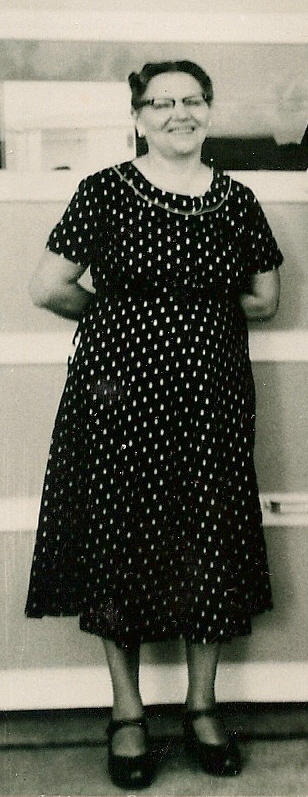
I can close my eyes, right now, and see her – a petite woman, no more than five feet  – (and that is giving her a couple inches) –  wearing a long handmade mini-print belted dress followed by those crazy-heavy black front tie granny shoes, her round rimmed glasses tipped on her nose, a Kleenex stuffed slightly up her sleeve, and a wrinkled white apron tied promptly around her waist at all times. In her side pocket, she carried hard candy, the key to her house, and at all times a worn silver rosary.  She spoke English, most of the time, but would fall to German when necessary.   She wasn’t quick to smile, but definitely was hard to anger.  Her grey hair was always cropped neatly, and the only piece of jewelry she sported was a simple gold wedding band.  She was a woman of great faith, hard work, humble means, and sensible actions.

Like all grandmothers, she had habits and quirks that fascinated me.  She owned a parakeet named Perky; and, if she travelled, Perky travelled with her.   She hid money – cash – throughout her modest home . . . ten-dollar bills in the hems of the curtains, a handful of coins in her button jar, enough money for a house payment behind the round picture of the Blessed Mary,  frozen money in the not-so-hidden ice-cube trays in the back of the freezer, a jar of dollars in the tree stump.  Plus, she only and always wore dresses.  Pants were just a no-no.  And every night she drank a short glass of whiskey, followed by praying the rosary, in Latin.

She loved me and I knew it, but not because she told me.

I stayed summers with her and she made me a pie a day . . . any kind, all I had to do was ask – chocolate, peanut butter, rhubarb, marshmallow, peach, raisin, ice cream, potato – everyday a new pie. She taught me how to make bread.  I always failed, but she always ate it.  We played euchre together each and every evening, keeping a running tab on who was winning and who was losing – for years.  She cried with me when I was sad, and laughed with me when I was happy.  Coddling wasn’t exactly in her vocabulary, but raking a yard, hanging laundry, or burning the trash pile with her didn’t seem like work.  It was purposeful fun . . . time well spent.

Her name was Pauline, but her family called her Polly.  She, herself, had countless sisters and several brothers, all living in a little town in Illinois.  Her own three children, two girls and one boy, were spread across the United States with my family being the closest in proximity to her at all times.  To me, she was the grandmother of all grandmothers – the perfect multi-generational companion for me and my brothers and sister.

She has been gone from this earth for many years now, and I used to wonder why I thought about her as often as I do.  It took me awhile, but it finally came to me.  In fact, I realize now that it really isn’t that hard to understand.  It really isn’t.    Simply put, Polly was a giant, living in the days of the giants.  And even though I wasn’t a quick learner, she was great at modeling.  Eventually she knew that I knew what she wanted me to know.  It just took awhile.

From her, I know that it isn’t money that makes people happy.  She didn’t have much if any, and was happy just to be fishing on a Friday night with me and half of her family at the local riverside – sometimes catching nothing, but always having fun.

From her, I know that faith can bring comfort.  I wouldn’t describe her as a god-fearing woman, but I would say that she was deeply religious.  She pondered through all of her challenges with prayer, (usually in another language), and somehow she seemed to navigate of all her troubles.

From her, I know that quiet is just as good as noisy.  One thousand words was a life time of conversation for her. I can still hear her say, “Too much talk, too little work.”  She, herself, didn’t have to communicate via speech, a talent that still impresses me. I knew what she wanted to tell me without her ever having to speak a word.

From her, I know the definition of giving.  I watched a woman whose belongings could literally fit into two suitcases, give anything she owned to anyone who asked.  That’s why her belongings fit into two suitcases.

From her, I know how to manage money.  It is simply a matter of saving it – in cans, jars, boxes, purses, curtains, trays, trees, sleeves, and banks.  She never bought something she didn’t need, and never really seemed to need anything.  But if she did, she dug up the can and paid for it in cash.  Her joy came not from buying whatever she needed, but from the journey that it took her to get to the point of purchase.

From her, I know how to be thrifty.  Can it if you can.  Freeze the rest.  Holes can be darned.  Dresses and shoes can be remade and salvaged with a little thread, leather and ingenuity.  Water comes out of a tap, walking is cheaper than driving, and one hundred found pennies can buy a dollar’s worth of anything.  There was never a glass jar that saw the bottom of the trash can in her house.  Who needs Tupperware when a used Vlasic pickle jar was available?

And from her, I know about joy.  She characterized her life, as hard as it might have been – as a young teen from a dirt-poor immigrant farm family, living through World War I, the Great Depression, and World War II –   as joyful.  All stories that I heard ended with some type of quote that was meant to direct me to always see the best in the world because she did.

Well, Polly, all I can say is lessons learned.

Pauline Washford

Grandma Polly 1957