A Man of Few Words

Recently, my little brother, Rich, and I entered into an interesting partnership.  And during the time we were considering whether to do so, both Rich and I consulted with our father. And in comparing notes, my brother and I found that we were both asked the same questions:

“Do you trust him?” my father asked.

“Yes,” I replied.

“Do you love him?”

“Yes,” I replied again.

“Then do it,” he said, “Everything else will work out fine.”

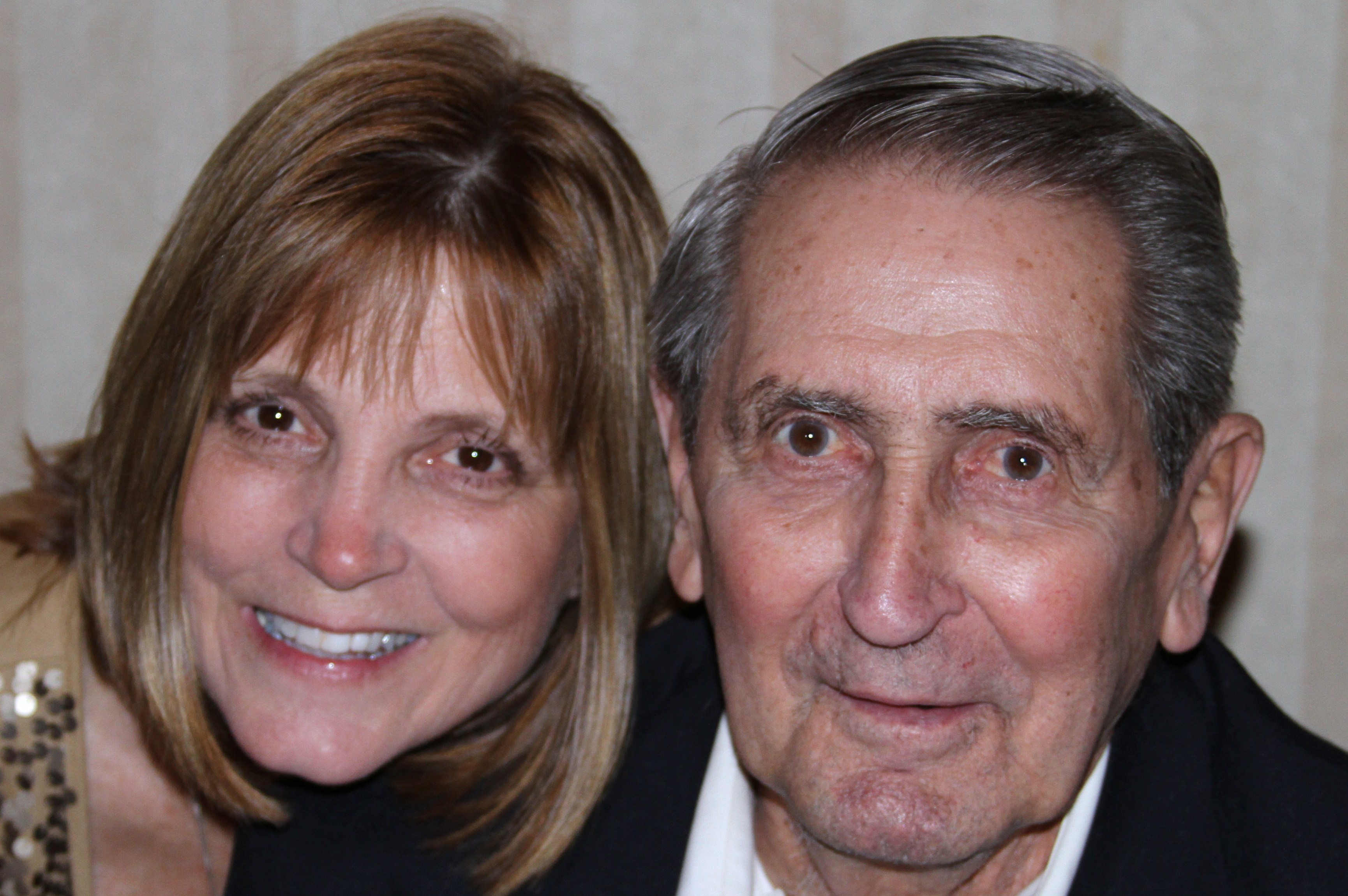
In this conversation, my dad was brief and to the point. If the time elapsed was more than one minute, I will be shocked.  My pop only had two questions – one about trust and the other about love.  Never having been a man of many words and certainly never having been a touchy-feeling type guy, he assumed that the two question eight-word piece of advice was enough and it would be all that I would need.  And odd as it may sound, it was.

But it was only odd to me. Clearly, it was not odd to him.  For, as I sat next to my dad listening to those two questions and watching him deliver that very brief message, it became strangely clear that this wasn’t the only time that he had used this advice.

Throughout the next several weeks, as my brother and I cinched our partnership (keeping our dad apprised of the smaller subsequent decisions and choices we were making), my dad began opening up about the times that those two poignant questions guided him.

Should he marry my mother – the love of his life – and the love of ours? Yes.  Should he take a risk and move his family to a great new frontier called Florissant? Yes.  Should he listen to the advice from his father and take a job with a company formerly called Union Electric – now Ameren UE?  Yes.  Should he, himself, enter into all types of adventures and mis-adventures with his own brother, Bud – his dearest and lifelong best friend? Yes.

With love in his back pocket and trust at his side, he had no fear of his decisions.  He just didn’t. He still doesn’t. The outcome of his decisions may not always have been as planned, may not always have been perfect, and may have led down new and unexpected paths, but with love and trust, he always felt that his decisions were . . . correct . . . right . . . just.  Where some may have fear, he had confidence.  And at the moment he was asking me his two greatest questions, he wanted me to be confident, to have no fear.

When my father asked me if I trusted my brother, he made the term . . . the idea . . . seem so simple. He didn’t want frivolous conversation from me.  He didn’t want a lengthy discussion on trust, the origins of trust, and the positive benefits of trust.  He wasn’t planning on spending hours and days introducing the concept of trust and pondering its definition with me.  He wanted me to answer his question with a brief but confident yes or no.  He really didn’t want me to discuss the degree to which I trusted my brother or any reasons why I should or should not trust him or the dangers of doing so.  In fact, I think he was hoping that I wouldn’t speak, rather simply move my head yes or no – preferably yes, which I did.

When he asked me if I loved my baby brother, the same premise applied.  Yes or no.  Did I love him?  My pop didn’t want to know the details that could have been attached to that question.  He didn’t want to know any challenges surrounding it.  In fact, I think that had I begun some type of discussion when my pop asked that question, he may have given me the awe-inspiring, dad-blaster ‘no time for talking’ look – the look that fathers use to pretty much stop space and time – in order to refocus me.  He just wanted me to give him that one word answer, again with confidence – which was yes.

In less than one minute, with eight words in two questions, my pop did it again.  It was masterful advice in the blink of an eye.  He didn’t say it this way, but I definitely heard: Trust those you love . . . and love those you trust . . . everything beyond will fall in place.

His confidence in knowing that if I had trust and if I had love, then I should have no fear was moving.  And my dad has been right.  My brother and I are having the time of our lives – and couldn’t be happier with our decision.

I know that I, like my father, will keep those two questions handy.  And as I face complicated, challenging decisions in the future, I know that – like him – I will hope that those eight words give me the same type of guidance that they have done for my dad.

But I do have to chuckle.How in the world am I ever going to meet that standard!  Heck, 1000 words isn’t always enough for me to convey whatever it is that I want to convey. Well . . . at least I have a target!
Dad


Dad

Why is the ocean salty?

A couple of evenings ago, my younger brother sent me a question via a text and I immediately knew the answer to what he was asking. “Why”, he asked, “is the ocean salty?” I didn’t know his whereabouts, nor did I know why he had picked this moment to ask me that question, but I knew what he wanted. I was positive that he didn’t want me to head to Google to find a true and correct scientific reason why the ocean is salty.

I was curious, however. I wanted to know whether he was in the middle of a family discussion about poverty versus wealth or in a discussion about what should be the wishes in our lives. I wanted to know if he was looking for a way to convey a message about empathy, about selflessness or maybe hunger. Still, I didn’t ask the circumstance of his request. It really wasn’t important to know his reason for asking. It was more important for me to respond.

He and I, along with three other brothers and one sister, grew up with an array of folks moving in and out of our family home. Grandparents, cousins, aunts, friends came and went. And these individuals brought with them all types of fascinating personalities, interesting behaviors, and memorable moments. Oddly enough, one strength they all had – (as if it were an unwritten requirement of my parents to move into the house) – was the ability to tell a story. And in particular, it was my Grandma Polly who did so with regularity, precision, and looking back on it, perfection.

She told her stories at very unusual moments – while helping us dry the dishes, while playing card games with us, while walking to church, while waiting in line by the sink to brush our teeth – mainly while we were a captive audience. And she told the same stories over and over and over – so much so that most of us know them by the funky names we assigned to them. So when my brother asked me if I knew why the ocean was salty, I did. It was one of my grandmother’s most famous and most favorite stories.

What I did learn from his question and my later answer, however, was that storytelling isn’t a lost art, a thing of the past. In fact, with all the technology the world offers us today, storytelling is most likely in its golden era. People can tell stories using blogs, through email, by telephone or video, in print, via the U.S. mail, and, of course, in person. Storytelling can convey those unwritten and complicated rules of life in a simple, unassuming, and understandable fashion. It’s easy. It’s simple. And for some reason, storytelling has the uncanny ability to leave an indelible impression on the listeners. I know it did for me.

So, without hesitation, I began to text the story back to my brother – in fifty character segments:

A long time ago, before the world was known, there was an old woman who was hungry and poor.

She came upon a family who had everything they needed and wanted. She asked them for food and drink to save her life.

They looked at her, sneered and said, “Old woman, why should we help you? What can you do for us?”

She said, “I am old and poor, but I still have a favor, a wish, remaining that I received many years ago from the wise king and queen of my village. I have saved this last wish and I can give it to you.”

They laughed at her and said, “If you have a wish remaining, then why don’t you wish for food and drink for yourself?”

She lowered her head and whispered, “Wishes are never meant to be used to save yourself. They are meant to be used to help others. So I would never wish for something for me.”

“Well”, the family who had everything said in unison, “Then use your wish for us. We would be happy to take your wish for something we want. In return, here is just enough food and drink for you to live.”

So the tired and starving old woman traded her last wish for food and drink; and, she lived a long and productive life for she had learned to share what she had and to be generous and selfless in her actions.

While eating their own supper, the wealthy family talked about the many ways they could use their wish. They could wish for more gold, for more land, and for more possessions. The choices were many.

As the eldest took a bite of the meal of many meats and vegetables their servants had prepared, he pushed back his chair and bellowed a most unhappy sound.

“Bah!” he exclaimed. “This meat may be plenty, but it has poor taste. It has no seasoning, no salt. We need to punish those who prepared it.” And without thinking, he added, “I wish for more salt.”

At that instant, there appeared a salt mill on the banquet table in front of him. Though tiny, it was mighty and it kept grinding and grinding and grinding salt, never ever stopping.

Suddenly, the wealthy family realized that they had used their wish; and, all they were receiving was an endless supply of salt. No gold. No land. No possessions.

They beckoned for the old woman and said, “We order you to make it stop. Make it stop now. And return our wish to us immediately!”

The old woman shook her head as she gazed at the wealthy family. “I am sorry,” she said, “but your wish has been granted. There is nothing I can do. The salt will be a reminder to you that when you wish for something, make sure it is used for the benefit of others and not just for yourself.”

The wealthy family was so angry that they took the salt mill and threw it into the ocean, where it has kept grinding for centuries. To this day, it reminds us to always think of others before ourselves.

That is why the ocean is salty.Salty Ocean (1 of 1)


Fishing

I don’t like fishing.

And as a vegetarian, it isn’t any great surprise as to why I don’t like fishing.  I normally try, as best I can, to keep my personal views concerning something like fishing to myself.  It’s something that people do – and I don’t.  ‘Nuff said.

However, recently, while visiting the great state of North Carolina, my third son, Patrick, invited me to go fishing with him.  Twice.  And, as odd as it seemed to me, twice, I went.

The first time, he asked me to tag along with him to the ocean around noon.  His plan was to fish while slightly off-shore in a kayak.  With a pole, bait, oar, and a very small back pack full of odds and ends, he waded into the water with me behind.  My job was two-fold:  steady the kayak until he made it past the first barrage of waves and then return to shore and wait for him to return . . . which I did.

I sat on shore watching the yellow kayak swaying back and forth with the tide.  And at first, I could see him clearly.  I could see him casting, I could see him rowing, and I thought I could see him smiling.   But as time passed, he moved farther and farther towards the horizon, and it became more and more difficult for me to see anything more than a flash of yellow between ocean waves.

My mind moved away from my thoughts about fishing and towards my thoughts about my son and the danger of water, in particular ocean water.  Though thankful that he had put on a life jacket moments before jumping into the kayak, as time ticked forward, I still had that feeling in the pit of my stomach that says anything, anything can happen.  So, I began to walk and wade into the Atlantic – as if I could somehow wade and swim to the bobbing kayak.  Which realistically, I could not.

Within ten minutes, he either ran out of bait and decided on his own to end his journey or he saw me and figured that his mother was going to get herself into water-trouble and might need help, because the kayak was heading swiftly towards me.  Once we were within shouting distance, I could tell that he was delighted with the fishing.  Usually a quiet sort of guy, he rattled on about the ocean, the fish, the waves, those he caught and those he lost.  He was happy and wanted nothing more than for me to be happy for him.

The second fishing experience was quite different.  As the sun began to set one evening, he pointed towards the marsh, grabbed a pole, his tackle, and two chairs.  He could see that the weather was perfect and the tide was up.  The plan was to quickly – faster than lightning fast –  head out with him to fish.  Again, he asked me to go, and for some reason, I went.

With me literally running behind him, we stopped when he found the perfect spot. He set up my chair, dropped his, tossed me some stuff, waded out just beyond the water’s edge and began casting.  He fished and I watched him fish. It was a fairly quiet experience with the reel making the most noise of the evening. We stayed for as long as we could see, which wasn’t all that long.  In fact, it wasn’t long enough for him to actually catch anything.  When the sun dipped below the horizon, he gave me the ‘let’s pack up’ signal, and we did.  Walking back to our place, he explained the difference between fishing in the marsh and fishing in the ocean, between fishing in the morning and fishing in the evening, between fishing from shore and fishing in a kayak.

Though I am opposed to fishing – at all levels – and he knows it, I must admit that I did enjoy my fishing experience.  First, he caught nothing that I could see.  What he caught in the ocean, he tossed back.  And he caught nothing in the marsh.  Great for me.  Not so great, I suppose, for him.

Next and more importantly, it was interesting entering someone else’s world – in particular a world that I would never enter.  It was interesting changing my perspective – stepping out of my box and seeing something from a different viewpoint.  I went fishing.  Okay, my role was very limited – at best.  I didn’t use a fishing pole. I was my son’s crowd, his groupie, his audience.  I was there to observe . . . to learn . . . to understand.

And I learned that it is one thing to talk about having an open mind and talk about being accepting of the differing viewpoints and activities, and another thing to actually have that open mind and be accepting. I always thought I was accepting of his choice to fish, but in reality, I was only accepting of it at a distance.  I really knew nothing about it.  I was more critically sarcastic than honestly accepting.

But, walking in the shoes of others truly does heightening understanding. It takes time and effort to do so, and I had to jump out of my comfort zone and hope that I could see whatever it was that he was seeing – use his eyes, his mind as my guide.

I still do not want to fish, but I know a little bit more about why my son fishes, and I think I am a little more embracing of his choice.

And as the sun went down while we were standing in the marsh fishing, I thought about the poetry of yesterday . . .   with e.e. cummings (1894 – 1962) drifting through my mind:

now the ears of my ears awake and / now the eyes of my eyes are opened
fishin (1 of 1)

The View From Above

I work on a college campus, and I love it.

Though my days can be somewhat varied, most of the time there is a carefully plotted out routine to what I do. There are countless committee meetings, reams of email, tons of telephone conversations, numerous one-on-one discussions, lots of small decisions, and large decisions, significant time working with students – faculty – staff on problems, concerns, challenges. . . and the list goes on and on.

It’s normal, average college work and it’s what I do everyday.

As expected, I am generally busy. I come early and stay late.  Sometimes I stop at noon to eat, but more often, I use the lunch hour to catch up on reading, signing things, thinking.  I find my college activities quite interesting.  But, for those on the outside looking in, the picture might not seem so exciting. Instead, it might be viewed as . . . tedious . . . tiring . . . a little too much of the same old – same old, and not enough of the knock your socks off, type stuff.

Admittedly, I spend most days in my office or in conference rooms.  I listen . . . I talk  . . . I read . . . I jot something down . . . I confer with others. I squint my eyes, looking up just in case an answer to whatever problem being discussed floats through my mind. (Rarely happens, but I look anyways.)

Sometimes the day passes without me ever standing up and moving from behind my office desk to the doorway. The two chairs in front of my desk are like seats on a merry-go-round that bring all kinds of folks into my office to chat. Suddenly, I look up and the day is over. I head home. I eat, sleep, wake up and start the process over again. It’s been this way for many years.

Most of the time.

For this is a college, and I know that college life is full of both the expected and . . . the unexpected.

As was the case on December 5th, 2012.

The sun was shining, the weather was perfect, and I was ready.   I slipped out of my regular work attire and into worn-torn jeans, work boots, and a college sweatshirt.  The faculty in the West Building had invited me, and I jumped at the chance.  I was – flat-out – super excited about the opportunity.  It was as if the world leaned over and tapped me on the shoulder for a great, great adventure.

In a few moments, I met my partner-in-crime.  Joe quickly ran through the must-do rules, and I suited up.  One hard hat. Check. One pair of leather gloves. Check.  One cell phone and one camera. Check, check.  And one safety harness with tons of carabiners. Big time check.  And I stood – at the ready – waiting for more instructions.

Joe looked at me and smiled.  He and I both knew that this day wasn’t going to be the usual.  This day wasn’t going to end with me turning out the office lights, shutting the door, and carrying my shoulder bag out to my nearby car.  This day was going to be different.  It was going to be a memory in the making.  This day was going to be one of those crazy-funny college days.

Our campus is a proud one and like other locations, we are becoming more energy-efficient. We have hundreds of geothermal wells throughout campus and several solar panels perched on building rooftops. We recycle everything, drive energy-efficient college cars, collect dead batteries, drink water from the tap, and turn the lights out when we leave our offices. And, most important for this occasion, we have two brand new wind turbines strategically placed on our college farm.

And I was in luck for It was my turn to climb one of those turbines.

The time came, and Joe started to climb first.  Once he was a healthy distance ahead of me, he peered down, motioned for me to connect my safety latch, and begin.  For just a moment, I hesitated.  I was delightfully excited, but from the bottom rung, it looked like a long way up.  I could hear him telling me to take that first step, but my boot seemed glued to the ground.  It was like my mind said go, but my feet said no.

I glanced up and Joe, who was already about fifty feet ahead of me, glanced down.  He smiled and called out my name one more  – and most likely the last – time. And finally, I started to climb.  What I thought I couldn’t do and wouldn’t ever have the opportunity to do, I began to do.  And it was fun – crazy fun.

One step at a time, one foot at a time, rung by rung, I climbed.  I have no idea how long it took me to reach the top.  I only know that it took me longer than it took Joe.  He coached me through the last trap door and onto the top platform enclosure – where there was just enough room for the two of us to stand.

He opened the top hatch, and from that vantage point, the view was stunning.  Farm fields, nearby highways, barns, lakes, silos, the college buildings, athletic fields – the best word to describe it was magnificent.

Oddly enough the only thing that had really changed was that I was no longer at ground level.  I was seeing the same sights I saw everyday – the same farm fields, the same nearby highways, the same barns, the same lakes, etc., and it was like I was seeing something completely different.

I changed my perspective and everything changed.  Everything. Everything.

Today as usual, I sit at my desk with paperwork and people swirling around me, with a routine that feels safe and comfortable, with my shoulder bag waiting to go home right after I click off the office lights at the end of the day.  But I know that if I take the time to look at my world from a slightly different perspective, I will see something totally different  – something very interesting and exciting.  Just depends on where I am standing.

College is crazy-funny that way.

This slideshow requires JavaScript.

I Am A Runner

I am a runner.

A very slow one at all times, but I still call myself a runner. Most days, I put in three to file miles in terms of distance. In fair weather, I run outside. In poor weather, I seek asylum and run inside. Regardless of speed, distance or location, I would describe myself as a fairly consistent year round slow and steady runner.

And until recently, running for me wasn’t a team sport.

Decked out in average, normal sporting apparel, wearing the most basic of running shoes, my routine has been to get settled with my IPOD, turn on the most eclectic music playlist, and hit the pavement – all by myself. One and only.

My running routes are those of the most basic sort. I start at my home, swing around the neighborhood in a three to file mile circle, and end up right back in my driveway, sweating and tired, a little while later. Each day, I wave at the same folks, walk up the same hills, listen to the same music, and mutter the same complaints about this sport being too hard, too difficult, too challenging for someone like me.  But each day, off I go.

Most of the thinking I do while running isn’t that earth shaking. I think a lot about how much further I have to go both in time and distance until I am done. (That’s my favorite subject.) Or about what song will follow the one I am already hearing. Or about whether I am swinging my arms too much or holding my hands too high. Odd as it my seem, those types of topics can actually fill up all of the thinking time available throughout a normal run.

But, as average and mundane as my running may seem, for me there has always been something about it that has made me repeat the process each and every day by myself for many, many years. I just like it – start to finish – day to day – month to month – year to year. It’s fun.

Recently, however, I have kinda surprised myself . . . because I have started to participate in organized running. In April of 2012, I participated in the Illinois Half Marathon in Champaign-Urbana, Illinois. In October of 2012, I participated in the Rock and Roll Series Half Marathon in St. Louis, Missouri. There were approximately 20,000 participants in April and equally as many in October. I went from me running around my local neighborhood with my little headset and dorky shoes to joining with a big group of folks – all looking much more spiffy and speedy than I – and running around big cities.

And until last night, I really couldn’t figure out why I made such a drastic change. Keep in mind, I don’t think about these things when I run. My understanding on this issue happened while I was sitting in the living room watching late night television.

Last night, I once again watched the movie Miracle – the story of the 1980 U.S.A. Olympic Hockey Team. Like many other people, I remember where I was and who I was with while watching that particular game. I remember the animated announcer Al Michaels asking me if I believed in miracles, and goalie Jim Craig wrapped in the American flag scanning the crowd looking for his father. I can still see the pile of young U.S.A. hockey players on the ice man-hugging in jubilation.

Me? I remember cheering, smiling, and laughing with my family as we watched the Americans celebrate at Lake Placid – which was thousands of miles away from me. It was a great moment – a fun time.

And then it hit me. Why have I suddenly started running with others?  And what is it about running with others that makes it fun?  Well . . .

At the beginning of the half marathon, I stood toe to toe with thousands of other folks waiting to hear the starting bell. Once we did, we trotted off – up and down all kinds of interesting city streets. Lining those streets were crowds of folks cheering, waving signs, clapping, handing us water, and just in general supporting the runners. They rang bells, shouted out words of encouragement, sang songs, and turned long distance running  – which for me had been a solitary sport – into one crazy-fun time.

I laughed along the way, gave out my fair share of fist pumps and high fives, reached out for the finish line and smiled widely at the entirety of my sag-wagon – which consisted of one person – when I did cross it.

And through the whole process – from the years of running alone to becoming  one runner among many and to connecting these moments to a 1980s hockey game, I have learned much.

First, it’s fun having fun with people who are having fun.  It is.

It’s fun to be part of crazy fun moments that make people smile for no other reason than something like running together.  There is something terribly groovy about sharing the times of our lives with others whether it be cheering along with millions of  Americans while watching a winning hockey game on television miles and miles away from the action or participating in a crazy-fun organized run.

It’s also fun to have fun with only one person who is having fun.  It is.

It’s fun to do something alone.  It’s fun to be incognito and smiling for no other reason than running on my own. There is something equally groovy about experiencing the time of my life with only the fanfare of me whether it be eating alone, working alone, sitting alone or running the streets of my neighborhood alone.

Finally, I learned that alone or with others, I like watching Miracle.  It’s just fun.

Stopping For A Photo While Running Alone

                             Stopping For A Photo While Running Alone 

Icicles

As a child, just the sight of icicles meant that my world was about to become very exciting.  Icicles meant winter. . . which meant cold . . . which meant time for action.  But there was always a lingering question.  Would it be cold enough?

Weather forecasting during my childhood wasn’t near as easy as it is today.  In the 60s and 70s, we would check the St. Louis newspaper’s weather bird, repeatedly dial the free weather phone number, turn on the television to watch the five minute 10:00pm weather report, and/or stick our heads outside and look around.  Even then, the long term weather forecast seemed like a guess.

When icicles appeared, it was most important to know that those icicles would be sticking around for several days – weeks – longer!  For if there was even a remote thought that a hard, down and dirty winter had arrived, the crazy-fun was going to begin.

My mother would stand at the front door with us – peering at the winter sky, thinking . . . pondering.  Isabelle was a petite young thing and a stay-at-home parent to six wild children (with the oldest 15 years older than the youngest), living in a home with one bathroom, in charge of anything and everything related to ensuring that my four brothers, one sister and I reached adulthood respectfully.

She wasn’t one to jump to conclusions quickly.  Rather, she would review the situation carefully, using a squint face which meant that her mind was somehow completing a unique mathematical calculation.  If after looking outside, she turned towards the living room closet, we were golden!  If not, our patience as children would be tested.

Sometime in the winter of 1971, I had just finished a grueling day of toiling at the local ice cream shop. (Yes, once I considered it hard work.  Now I see it as being paid to eat dessert, chat with friends, and occasionally serve food to others.)  Walking home from that job, which was only up the street from my home, I could see my siblings and mother all huddled around the front door.  Isabelle’s two eyes looked like slits as she gazed up at the house guttering.

As most would agree, winter evening weather can create an amazing hushed beauty.  Nothing is better than being outside on a cold, silent, clear, moonlit evening.  It can seem like the earth is on pause, standing still for just a moment.

And this time, my family’s anticipation only added to that beauty.

I walked off the sidewalk, talking the shortcut up my front lawn.  With each step, I heard the crunching of the frozen grass beneath my feet.   Life all around me was below-zero frozen.  And I slyly smiled because I was beginning to understand the scene.

Nearing the front door, I could see what my family could see.  With a brilliant moon in the background on a starry evening at the beginning of winter, there it was . . . a long line of big, perfect, giant, shiny, stoic icicles hanging down from the rooftop of 200 Duquette Lane.  And happy smiles on everyone’s face.

2011February ice storm 045

From that point forward, the person we knew as a traditional hardworking, intentional-driven mom turned into this crazy-funny person.  Bedtime . . . forget it! Homework . . . not tonight! Safety . . . ignore it! Practicality . . . dream on!

She shouted and some of us suited up.  Hats, coats, gloves, scarves, boots – check.  The rest headed for the basement.  Acting like a volunteer firefighting brigade, my siblings unhooked the downstairs washing machine from its water source.  They secured a spray nossel to the backyard hose which was patiently waiting three feet away just for these occasions.  They attached the hose to the now-barren water source, and threaded it out the basement window to my waiting mom.

With all systems a-go, Isabelle gave the on-signal.  Now, all it took was watching, waiting, and spraying.

My mother, in her early to mid-forties, wearing non-waterproof everything, would stand in the dark of the backyard, on such icicle evenings, for hours – with or without the rest of the brigade – holding a cold, wet hose, spreading a thin layer of water on the lawn in order to create one heck-of-a-great time for the family.

The nearest commercial ice-skating rink was both out of sight in terms of distance and  cost.  But, with a little luck and a little elbow grease, the back yard of 200 Duquette Lane could turn into one of the finest skating arenas in the nation.

According to Isabelle, there was an art to freezing the backyard.  First, she would apply a continual fine misting over the grass.  Once the grass was covered, she would remove the spray nossel and use a flooding approach.

By the time she had completed step one, she, herself, looked like a frozen popsicle, with icicles hanging from the ridge of her gloves, coat, body.  We would help as much as possible, but this moment was hers.  It was a time for Isabelle to step out of her responsible mother role and do something so absolutely nutty, that it befuddles me even today.

Throughout the night and into the morning, she would pace the back yard, hose in hand, until every inch was covered in ice.  My father, who left for work before 5:00am each day was a trusty assistant, but could not lead this madness.  It was an Isabelle project all the way.

Upon waking, we would skate the heck out of the back yard – daytime, nighttime, before school, after school.  That crazy-funny ice rink with three giant trees in its middle was a winter treasure beyond belief. We had the time of our lives.

Isabelle?  She really didn’t like to skate, but she watched us like a mom from the nearby kitchen window.  And for as long as the icicles stayed, we felt like the luckiest bunch of kids on the face of the earth.  Who knew that a postage stamp yard in the middle of suburbia Missouri could become such a splendor-land.

Well maybe, only that squinting mother of six who saw icicles as opportunities.

The Charleston Women’s Drama Study Club

For those who have known me for a long time, and for those who most likely have drawn logical conclusions about me by reading this blog, feel free to laugh now.  As I readily admit, normally my walk in life is not the personality that when entering a room fills it with howling laughter.  I can be crazy-funny in the moment, but on a regular basis, I am not generally described as the comic relief personality. 

I am not sure why I think this part of my life is funny – perhaps because it is so out of character for me – perhaps because I am – as I see it – in this part, a weak link in a very strong chain –  perhaps it is because it is something I never dreamt that I would be doing.

 But, I am.

So keep in mind that what I am about to tell you is true – and I am not changing the names to protect the innocent (see Dragnet 1951-1959)! 

I am proud to say that I am friends with 34 very talented women.  That number doesn’t include the five talented women who have reached emeritus status. (They are still my friends and they are still talented; however, they are just more or less retired).   Considering the entire group, the composition is amazing.  These women come from all walks of life, represent numerous generations, have very diverse interests, lifestyles, and opinions, and again, are all my friends. 

By default, I have been to most of their homes, always on the second Thursday of the month, always on time.  Actually, the rules state that if I can’t be there, I must contact the host prior to 7:45pm.  Failure to do so twice in a row means that I will be asked to exit the group. 

And in some configuration or another, these women have been together for the past 93 years.  Yes, 93 years!

Me?   I am merely a youngster as I have only been with them for the past six years.  I know several ladies who have marked their 50th year.  Let me say that again, 50th year.   It is amazing to me that sometime in 1909, 35 women joined together and came up with a brilliant idea that has managed to make it through numerous wars, natural disasters, depressions, recessions, and just the every day, usual, routine stuff that can set up all kinds of challenges and barriers no matter how strong the women are.

We have an ironclad constitution that guides us, and we follow it – every last word of it.  Every five years (no exceptions), we invite spouses and significant others.  The dues is $6.00.  Cash is preferred, checks are accepted.  But it must be paid, and the sooner, the better.  In fact, at the start of this season, it was announced that all dues had been collected during the first month.  And we applauded.    

All members must participate once each year during one of the eight months of the season.  Every five years, each member must agree to be a host.  No exceptions.  Every time we meet, we take roll, read the minutes, present the treasurer’s report, consider old business, and discuss new business.

And then the fun starts.

For the group I am describing is the Charleston Women’s Drama Study Club, currently in its 93rd season.

From October to May . . . for the past 93 years . . . a portion of our group becomes the cast – reading and acting out a play –  and the remainder of the group comprises the audience.   This season’s docket includes: The Best Man, Mrs. Mannerly, The Last Romance, Ghost Writer, Dead Man’s Cell Phone, The Other Place, The Naked Eye, and Theatrical Haiku.  In all, I have seen 48 different plays during my membership and have looked forward to the previously mentioned eight.

In early evening, on the second Thursday of the month, we fill a house, create a set, find a place for the audience to sit, listen to the director provide a brief description of the play, the playwright, the time period, and any unusual stage directions that might be happening, and . . . off we go into the world of drama. 

I have seen the ladies of the Charleston Women’s Drama Study Club transform themselves into all kinds of characters; we have no boundaries on who we might be and what we might do to convey what we believe the writer and director intended. 

I have witnessed a woman – who is in her mid to late seventies (and who has been a member of the club for decades) play a character whose profanity would make pigs squeal.  It was so out-of-character for the actor – and truly unexpected while in the moment.  So, every time she spoke, we roared.  Every time we roared, she laughed.  And every time she laughed, we laughed more. It was crazy-funny at its best. 

Again, we laugh, laugh, laugh at the comedies and cry, cry, cry at the tragedies.  At times the audience is noisy-loud, and at other times, the drama is so dramatic we can hear a pin drop.  We always end the evening by gathering around the cast and seriously discussing exactly what we might have learned from the production, followed by a cast photo taken by our resident historian.  And this has been happening for 93 years. 

Most amazing to me is what I have learned – being a member of the Charleston Women’s Drama Study Club.  In all honesty, I haven’t learned to be a better actor – my talent is still on the lean side in that area.  I am still not one who dazzles much, if at all.   

But, the moral of this story is don’t knock it until you’ve tried it. 

Even with my minuscule acting ability, if I am a cast member, my theater buddies lavish words of praise and accolades upon me.  And there is nothing better than trying something new and different, persevering and clunking through it, and having the ladies of the Charleston Women’s Drama Study Club tell me that I was superb!  For me, that is how this star was born!

Acting in the annual Christmas Play . . . Even the best actors can’t always hide their feelings!

A Few Words / Lots of Photos

I have been blogging for a little more than a year – and usually I find a photo that, for me, generates 1000 words.  I am stepping outside of my box a little. Following are five videos – of varying length – with lots of photos, a little music, and very few words. Not sure why I have changed the format for this post, but I hope –  for those visiting my blog –  that one photo, one minute, one moment generates many, many thoughts, ideas, words. (Please note:  This attempt is my first in terms of using video.  All suggestions would be welcome!)

The Music . . .

Barry, John. (1986). Out of Africa: Soundtrack from the Motion Picture. N.L.: Geffen Records.

Carpenter, Richard. (2004). Karen’s Theme. On Carpenters Gold 35th Anniversary Edition. N.L.: A & M Records

The Cranberries. (1998). Dreams. On You’ve Got Mail (Music from the Motion Picture). N.L.: Atlantic Recording Corporation.

Durante, Jimmy.  (1998) You Made Me Love You. On You’ve Got Mail (Music from the Motion Picture). N.L.: Atlantic Recording Corporation.

The Philadelphia Orchestra & Normady, E. (2001). Clare de lune. On Ocean’s Eleven (Music from the Motion Picture).  N.L.: Warner Bros. Records Inc.

How To Make Memories With 47,399 People

When I reflect on that moment, I have to admit it was one of the best of my short life.  It was so exhilarating, it is almost indescribable.  And unbelievable as it may sound, though it has almost been a year ago, rarely does a week pass without someone mentioning something about it to me or my daughter.

Heather, my daughter, is my youngest child and only girl.  At 28, she is slight of build, tall in stature and is as even-tempered as her father.  I am lucky as she and I pal around quite a bit together.  And oddly enough, the reason for being together on October 28th, 2011 was due to a very chance circumstance.  But it happened and we were.

The men in our lives were all left behind.  My son hadn’t been feeling well, and my spouse graciously agreed to stay home as caretaker.  He offered his spot to my daughter, and she smartly took it.  So we were off – together – on another adventure of a lifetime.

As happens in most families, she and I have actually shared many mother / daughter lifetime adventures – in all kinds of shapes and sizes from international travel to half marathons, from home building projects to weekends away.   But this event was different.

As we headed out – with all the amenities two people might need including food, clothes, cash, and cameras – my mind could hear a phrase often spoken by a dear aunt of mine who has just enough of a southern drawl to bring out the wisdom of such simple words:  “Nothing more important than making memories.”

Two hours later, we arrived at our destination.  We found a makeshift parking space, abandoned our car, and entered the thick of things.  Downtown traffic was at a standstill.   Banners were strung from every skyscraper and pump-me-up music was blaring on every corner.  Two gentlemen – sans shirts – with their chests painted bright red – strolled by us, singing a rather poor rendition of the national anthem.

Yet, because of the atmosphere, they were nothing shy of adorable – and for this occasion – very typical.  For at that moment, a total of 47,399 individuals were headed towards the gates of a previously empty stadium – each person intent on making their own memories.

Our seats were high-in-the-sky, in what folks might fondly call the nose-bleed section.   And looking out on the crowd, all we could see was a sea of red – as literally everyone had dressed in the team color for the occasion – (or as witnessed earlier, had painted their bodies accordingly).

The two women in front of us were wearing red wigs made of flashing LED lights.  A couple of rows in front of them sat a family who had brought along an assortment of hand-made posters and were waving them madly.

Before the first pitch was thrown, we had both been asked to take family photos for folks around us and had asked the folks around us to take our photo.  Fans were texting, tweeting, facebooking, and calling everyone who didn’t make it into the stadium.   It could only be described as orderly pandemonium.

Of course, not to be missed was the calm and subdued gentleman at the end of our row.

He happened to be visiting a friend who had an extra ticket.  He came along not knowing what to expect, and found all the frantic madness a little quizzical.  He was seemingly disengaged from the surrounding activity, and spent most of his time checking and re-checking his trusty blackberry . . .so we called him Blackberry Man . . .  really the only odd-duck on the pond.

But, as the game began and time began ticking forward, the excitement within the crowd escalated  – and it escalated exponentially. We stood – shoulder to shoulder – from the first crack of the bat to the last, sitting only during the momentary wee breaks between innings.  We shouted  – loud and long – creating an unrecoilable energy that was all-pervasive.  And we bonded – with the 47,399 people who came to the stadium with the same hopes and desires as the hometown athletes.

My daughter and I were  – in athletic speak – in the zone.  We were on our tiptoes, cheering, shouting, clapping, hugging, laughing. And everyone around us, except for Blackberry Man, was doing the same.  For all of us, it was a time of sheer fun and exhilaration. I was quite sure that the game’s outcome wouldn’t solve any great human mystery.  And I knew that days later, I would still be putting on my shoes one at a time. But, for that one moment, the world around us was in sync.

And I learned that anytime the world around us is in sync, it is truly unbelievable.

For today, I can still hear the collective screaming and I can still feel the collective dancing when the hometown team won. Fireworks blasted.  Confetti fell.  Lights flashed, and the music of champions played.  Strangers hugged each other, with even Blackberry Man faintly smiling.

And I can still  see my daughter’s eyes looking at me with such pure joy.

As we walked out the stadium, still shoulder to shoulder with those 47,399 people who were all still more than just a little exuberant, I knew that my daughter and I had made a great memory, a permanent one.

What I didn’t know is  how that particular memory would change my thinking.

I was once again – and in a big way –  reminded that it is possible for the entire world to be in sync.  Somehow, it is possible for all of us to be happy, for all of us to experience joy.  It might be difficult, but what is worthwhile isn’t usually easy.  All we have to do is wake up our collective sleeping giant and make a memory.

. . . . . . . . . . . . . . . . . . . . . . . . . . Confetti With Friends . . . . . . . . . . . . . . . . . . . . . . . . . . . . .

Pause On / Pause Off

Pause on.

This past September weekend was a very busy one.  For five days straight, I spent time with many, many – say it again – many family members and friends, met with tons of acquaintances, and completed all kinds of activities that brought all walks of my life together.  People were in and out of my home.  We served meals, refreshed the laundry, and arranged and re-arranged our home as needed.  The purpose of all the activity was pure enjoyment with every motion made set to encourage positive results.  And I honestly believe that at the end of this particular stretch of time, fun was had by all.

But, at the end, I paused . . . and I am still pausing.  After all was said and done, I knew that I needed to do a little self-check on the lens that I use to see everything.

Through my usual lens, my life is rather rosy.  I have four wonderful children –  who are all well-educated, who are doing well financially, and who have fairly rosy lives themselves.  I live in a very comfortable home – and want for nothing.   I am surrounded by all that is good.  I travel . . . a lot.  I spend a couple of weeks in the mountains, a couple weeks on the beach, time in various metropolitan areas, and time in great Americana spots.  I have favorite breakfast spots that aren’t just at the area covered by my kitchen table.  Two very nice folks clean my home on a bi-weekly basis.  I don’t mow the lawn.  I have easy access to health care. My cars are bright and shiny, are parked in a garage, and when broken are repaired by someone else.  I have money in my checking account at all times.  My retirement plans are going well.

I exercise everyday – because I have time and the means to do so.  I use a dry cleaner who brings my stuff to my house when it is ready.  A young person delivers the newspaper to my doorstep, daily.  I own and display seasonal decorations, and have storage space to keep them looking new and organized.  I have a big, giant family.  And all of my brothers and sister have homes that have at least four bedrooms, countless bathrooms, two car garages, and extra refrigerators. And of that group, several of us have advanced degrees, all of us have undergraduate degrees, and all children among us have gone to college or are planning on going to college; and, all have parents and relatives who are totally and passionately involved in their lives – supporting them every step of the way.

I have more than one pair of tennis shoes – just for running.  I save one dollar coins on a whim, wear matching underwear just because, and have a ginormous backyard deck.  My home has air-conditioning, tons of extra toilet paper, a pantry full of food, high-speed internet, and kitchen gadgets for every and any purpose known to humankind.  My wardrobe changes with the season.

And due to all of this  –  coupled with all the motion and commotion at my house during that five-day period in September –  I paused.  For quite awhile.  For, there is another more challenging lens that is often obscured by my rosy one previously described – especially when I am in the middle of such frenzied activity.

I paused because I know and needed to remember that there are thousands and thousands of folks who are hoping to find food for tonight’s dinner meal.  They don’t have homes or cars or educational opportunities.  They certainly don’t have decks or seasonal decorations, or storage space, matching underwear, or kitchens.  They struggle with family and friends.  In fact, there are children begging for attention from anyone – any family member – any friend – and there are adults begging for the same.  The only clothes they have are the items they are wearing.  They can’t save coins . . . they can’t save anything for their immediate needs are too great.  They use pencils because they can’t afford pens.  The only vacations they take may be those taken during their best daydreams.  Newspapers aren’t delivered, garages aren’t attached to their homes, and they have no need for extra refrigerators as they have a tough time filling one, let alone two. Healthcare is a challenge.

So I paused.

Through the summer of 2012 in another part of my world,  I have been intentionally pondering  over the term creativity.  What does it mean?  Where does it come from?  How can I learn to open myself up to becoming a more creative individual?  Where is it most prominent?  Who are the experts?  How is it reflected in me and how can I strengthen my focus on it.    And suddenly – because I took a moment to pause – I may have gotten closer to the answers.

In all my wondering about and wandering with creativity, I might have been on an erroneous path.  While pausing, I had a moment to reflect, to consider the other side.  And I learned that I have examined creativity using only one lens. . . instead of many.

I am finding that when I look through the lens that is not so rosy, I see the creativity that people use just to make it to tomorrow.  I see folks finding solutions to problems that I can only imagine.  I see folks doing things differently not because of want, but because of need.  I see folks making their worlds keep spinning in any way possible, and hoping to affect change in their lives by doing so.  Their creativity is ingenious.  And as far as I can see, their greatness in this area has to come from their ability to face adversity and survive.

For me, I learned that the source of creativity is more than just one lens.  It is more than just two, and very likely it is found in hundreds of lenses. I just need to make sure that my eyes are open and ready to see.

Pause off.

The Bob Kerrey Pedestrian Bridge in Omaha, NE, is a great place to ponder the intricacies of creativity . . . or any other subject!